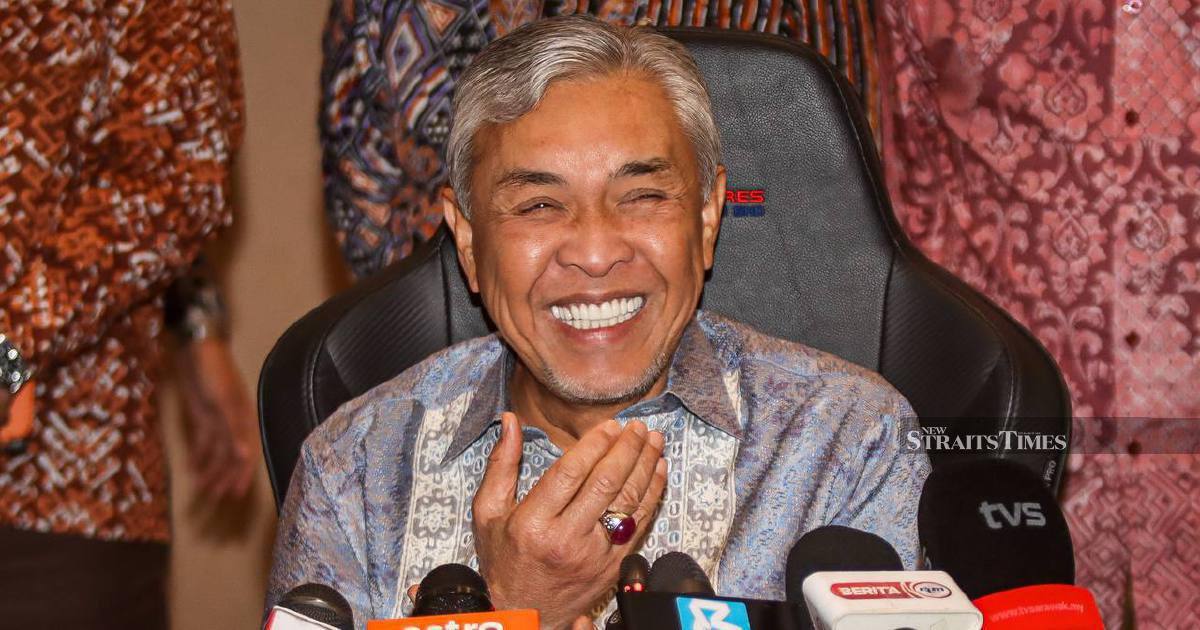
Deputy Prime Minister Datuk Seri Dr Ahmad Zahid Hamidi has responded to Prime Minister Datuk Seri Anwar Ibrahim's recent unity message delivered in pantun form, matching it with a four-line Malay verse of his own in George Town. The exchange between Malaysia's two highest-ranking government officials underscores their commitment to maintaining constructive dialogue whilst working together to steer the country through a complex political landscape.
The use of pantun—a traditional Malay poetic form known for its rhythmic quatrains and often-witty wordplay—by both leaders reflects a calculated effort to communicate beyond the confines of formal state addresses. This cultural medium allows them to connect with ordinary Malaysians in a distinctly local idiom, transcending the stilted language of official government statements. By employing this classical art form, the two men demonstrate an appreciation for Malaysia's literary heritage whilst simultaneously projecting an image of accessible, relatable leadership.
Pantun has long served as a vessel for messaging across Malay-speaking communities, traditionally used at weddings, religious gatherings, and public forums to convey sentiment with layers of meaning and subtle inference. The contemporary deployment of this form by senior political figures signals an awareness that effective governance communication requires more than policy papers and press conferences. It suggests confidence in their own cultural fluency and a willingness to engage with voters on culturally resonant grounds rather than through abstract bureaucratic language.
The Prime Minister's original pantun centred on themes of national unity and cohesion, messages that have become increasingly vital given Malaysia's persistent political fragmentation and periodic calls for government stability. Anwar Ibrahim has positioned unity as a cornerstone of his administration's vision, and the choice to express this through traditional verse rather than conventional political rhetoric lends it an almost spiritual or aspirational quality. The approach resonates particularly with older voters and those with deep connections to Malay cultural traditions.
Zahid's counter-pantun, with its apparent reference to roofs and storms, likely operates on multiple symbolic levels. In the context of ongoing political discourse, such meteorological imagery often carries implications about weathering crises and maintaining structural integrity during turbulent times. The Deputy Prime Minister's willingness to engage on equal poetic footing suggests he is neither subordinate to nor distant from the Prime Minister's messaging agenda, even as the two men come from different political backgrounds and maintain distinct constituencies within the ruling coalition.
The exchange occurs against a backdrop of Malaysia's complex political architecture, where the government comprises multiple parties with distinct interests and occasional points of friction. The Deputy Prime Minister's role has traditionally required careful navigation between his own party's concerns and broader national interests. By participating in this cultural dialogue, Zahid affirms his commitment to governmental coherence and suggests that despite inevitable disagreements on policy matters, the leadership maintains sufficient rapport to engage in this form of public communication.
For Malaysian observers, particularly those engaged in political commentary, the pantun exchange illuminates a softer dimension of high-level political management. Whilst the substance of governance proceeds through cabinet meetings, parliamentary debates, and legislative processes, these poetic interludes offer glimpses into the interpersonal dynamics at the apex of power. They signal that despite the competitive nature of politics, the nation's leaders retain cultural touchstones that transcend partisan division.
The broader significance extends to Malaysia's regional standing. In an era when Southeast Asian nations compete for soft power and cultural influence, the deployment of traditional literary forms by senior statesmen reinforces Malaysia's identity as a nation with profound cultural roots and intellectual sophistication. This cultural confidence—manifested through leaders confidently engaging in pantun composition—sends a message internationally that Malaysian leadership is grounded in authentic local traditions rather than merely imitating imported governance models.
For the general public, these exchanges also provide a counterweight to relentlessly negative political coverage that characterises much Malaysian news discourse. The image of the nation's two top leaders engaging in witty cultural repartee rather than public acrimony offers reassurance that the government possesses internal stability and sufficient common purpose to communicate through shared cultural idioms. Whether substantive policy implications follow from such gestures remains a separate question, but the symbolic value of visible unity among senior figures carries weight in a nation where political volatility periodically threatens governmental continuity.

