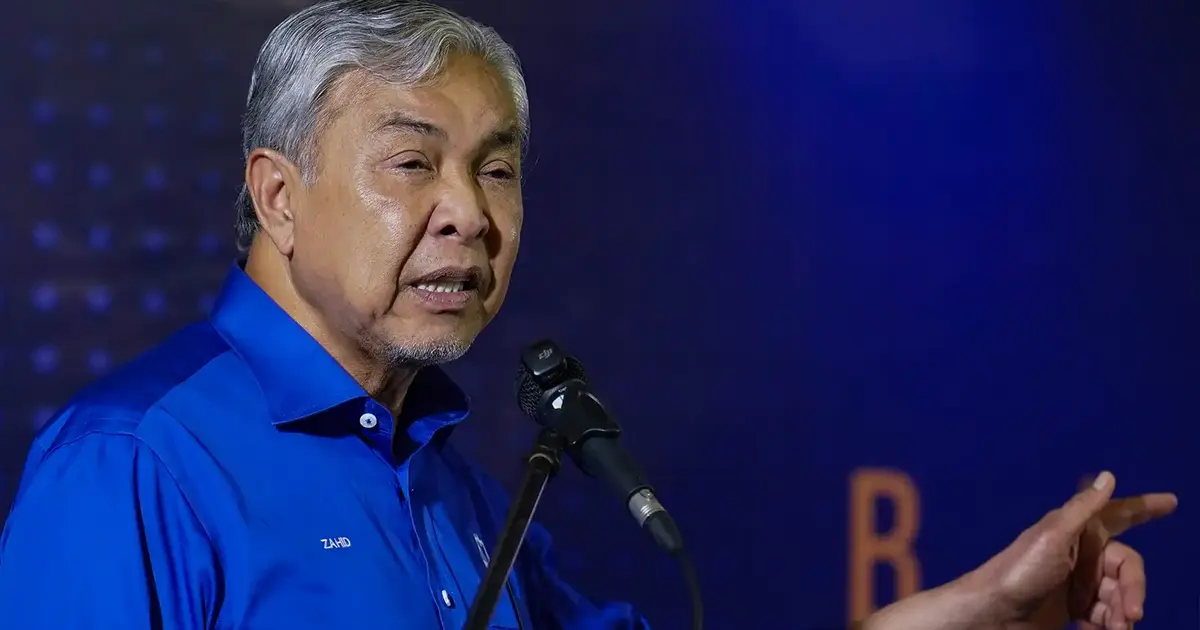
Deputy President of Umno, Puad Zarkashi, has offered fresh insight into the political calculations driving two of Malaysia's largest Malay-Muslim parties, revealing that Deputy Prime Minister Zahid Hamidi holds ambitions for the nation's top office whilst the Pan-Malaysian Islamic Party remains focused on securing a pathway back into the federal government. These separate yet potentially complementary objectives, according to Puad's assessment, create fertile ground for renewed collaboration between Umno and PAS despite the acrimony that fractured their previous partnership.
The political landscape of Malaysia has undergone considerable transformation in recent years, with alliances fragmenting and reforming in response to shifting electoral dynamics and leadership transitions. The historical alliance between Umno and PAS, which once formed the backbone of traditional Malay-Muslim political representation, collapsed amid mutual accusations and strategic divergences. Puad's recent comments suggest that pragmatism—rather than ideological reconciliation or personal animosity resolution—may now serve as the binding agent for rekindled cooperation between these two political heavyweights.
Zahid's documented aspirations toward the premiership represent a significant factor in this realignment calculation. Currently serving as Deputy Prime Minister under the existing administration, Zahid commands substantial support within Umno's grassroots membership and retains considerable influence over party machinery. His trajectory toward the Prime Minister's office would necessarily require either a change in the current government composition or a consolidation of power within his own party structure. Such ambitions cannot be realised in isolation, which explains why securing additional parliamentary allies becomes strategically essential for any serious bid for the premiership.
PAS, meanwhile, finds itself in a markedly different position relative to its peak influence in Malaysian politics. The party's exclusion from federal government participation has constrained its ability to distribute patronage, secure development allocations for constituencies under its control, and maintain its organisational momentum across key Malay-majority states. For a party whose legitimacy relies significantly upon delivering material benefits to supporters and demonstrating governmental competence, this absence from power represents a genuine strategic vulnerability. A return to federal government coalitions would address these pressures directly.
Puad's characterisation of both parties as operating from "short-term goals" reveals a particularly astute political analysis. Rather than requiring ideological alignment or resolution of deeper institutional conflicts, the two parties need only identify overlapping immediate objectives. For Zahid, these objectives centre on accumulating the parliamentary numbers and political capital necessary for a Prime Minister transition. For PAS, the immediate focus remains on regaining access to federal government structures and resources. These goals, while distinct, need not conflict and may in fact be mutually reinforcing through careful negotiation and power-sharing arrangements.
The Malaysian political system, characterised by coalition governments and coalition-building imperatives, frequently rewards parties that remain flexible in their alliance-making approaches. The precedent of previous Umno-PAS collaborations demonstrates that electoral cooperation remains feasible even when previous joint efforts have concluded unsuccessfully. Both parties retain overlapping voter bases, particularly among rural and semi-urban Malay-Muslim constituencies, and both command significant representation in state legislatures across Malaysia. These structural factors create multiple potential mechanisms through which renewed cooperation could be operationalised.
The timing of Puad's statements carries significance within Malaysia's broader political calendar. With electoral cycles and leadership transition timelines creating windows of opportunity and urgency, the articulation of these political calculations suggests that discussions regarding renewed cooperation may already be advancing at behind-the-scenes levels. Politicians typically only make such declarations publicly when preliminary groundwork has already established sufficient feasibility. Puad's comments therefore likely represent signals to both party hierarchies and broader political constituencies that serious alignment discussions are underway.
For Southeast Asian observers and international analysts monitoring Malaysian politics, the potential Umno-PAS realignment carries broader implications for regional stability and governance dynamics. Umno and PAS together command considerable parliamentary representation and remain the dominant political forces among Malaysia's majority Malay-Muslim population. Their cooperation patterns significantly influence government formation, policy priorities, and the distribution of power among Malaysia's major political players. A renewed alignment would reshape the government's composition and potentially alter the trajectory of Malaysian domestic and foreign policy.
The breakdown of previous Umno-PAS alliances had often centred on personal rivalries between leaders, ideological disputes regarding the appropriate role of Islamic law in governance, and competition for control over Malay-Muslim constituencies. Puad's suggestion that pragmatic short-term goal alignment can override these historical obstacles implies either that underlying tensions have sufficiently diminished, or that the electoral and governmental pressures currently facing both parties have grown sufficiently acute to subordinate previous grievances. Either interpretation signals meaningful shifts in Malaysian political dynamics that warrant close examination.
The potential emergence of a reinvigorated Umno-PAS partnership would necessarily reshape Malaysia's opposition politics as well. The concentration of Malay-Muslim political representation within a single governing coalition would constrain the political space available for opposition formations and affect the competitive dynamics between Malaysia's major political blocs. Such reconfiguration could influence not only Malaysian domestic governance but also regional diplomatic and security partnerships that depend upon stable Malaysian government structures.
Moving forward, the trajectory of Umno-PAS relations will depend substantially upon whether concrete negotiations successfully translate Puad's characterisation of shared short-term objectives into enforceable formal agreements. Previous alliance breakdowns occurred despite initial expressions of mutual commitment, suggesting that structural factors and leadership disputes can overwhelm initial cooperation frameworks. Whether this potential realignment avoids such historical pitfalls depends upon the willingness of both party leaderships to subordinate ego and ideology to electoral mathematics during the coming months.

