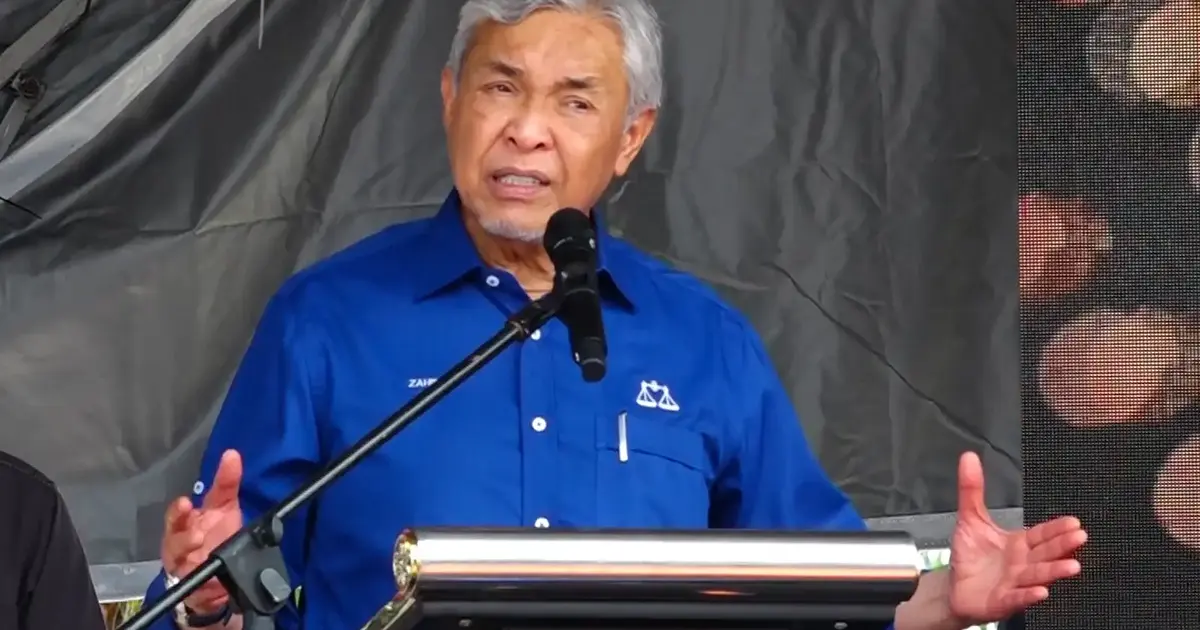
UMNO President Zahid Hamidi has directed the party's election machinery to set aside any commentary from former leader Puad Zarkashi concerning Barisan Nasional candidates preparing for the Johor state elections, signalling an effort to move past internal party tensions as the coalition consolidates its campaign strategy.
Zahid's directive reflects the ongoing friction between competing factions within Malaysia's largest Malay-Muslim party, where differing views on candidate selection and electoral strategy have occasionally surfaced publicly. By instructing party operatives to simply ignore Puad's remarks rather than engage with them, the UMNO president appears intent on preventing such differences from undermining party cohesion during a critical election cycle.
Puad, who previously led UMNO before Zahid assumed the presidency, has maintained a visible presence in political commentary despite stepping back from the party's top position. His continued observations about party matters—particularly regarding candidate nominations and BN's direction in state-level contests—have occasionally drawn attention, prompting leadership intervention to ensure these do not become sources of public division.
The Johor state elections hold particular significance for Barisan Nasional, as the coalition seeks to demonstrate its enduring support in a state that has traditionally served as a political stronghold. Strong performance in Johor would strengthen Zahid's leadership credentials within UMNO and reinforce BN's claim to remain the dominant force in Malaysian politics, particularly following the party's resurgence after internal crises in recent years.
Candidacy decisions in state elections often generate internal party debate, as various wings and regional divisions advocate for their preferred candidates. UMNO's complex power structure, which balances influences from different divisions, wings, and senior figures, means that nomination processes regularly surface competing interests. By actively discouraging public responses to Puad's input, Zahid aims to keep such negotiations within proper channels rather than allowing them to play out through media commentary.
The instruction to election machinery also carries an implicit message: the party's resources, messaging frameworks, and campaign infrastructure should remain focused exclusively on positive outreach to voters rather than becoming entangled in responses to internal critics. This approach reflects a broader strategic understanding that external perceptions of party unity prove crucial during election campaigns, as voters often view internal discord as a sign of weakness or mismanagement.
Puad's position within UMNO remains distinctive and complex. While no longer holding the party presidency, his historical role and established credibility within the party apparatus mean his public statements can carry weight among certain segments of the party base and broader political observers. His involvement in substantive party matters—even from a secondary position—suggests he retains influence in informal party networks, which Zahid's comments implicitly acknowledge.
For Malaysian political watchers, such moments reveal the delicate balance that dominant parties must maintain between accommodating diverse internal voices and presenting unified external messaging. UMNO's structure, with its elaborate hierarchy of positions and traditional emphasis on elder statesman input, creates situations where previous leaders like Puad retain platforms and audiences even after stepping down from the apex position. Managing these relationships without appearing authoritarian remains a perennial challenge.
The Johor elections themselves will test whether such internal management strategies actually translate into electoral success. The state's complex ethnic composition, urban-rural dynamics, and historical voting patterns mean that BN must appeal across multiple constituencies with coherent messaging. Any perception of confusion or internal contradiction regarding candidate quality or BN's vision could undermine the coalition's message to voters already evaluating their options.
Zahid's approach also suggests confidence in his current position and the trajectory of party consolidation under his leadership. Rather than engaging substantively with criticism or attempting to silence critics through formal mechanisms, he opts for a softer tactic of simply directing party machinery to focus elsewhere. This stance implies that Puad's observations, while occasionally noted, do not fundamentally threaten the party's election readiness or Zahid's authority within the organization.
Southeast Asian political observers recognize that such internal party management issues appear across the region's large coalitions and dominant parties, where balancing elder statesmen, emerging leaders, and grassroots interests requires constant navigation. UMNO's experience mirrors broader patterns in how established political organizations maintain operational unity while accommodating multiple voices and interests within their structures.
Looking forward, the effectiveness of Zahid's directive will become evident once the Johor campaign formally commences and voters engage with BN's actual candidate slate and policy platform. The elections will ultimately determine whether internal unity management successfully translated into electoral momentum, or whether underlying tensions required more substantial resolution.

