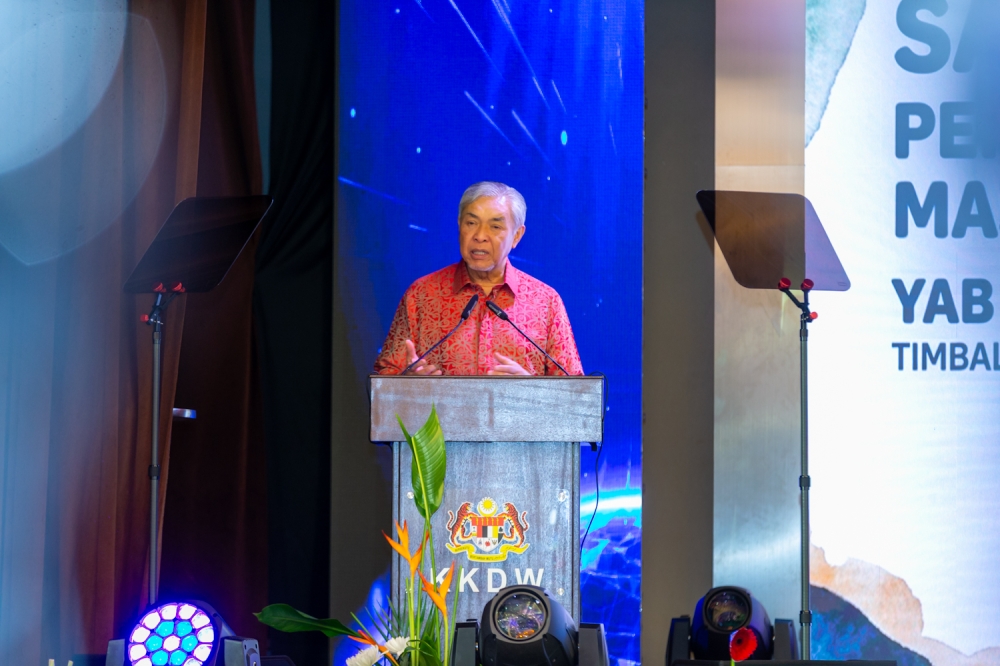
Deputy Prime Minister Datuk Seri Ahmad Zahid Hamidi has moved to extinguish speculation about behind-the-scenes negotiations among Malaysia's major political coalitions, categorically denying that senior leaders from Barisan Nasional, Perikatan Nasional, Gabungan Parti Sarawak, and Gabungan Rakyat Sabah met to discuss any form of merger or realignment. His statement comes as online chatter intensified regarding potential shifts in the country's political architecture, with claims circulating across social media platforms suggesting clandestine talks had occurred among faction heads.
Speaking from Putrajaya on July 21, Zahid stressed that no such gathering took place and characterised the reports as mere gossip without foundation. The Deputy Prime Minister's emphatic denial underscores the sensitivity surrounding coalition stability at a time when Malaysia's government depends on a delicate balance of support from multiple political entities. By directly addressing the rumours rather than allowing them to fester, Zahid sought to restore investor and public confidence in the longevity of the ruling arrangement.
The Deputy Prime Minister used the occasion to reaffirm his unwavering dedication to the unity government model that has underpinned Malaysian governance since its establishment following the previous general election. He characterised this framework not as a temporary expedient but as a mature political arrangement suited to the country's needs, emphasising that all component parties remain committed to the overarching objective of delivering effective administration and addressing citizens' concerns. This positioning reflects an understanding that coalition fragmentation would inevitably undermine legislative capacity and expose the government to opposition challenges.
Zahid's comments are significant given the persistent tensions that simmer beneath the coalition's surface. Perikatan Nasional, in particular, has occasionally signalled dissatisfaction with its junior role in the arrangement, while Sarawak and Sabah-based parties have historically leveraged their strategic importance to secure concessions and resource allocation. The convergence of these factions within a single governing umbrella has required constant management and goodwill, making public reassurances about commitment necessary to prevent speculation from metastasising into actual fractures.
The denial also addresses a broader pattern of political rumour-mongering that has characterised recent Malaysian politics. Following the fractious period that preceded the unity government's formation, observers have remained alert to any signs of regrouping or reconfiguration. Claims about secret meetings, whilst often unsubstantiated, can nonetheless influence market sentiment, affect legislative predictability, and potentially embolden opposition elements seeking to exploit perceived weakness or internal division. Zahid's swift rejection aims to forestall such consequences.
From a regional perspective, Malaysia's political stability carries implications for Southeast Asian governance more broadly. Coalition governments have become increasingly commonplace across the region as voters fragment among multiple party options. The Malaysian experience with unity government mechanics—balancing competing interests whilst maintaining forward momentum on policy—offers instructive lessons for neighbouring democracies navigating similar terrain. Political instability or credible uncertainty about governing coalitions can reverberate beyond national borders, affecting investor confidence in the broader region.
The timing of Zahid's statement also reflects domestic economic considerations. Malaysia faces ongoing challenges including inflation management, employment stabilisation, and fiscal consolidation. These priorities require sustained governmental focus and coherent policy implementation. Perception of coalition instability or imminent realignment could distract from such essential work, create uncertainty that deters investment, and potentially trigger market volatility. Zahid's reassurance therefore serves both political and economic purposes, signalling to domestic and international stakeholders that the government remains anchored and functional.
Within Umno, Zahid's position as Deputy Prime Minister carries particular weight given the party's leading role within Barisan Nasional. His statements effectively represent institutional commitment to the current arrangement, signalling that Malaysia's largest Malay-Muslim party views the unity government not as a stepping stone to alternative configurations but as a durable structure deserving sustained investment. This carries implications for internal party dynamics and succession politics, as ambitious figures must calibrate their positioning accordingly.
The viral nature of the claims—spreading through social media channels—illustrates how political narratives now circulate and gain traction in the digital age. Zahid's response reflects an understanding that allowing such narratives to propagate unchallenged risks creating a reality of its own through media repetition and public perception. By intervening directly and forcefully, the Deputy Prime Minister sought to reset the narrative frame and establish the factual record, at least from the government's perspective.
Looking ahead, maintaining coalition cohesion will require ongoing diplomatic effort and strategic resource distribution among component parties. Each faction brings distinct constituencies and concerns to the table, necessitating inclusive policymaking that demonstrates tangible benefits to members' supporters. The stability of Malaysia's government ultimately depends not on occasional denials of merger speculation but on the continued perception that coalition participation offers superior outcomes to alternative political configurations, both for party leadership and their grassroots constituents.
Zahid's remarks should therefore be understood as part of broader coalition maintenance efforts rather than a definitive end to speculation about Malaysian political reorganisation. The underlying dynamics that occasionally fuel merger talk—competing ambitions, resource scarcity, and strategic realignment calculations—will persist. What matters is that the government apparatus continues functioning effectively, legislative programmes advance, and the coalition's utility remains apparent to all participants. On these measures, the unity government model continues to demonstrate viability despite periodic challenges.

