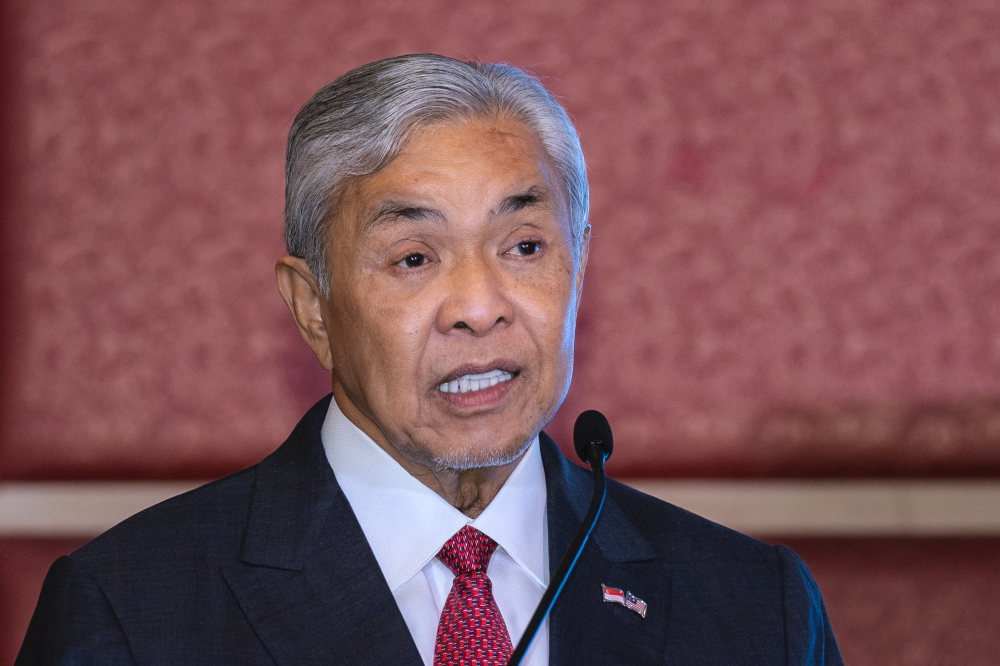
Umno president Datuk Seri Dr Ahmad Zahid Hamidi has firmly rejected suggestions that his party entered into a binding agreement with PAS ahead of the Negeri Sembilan state election, adding that the coalition's political foundations remain fluid and subject to change. Speaking in Kuala Lumpur on July 13, Zahid emphasised that no formal understanding exists between Umno and the Islamic party concerning seat distribution or governance arrangements in the state, positioning himself as a pragmatic leader willing to adapt to shifting political realities.
The denial arrives amid mounting speculation about the nature and scope of cooperation between Malaysia's two largest Malay-Muslim parties as they prepare for what many analysts expect to be a closely contested election in Negeri Sembilan. PAS and Umno have been central to the Perikatan Nasional coalition at federal level, yet their relationship remains characterised by underlying tensions over policy direction, religious governance, and control of key constituencies. Zahid's comments suggest that despite their partnership at the national stage, the two parties maintain divergent strategic interests at the state level.
Zahid's warning that "goalposts can change anytime" reveals the precarious nature of coalition politics in contemporary Malaysia, where electoral outcomes frequently trigger rapid realignments and power-sharing negotiations. His language reflects the reality that political agreements, even between ostensible allies, operate within a context of mutual benefit rather than ideological cohesion. For Negeri Sembilan specifically, this suggests that pre-election configurations may bear little resemblance to post-election power arrangements, particularly if either party achieves stronger-than-expected results.
The Negeri Sembilan state election carries disproportionate significance for both Umno and PAS as a test of their respective electoral machinery and grassroots appeal among Malay-Muslim voters. The state has historically been an Umno stronghold, though demographic shifts and the rise of PAS in recent years have complicated what was once considered a safe Umno territory. A competitive outcome could embolden PAS to demand greater influence in state governance, potentially at Umno's expense, while a decisive Umno victory would reinforce the party's claim to primacy within the Perikatan Nasional framework.
Zahid's explicit denial of formal arrangements serves multiple strategic purposes. First, it preserves Umno's autonomy to negotiate independently with other potential partners, including Pakatan Harapan components if post-election mathematics prove advantageous. Second, it deflates expectations among PAS supporters that their party has secured guaranteed positions or concessions, thereby limiting internal pressure on PAS leadership. Third, it signals to Negeri Sembilan voters that Umno retains flexibility to chart its own course unconstrained by rigid pre-poll agreements, potentially attracting moderate or non-partisan voters who distrust formal coalitions.
The broader context involves Umno's attempt to rehabilitate its image following years of political turbulence, corruption scandals, and electoral losses. By emphasising its independence and refusal to be bound by predetermined pacts, Umno seeks to present itself as a pragmatic governing party responsive to local conditions rather than a captive of coalition mathematics or ideological commitments. This positioning requires maintaining ambiguity about alliance terms while simultaneously preserving relationships with PAS that remain strategically valuable at federal and other state levels.
For PAS, Zahid's comments may complicate party messaging, as the Islamic movement has been expanding its electoral footprint across multiple states and wishes to avoid appearing subservient to Umno. However, PAS leadership has developed considerable sophistication in navigating coalition politics, often extracting maximum advantage through last-minute negotiations rather than transparent pre-election agreements. The party's silence on Zahid's denial, should it occur, could indicate acceptance of this transactional approach or frustration with Umno's attempts to maintain strategic flexibility.
The situation reflects broader patterns in Malaysian politics where coalition agreements frequently dissolve or transform based on electoral results and shifting incentive structures. The 2018 general election and subsequent state elections demonstrated repeatedly that pre-poll arrangements prove fragile when actual voting produces unexpected outcomes. Political leaders like Zahid have learned that excessive transparency about alliance terms invites scrutiny, criticism, and potentially limits negotiating room after elections conclude.
For Malaysian voters and observers attempting to predict Negeri Sembilan's political trajectory, Zahid's remarks counsel caution regarding any publicly announced coalition agreements. The fluid nature of post-election negotiations means that state governments frequently emerge from complex behind-the-scenes bargaining involving multiple parties, defectors, and independent candidates. Understanding electoral mathematics becomes as important as analysing campaign messaging, as final power configurations often diverge substantially from pre-election configurations.
Looking forward, the Negeri Sembilan election will provide valuable data about relative Umno and PAS strength in a state neither party can afford to lose. Both organisations have invested significant resources in candidate selection and ground organisation. Zahid's insistence on flexibility may embolden PAS to campaign aggressively, potentially fracturing the Perikatan coalition in ways that benefit opposition parties. Alternatively, last-minute coordination might occur despite the absence of formal pacts, suggesting that Malaysian coalition politics operates through informal understandings rather than transparent arrangements.
The episode also illustrates the challenge facing Malaysian political parties in balancing coalition discipline with electoral competition. When allies become competitors at state level, leadership must manage expectations and maintain party morale while negotiating with partners who possess overlapping constituencies and complementary organisational capabilities. Zahid's approach of denying formal agreements while preserving negotiating flexibility appears designed to address this tension, though whether it succeeds depends partly on election outcomes and partly on how skillfully PAS responds to what it may perceive as Umno attempts to monopolise state power.

