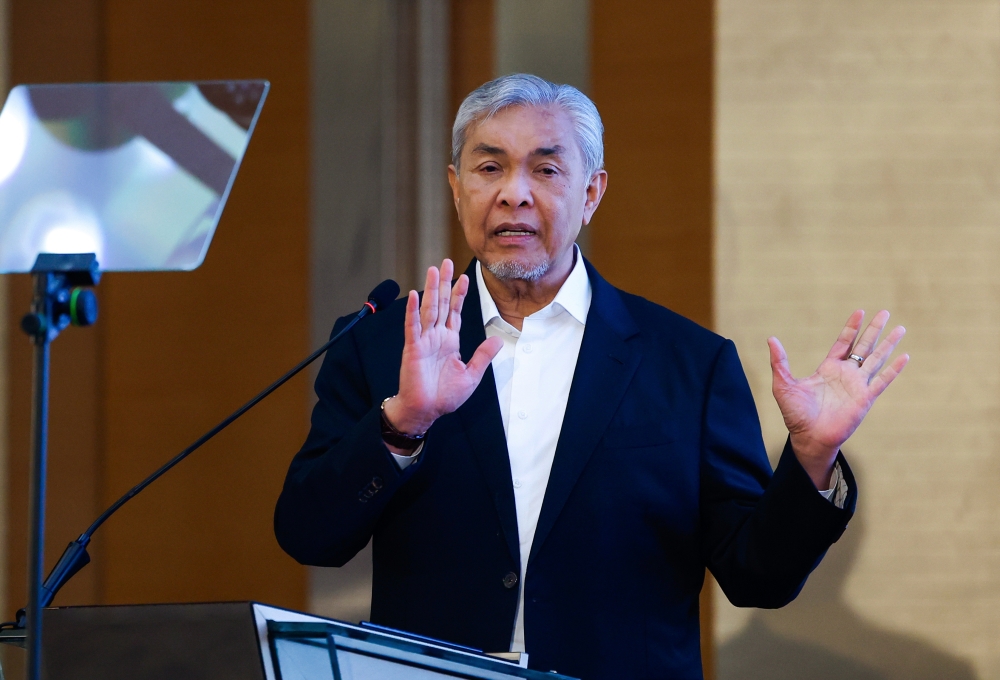
Deputy Prime Minister Ahmad Zahid Hamidi has proposed widening the scope of the Royal Commission of Inquiry (RCI) into Tabung Haji to encompass not merely the period when financial irregularities occurred, but also the subsequent recovery phase. Speaking in Seremban on July 30, Zahid suggested that the Cabinet should broaden the inquiry's mandate to provide a more comprehensive assessment of how the pilgrimage fund has managed its crisis and reconstruction efforts.
The Tabung Haji scandal has cast a shadow over Malaysia's premier pilgrimage savings scheme, which manages the financial planning of hundreds of thousands of Muslims preparing for the Hajj. The inquiry, when constituted, would normally focus on how the fund's investments deteriorated and what institutional failures allowed losses to accumulate. However, Zahid's intervention signals that government leadership wants the RCI to extend beyond accountability for past wrongdoing into an examination of present remedial measures.
The rationale behind this expanded scope appears twofold. First, it acknowledges that understanding the full trajectory of institutional recovery is as crucial as understanding what went wrong. Second, it positions the government as concerned not merely with blame assignment but with demonstrating effective crisis management and restoration of confidence in a pivotal national institution. For Malaysian pilgrims and their families who have contributed to Tabung Haji for years, such scrutiny of recovery mechanisms directly affects whether their accumulated savings remain secure.
Tabung Haji's financial troubles emerged from complex investment strategies that went awry, resulting in significant losses that eroded the fund's capital reserves. The scale of these losses and the questions around governance oversight prompted calls from various quarters for a formal inquiry. By proposing an RCI—the highest investigative mechanism available short of a parliamentary inquiry—the government underscores the seriousness with which it treats the matter.
Zahid's proposal to include the recovery period reflects a pragmatic approach to institutional reform. Rather than using the RCI purely as a reckoning mechanism, broadening it to examine recovery measures allows the inquiry to serve a forward-looking function. This approach can identify whether management restructuring, internal controls, investment policy changes, and governance enhancements have been adequate. It also provides an opportunity to assess whether lessons learned from the crisis have been properly institutionalised.
The Hajj savings scheme occupies a unique position in Malaysian public life. Unlike conventional financial institutions, Tabung Haji carries cultural and religious significance for Muslim Malaysians. Its stability is intertwined with the spiritual aspirations of millions who view it as a dedicated, trustworthy vehicle for fulfilling one of Islam's five pillars. Any crisis affecting the fund therefore registers not merely as a financial concern but as a breach of public trust in an institution expected to uphold Islamic principles of sound stewardship.
From a regional perspective, the Tabung Haji RCI has implications beyond Malaysia's borders. Other Southeast Asian nations with significant Muslim populations, including Indonesia and Thailand, operate similar pilgrimage savings schemes. How Malaysia addresses Tabung Haji's crisis—and whether its recovery becomes a model of institutional resilience—influences confidence in comparable mechanisms across the region. A thorough, publicly transparent RCI that examines both failures and remedies can demonstrate responsible governance to Muslim communities throughout Southeast Asia.
The Cabinet's consideration of Zahid's proposal suggests internal recognition that the pilgrimage fund requires comprehensive institutional overhaul, not merely investigative conclusions. By extending the RCI's purview to recovery efforts, the government signals that it will hold both past leadership and current management accountable. This dual focus also creates institutional pressure for ongoing transparency and performance monitoring beyond the formal inquiry period.
Tabung Haji contributors, numbering in the hundreds of thousands, represent a demographic cross-section of Malaysian Muslims—from professionals to informal sector workers, urban and rural populations alike. The fund's recovery therefore carries socioeconomic implications. A thorough RCI examining recovery mechanisms provides assurance to this constituency that their savings are protected through strengthened governance, not merely that wrongdoers will face consequences.
The proposal also reflects broader Cabinet discussions about institutional accountability in Malaysia. As government and parliamentary mechanisms scrutinise multiple agencies—from sovereign wealth funds to development authorities—establishing comprehensive inquiry frameworks that examine both dysfunction and repair sets procedural precedent. The Tabung Haji RCI, should it proceed along the lines Zahid proposed, could become a template for investigating major institutional crises while simultaneously assessing management's capacity to restore confidence and functionality.
Moving forward, the RCI's actual scope will depend on Cabinet approval and terms of reference formally established. However, Zahid's advocacy for including recovery-phase examination suggests that Malaysia's political leadership is approaching the Tabung Haji crisis not as a discrete scandal requiring punishment, but as an institutional challenge requiring comprehensive diagnosis and demonstrated reform. For the pilgrimage fund's future and the trust of its millions of contributors, such forward-looking inquiry framing may ultimately prove more consequential than assigning individual culpability alone.

