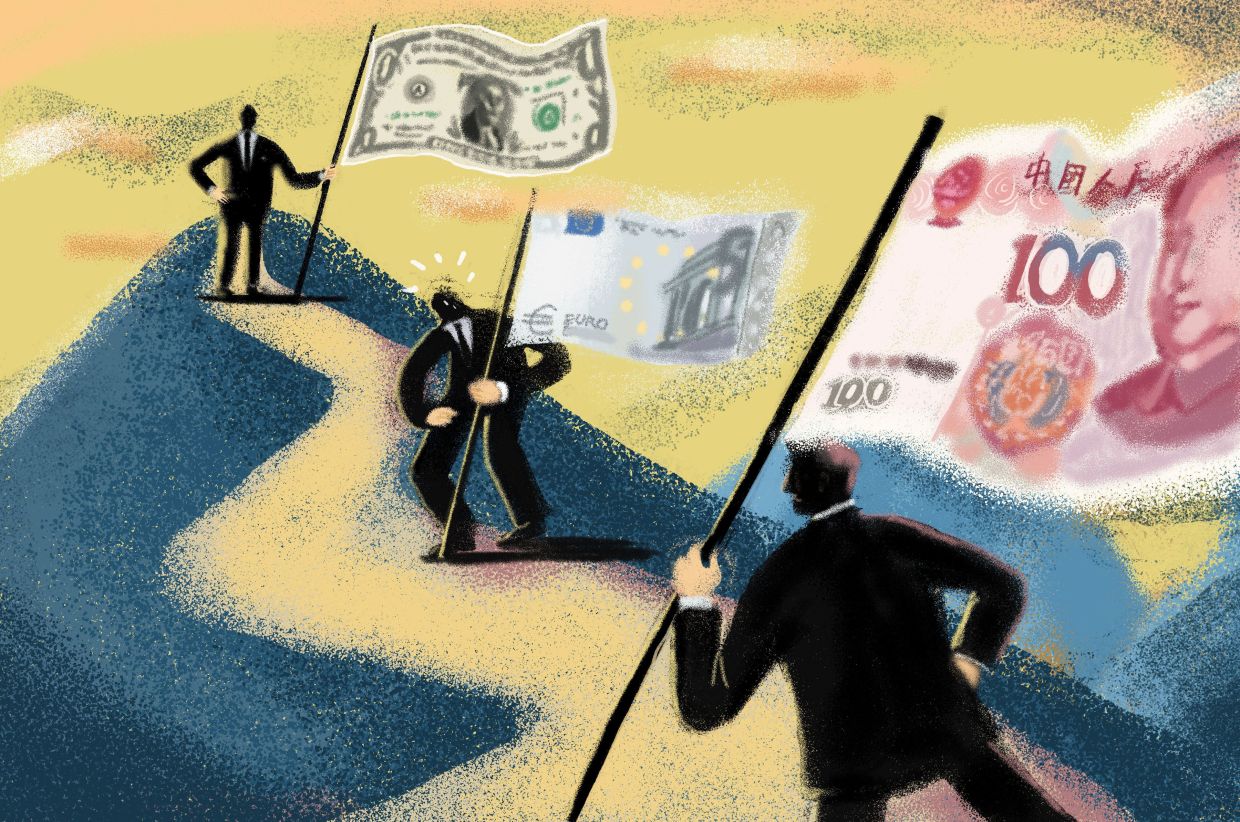
China's cross-border payment system recorded a landmark transaction volume of 1.22 trillion yuan (US$180.3 billion) on April 2, coinciding with geopolitical tensions and accelerating moves away from dollar dependency. This surge reflected growing momentum among oil-producing countries to settle transactions using the yuan instead of traditional reserve currencies.
Despite the dollar's continued dominance in international settlements, observers point to a more achievable near-term goal: lifting the yuan past the euro into the second-place position. Central bank governor Pan Gongsheng noted in June 2025 that the yuan ranks as the third-largest payment currency globally on a comprehensive basis and has already become the world's second-largest trade finance currency. Some analysts suggest this milestone may be approaching or already within reach.
However, conventional metrics tell a different story. Swift data showed the yuan's share of global payments dropped to sixth place in April at 2.85 per cent, below the US dollar, euro, British pound, Japanese yen and Canadian dollar. The currency had held fourth place through much of 2024 with over 4 per cent of transactions. Yet specialists argue that headline Swift figures mask a significant shift occurring outside traditional banking channels.
Countries facing sanctions or seeking financial independence increasingly view yuan settlement as protection against vulnerability. Russia and China now settle almost all bilateral trade in local currencies, with the yuan predominating—flows often bypass Swift entirely through regional Chinese banks using direct settlement systems. The trend extends beyond Russia to include parts of the Middle East, Central Asia, Southeast Asia and developing economies seeking diversification.
Yuan-denominated energy trade represents particularly symbolic progress, as oil settlement has historically anchored dollar supremacy. A striking figure circulating in Chinese research circles indicates that yuan settlements represented 41 per cent of Middle Eastern crude oil trade with China in March, placing the yuan second among settlement currencies for the first time. This parallel ecosystem signals structural shifts even as petrodollar dominance persists.
The mechanics enabling yuan expansion have strengthened considerably. The Cross-Border Interbank Payment System (CIPS) now includes 194 direct participants and 1,597 indirect participants spanning 191 countries and regions, with the number of direct participants more than tripling since 2020. Relaxed regulations permitting overseas institutions to use offshore custodians for clearing have lowered barriers to participation, supporting continued expansion particularly in Southeast Asia and Latin America where tight trade ties with China drive natural demand for yuan invoicing.
%22%2F%3E%3C%2Fpattern%3E%3C%2Fdefs%3E%3Crect%20width%3D%22100%25%22%20height%3D%22100%25%22%20fill%3D%22url(%23phet3tg)%22%2F%3E%3Crect%20width%3D%22100%25%22%20height%3D%22100%25%22%20fill%3D%22url(%23phet3tp)%22%2F%3E%3Ctext%20x%3D%2250%25%22%20y%3D%2250%25%22%20text-anchor%3D%22middle%22%20dominant-baseline%3D%22central%22%20fill%3D%22rgba(255%2C255%2C255%2C0.95)%22%20font-family%3D%22Georgia%2C%20'Times%20New%20Roman'%2C%20serif%22%20font-weight%3D%22700%22%20font-size%3D%22272%22%20letter-spacing%3D%22-0.02em%22%3EAnwar%3C%2Ftext%3E%3C%2Fsvg%3E)
%22%2F%3E%3C%2Fpattern%3E%3C%2Fdefs%3E%3Crect%20width%3D%22100%25%22%20height%3D%22100%25%22%20fill%3D%22url(%23ph4mm76g)%22%2F%3E%3Crect%20width%3D%22100%25%22%20height%3D%22100%25%22%20fill%3D%22url(%23ph4mm76p)%22%2F%3E%3Ctext%20x%3D%2250%25%22%20y%3D%2250%25%22%20text-anchor%3D%22middle%22%20dominant-baseline%3D%22central%22%20fill%3D%22rgba(255%2C255%2C255%2C0.95)%22%20font-family%3D%22Georgia%2C%20'Times%20New%20Roman'%2C%20serif%22%20font-weight%3D%22700%22%20font-size%3D%22272%22%20letter-spacing%3D%22-0.02em%22%3EAnwar%3C%2Ftext%3E%3C%2Fsvg%3E)
%22%2F%3E%3C%2Fpattern%3E%3C%2Fdefs%3E%3Crect%20width%3D%22100%25%22%20height%3D%22100%25%22%20fill%3D%22url(%23ph27uh0g)%22%2F%3E%3Crect%20width%3D%22100%25%22%20height%3D%22100%25%22%20fill%3D%22url(%23ph27uh0p)%22%2F%3E%3Ctext%20x%3D%2250%25%22%20y%3D%2250%25%22%20text-anchor%3D%22middle%22%20dominant-baseline%3D%22central%22%20fill%3D%22rgba(255%2C255%2C255%2C0.95)%22%20font-family%3D%22Georgia%2C%20'Times%20New%20Roman'%2C%20serif%22%20font-weight%3D%22700%22%20font-size%3D%22170%22%20letter-spacing%3D%22-0.02em%22%3EMalaysia%3C%2Ftext%3E%3C%2Fsvg%3E)