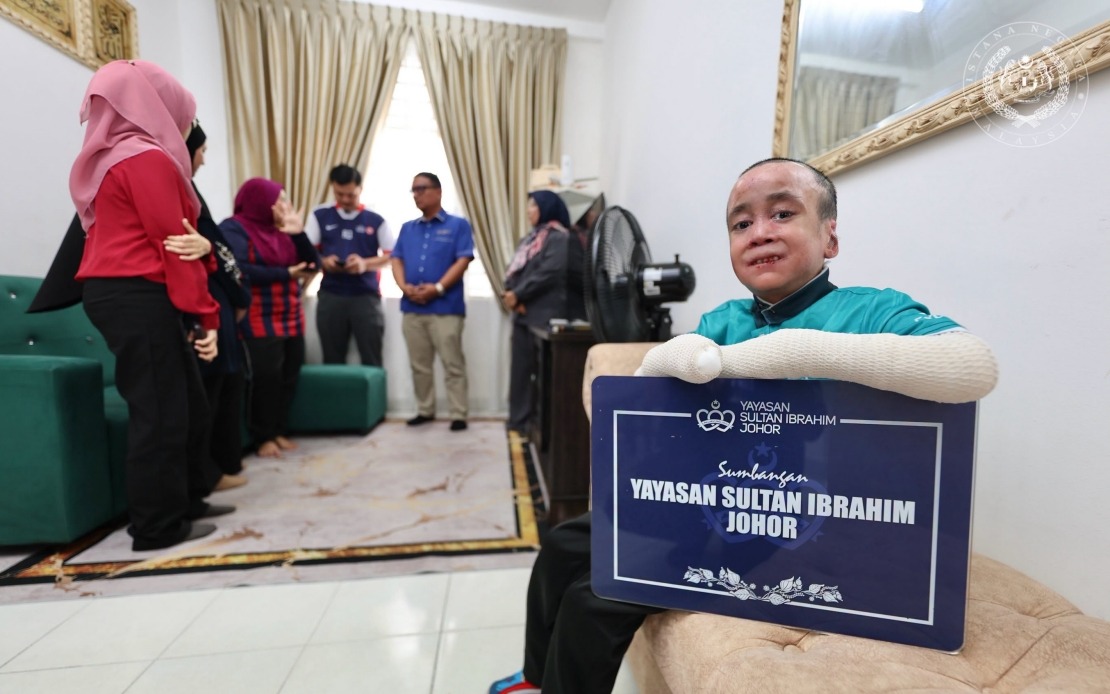
The Yayasan Sultan Ibrahim Johor (YSIJ) has stepped in to support a teenager grappling with one of the rarest and most debilitating genetic skin disorders. Muhammad Hazreel Mikhail Hizar, 15, has lived with epidermolysis bullosa (EB) since birth, a condition that causes severe blistering and skin fragility at even the slightest touch or friction. The foundation delivered the assistance through its Ziarah Kasih programme during a visit to Hazreel's home at the Sungai Tiram People's Housing Project in Johor Bahru on August 18, addressing both the medical and financial pressures that have mounted over the teenager's lifetime.
Epidermolysis bullosa is an extraordinarily challenging condition that demands unrelenting attention and carefully controlled environmental conditions. Hazreel requires constant wound management, with regular cleaning necessary to stave off potentially life-threatening infections that can exploit the damaged skin barrier. Beyond clinical care, his living environment must remain continuously cool and air-conditioned, as heat and humidity trigger severe flare-ups and additional blistering. These requirements translate into substantial utility costs and ongoing medical expenses that stretch far beyond what a typical household might encounter.
The financial burden falls heavily on Noor Halimaton Hashim, Hazreel's single mother, who carries the dual responsibility of breadwinner and full-time caregiver. She supports three children on an income constrained by the inability to pursue full-time employment, given that Hazreel's condition demands her constant presence and vigilance. The need to maintain a cool environment, frequent medical appointments, specialised wound dressing materials, and the inability to leave her son unattended has created a precarious economic situation for the family. Many families in similar circumstances across Southeast Asia face comparable struggles, with the rare disease burden often going unrecognised by public support systems.
Through its intervention, YSIJ has acknowledged both the medical reality and the social dimension of rare disease management. The foundation's Ziarah Kasih programme represents a targeted approach to alleviating hardship among vulnerable communities, extending beyond token gestures to provide material relief where government safety nets often fall short. In Malaysia, where epidermolysis bullosa remains largely unknown to the general public and healthcare systems struggle to accommodate its complex needs, such philanthropic support becomes critical lifeline.
Noor Halimaton expressed profound gratitude for the assistance, noting that the timing proved crucial for her family's immediate needs. Her statement, conveyed through the Royal Press Office, underscored how such interventions provide not merely financial relief but also validation and recognition of the family's struggle. For parents and caregivers of children with rare genetic conditions, the psychological impact of institutional recognition can be as significant as the monetary support itself.
The case of Hazreel exemplifies broader challenges within Malaysia's healthcare and social welfare frameworks regarding rare and chronic conditions. Epidermolysis bullosa, affecting an estimated one in 50,000 births globally, requires specialized dermatological expertise and multidisciplinary support that most public healthcare facilities lack. Patients often navigate a fragmented system, accessing care through trial and error while bearing substantial out-of-pocket costs. The absence of comprehensive rare disease registries means many cases remain unrecognised and unsupported by formal programmes.
For families in similar circumstances throughout the region, the YSIJ initiative highlights the gaps in formal safety nets and the continued reliance on charitable interventions. While commendable, philanthropic support cannot substitute for systemic policy changes and institutional capacity building. Southeast Asian governments increasingly recognise rare disease management as a public health imperative, yet implementation remains inconsistent across jurisdictions. Malaysia's experience with epidermolysis bullosa provides a microcosm of these broader challenges.
The involvement of the royal institution through YSIJ also signals the importance placed on vulnerable populations within Johor's governance structure. Such high-profile support can catalyse broader awareness and potentially influence policy discussions around rare disease support mechanisms. When institutional backing reaches families like Hazreel's, it often encourages other affected individuals to seek support and may prompt civil society organisations to develop specialised programmes addressing these overlooked conditions.
Looking forward, cases such as Hazreel's underscore the necessity for integrated approaches combining immediate financial relief with long-term systemic solutions. Establishing rare disease centres of excellence, creating patient registries, training specialists in epidermolysis bullosa management, and developing sustainable welfare frameworks would address root causes rather than merely treating symptoms. For a teenager with EB in Johor Bahru, the immediate assistance provides relief, but the broader challenge of ensuring dignified, comprehensive care for all Malaysians with rare conditions remains unmet.

