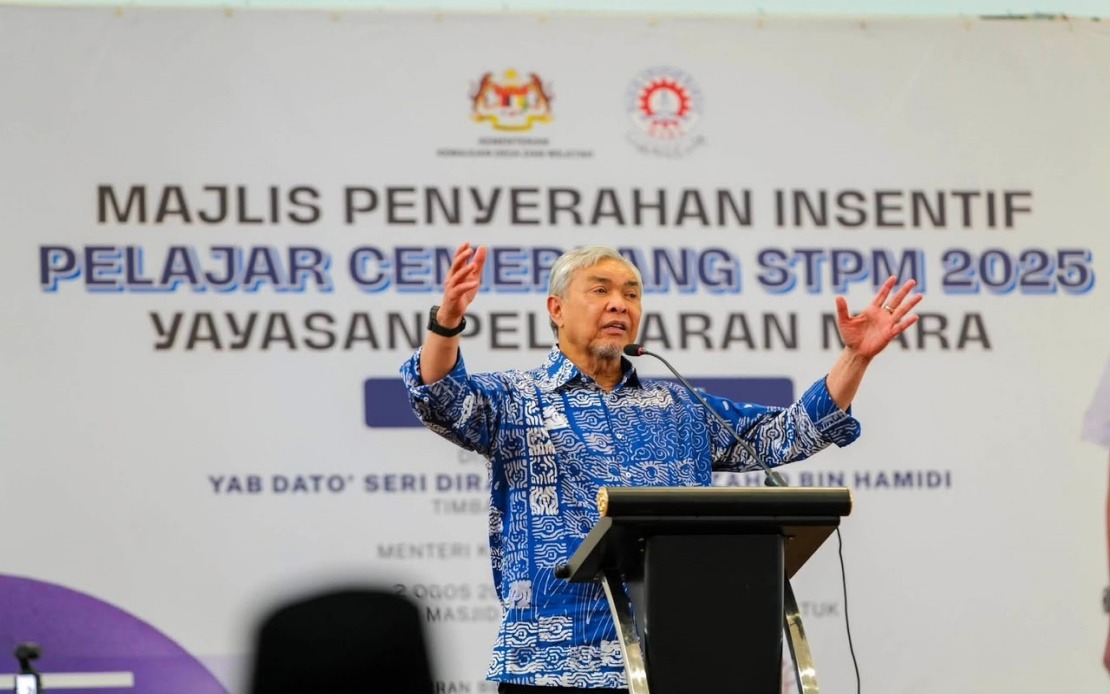
Thirty-eight exceptional students from two secondary schools in Bagan Datuk have been honoured with the 2025 Sijil Tinggi Pelajaran Malaysia (STPM) Excellence Incentive from Yayasan Pelajaran MARA (YPM), cementing the constituency's reputation as a breeding ground for academic talent. The recognition was announced by Deputy Prime Minister Datuk Seri Dr Ahmad Zahid Hamidi, who highlighted the achievements as a testament to the potential of young people in the district when afforded proper educational support and guidance.
The two institutions recognised for producing these top achievers are Sekolah Menengah Kebangsaan Khir Johari and Sekolah Menengah Kebangsaan Tun Abdul Razak, both of which have long been pillars of secondary education in the Perak constituency. The STPM Excellence Incentive programme, administered by YPM, represents a crucial mechanism for identifying and rewarding students who have demonstrated exceptional academic rigour and mastery of their chosen subjects at the pre-university level. This award carries particular significance in Malaysia's education ecosystem, as STPM performance often determines the quality of university placements and scholarship opportunities available to students.
Beyond the STPM excellence awards, the Bagan Datuk Member of Parliament underscored that three local youths have successfully secured admission to Al-Azhar University to pursue studies in Islamic Syariah and Usuluddin. This development is particularly noteworthy for a Malaysian constituency, as Al-Azhar remains one of the most prestigious Islamic academic institutions globally, and places there are highly competitive. The opportunity for Bagan Datuk students to undertake specialised Islamic studies at such an internationally recognised centre reflects both individual achievement and the growing internationalisation of educational pathways for Malaysian youth.
The support extended by YPM has also reached a broader cohort of students in the district. According to Datuk Seri Dr Ahmad Zahid Hamidi, twenty-three students from the area have been granted the YPM Education Compassionate Fund, a financial assistance programme designed to support underprivileged but academically capable students. This multi-tiered approach to educational support demonstrates how structured intervention by organisations like YPM can create a comprehensive ecosystem that nurtures talent across different socioeconomic backgrounds. For many Malaysian families, such grants can be transformative, removing financial barriers that might otherwise prevent promising students from completing their secondary education or pursuing tertiary studies.
The Deputy Prime Minister's remarks reflect a broader national strategy that positions education as the cornerstone of social mobility and community development. By emphasising that success comes when young people are given the right opportunities, guidance, and support, Datuk Seri Dr Ahmad Zahid Hamidi articulated a philosophy that resonates across Malaysia's education policy landscape. This framing acknowledges that academic excellence is not solely a product of individual merit but rather emerges from the intersection of talent, institutional support, family encouragement, and access to quality pedagogical resources. For constituencies like Bagan Datuk, such recognition helps elevate the profile of local schools and creates aspirational narratives that motivate younger cohorts of students.
The emphasis on parental involvement in educational success underscores a crucial insight often overlooked in discussions of academic achievement. The Deputy Prime Minister's appeal to parents to serve as sources of encouragement and strength for their children recognises that school-based learning exists within a broader ecosystem of family and community support. In the Malaysian context, where many families are navigating economic pressures and competing demands on their time, this call for sustained parental engagement carries practical weight. Sustained academic success in constituencies like Bagan Datuk depends not only on excellent teachers and facilities but also on family structures that prioritise and facilitate learning.
The prospect articulated by Datuk Seri Dr Ahmad Zahid Hamidi regarding students returning to contribute to Bagan Datuk's development reflects a longstanding concern in Malaysian policy circles about brain drain and regional inequality. Many high-achieving students from smaller constituencies or less economically developed districts have historically pursued opportunities in Kuala Lumpur or abroad, with limited subsequent engagement in their home regions. By explicitly expressing hope that Bagan Datuk's brightest students will return and channel their expertise toward local development, the Deputy Prime Minister signalled awareness of this challenge and suggested that fostering return migration of talented individuals should be a development priority.
The geographic concentration of these achievements in Bagan Datuk raises questions about educational equity within Perak and across Malaysia more broadly. While the success stories from Sekolah Menengah Kebangsaan Khir Johari and Sekolah Menengah Kebangsaan Tun Abdul Razak are genuinely commendable, they also prompt inquiry into whether similar levels of support and recognition are being extended to student communities in other constituencies. The distribution of YPM awards and scholarships across different regions can serve as an informal indicator of educational inequality, suggesting where interventions and additional resources might be needed to level the playing field for students in less privileged areas.
The 2025 STPM results represent a particular moment in Malaysia's educational calendar, as the pre-university examination remains a significant determinant of university trajectories and career prospects. For students who excel at this level, the pathway to top-tier local universities and international scholarships typically opens significantly. The recognition of 38 students for STPM excellence thus carries implications that extend well beyond the immediate accolade, potentially shaping the educational and professional trajectories of dozens of young Malaysians over the coming decades. As these students progress to university and beyond, their achievements will contribute to the formation of Malaysia's next generation of professionals, academics, and leaders.
The YPM's role in identifying and incentivising excellence through targeted scholarship and grant programmes reflects a deliberate investment in human capital development. As Malaysia continues to navigate economic challenges and competitive regional dynamics, the cultivation of high-performing students through organisations like YPM becomes increasingly vital to national competitiveness. By recognising not only those achieving STPM excellence but also supporting students facing financial hardship, YPM's multifaceted approach addresses both talent development and equity concerns, principles that should ideally guide educational policy across all Malaysian constituencies. The celebration of Bagan Datuk's academic achievements thus serves as a reminder of both the potential within Malaysia's education system and the ongoing work required to ensure that such potential is nurtured uniformly across the country.

