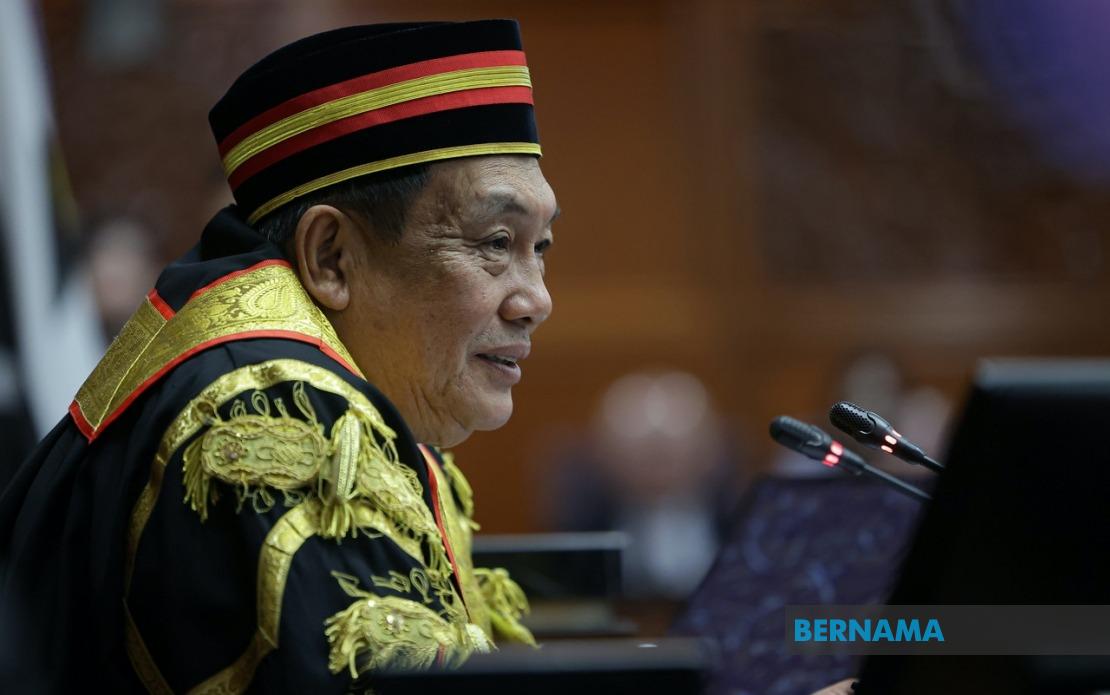
Senate President Datuk Awang Bemee Awang Ali Basah has positioned Malaysia's Youth Parliament as far more than a ceremonial exercise—characterising it instead as an essential institutional framework for cultivating the next generation of informed, responsible democratic citizens. Speaking at Universiti Malaysia Terengganu this week during Parliament Malaysia's roadshow, he articulated a vision of youth engagement that goes beyond symbolic participation to encompass genuine leadership development rooted in democratic values.
The Senate President's framing of Youth Parliament as a "school of democracy" reflects a deliberate pedagogical approach to governance. By offering young people direct exposure to the mechanics of parliamentary debate, decision-making, and legislative process, the initiative creates what Awang Bemee describes as transformative learning experiences. These encounters with democratic practice—from articulating positions and engaging in substantive debate to accepting criticism and respecting collective decisions—forge the foundational habits of mind essential for effective democratic citizenship. Crucially, he emphasized that each stance adopted carries corresponding responsibility, a principle that distinguishes genuine leadership development from mere political theatre.
Awang Bemee articulated a sophisticated understanding of leadership that challenges conventional framings emphasizing authority and command. In his conception, true leadership encompasses listening with equal weight to speaking, problem-solving as fundamentally as directive-giving, and viewing public office as stewardship rather than privilege. This characterization carries particular significance in the Malaysian context, where youth engagement in formal political institutions remains relatively limited and where perceptions of youth as either idealistic but impractical or disconnected from governance persist across generations.
The three-pillar framework presented by the Senate President—openness and inclusive democracy, quality contextual education, and responsible freedom—provides a coherent architecture for youth empowerment. The first pillar acknowledges Malaysia's plural society, positioning racial, religious and cultural diversity not as a challenge to democratic participation but as a strategic asset requiring active cultivation through transparent institutions and deliberate efforts to value minority perspectives. In a region where communal tensions occasionally surface, this framing offers a constructive path toward leveraging demographic diversity as a democratic strengthening mechanism rather than a governance constraint.
The second pillar extends educational discourse beyond conventional credentialism toward competencies increasingly recognized as essential for contemporary citizenship. Critical thinking, digital literacy, artificial intelligence comprehension, entrepreneurial mindset, and effective communication represent the cognitive and practical toolkit required for meaningful engagement with both governance and the emerging economy. Awang Bemee's specific mention of the Blue Economy—encompassing marine resource management, renewable energy, tourism and maritime transport—signals Parliament's recognition that youth must envision their civic roles within evolving economic contexts. This integration of economic literacy with democratic participation addresses a genuine gap in conventional civics education.
Particularly notable is the Senate President's insistence that technological capability must be yoked to ethical frameworks and personal responsibility. His prescription—verify before sharing, scrutinize before believing, understand before judging, consider consequences before acting—articulates a practical ethics for digital citizenship directly responsive to contemporary challenges including misinformation, disinformation, and the erosion of deliberative standards on social media platforms. For Malaysian young people navigating increasingly complex information environments, this explicit guidance provides tangible principles for responsible engagement.
The third pillar addressing freedom with responsibility directly confronts the tension between liberty and obligation that animate contemporary democratic societies. Awang Bemee's unambiguous statement that free speech does not license falsehood or defamation signals Parliament's intention to cultivate citizens who understand freedom not as absence of constraint but as disciplined exercise of rights within communal frameworks. This nuanced framing becomes especially pertinent as younger Malaysians navigate expanding digital spaces where speech norms remain contested and where consequences for uncivil discourse remain ambiguous.
The roadshow itself, bracketing university visits and direct engagement between Parliament's institutional leadership and students, represents a structural effort to narrow the perceived distance between legislatures and youth constituencies. The featured forum titled "Malaysian Youth: Drivers or Spectators?"—with its deliberately provocative binary—essentially poses a choice about the trajectory of youth engagement in national life. By positioning Parliament Malaysia's chief administrator in direct dialogue with students, the initiative implicitly validates youth perspectives as worthy of institutional leadership attention rather than as objects of paternalistic instruction.
Awang Bemee's confidence that Malaysian youth can become "bridge-builders" uniting communities and leading the nation toward positive futures projects an optimistic yet conditional vision. The conditionality inheres in the requirements he outlines: that young people develop critical capacities, internalize responsibility, respect democratic procedures even when dissenting from outcomes, and recognize that technological capability requires ethical restraint. This vision implicitly critiques both cynicism about youth political potential and romanticized assumptions about youthful idealism untethered from institutional engagement.
For Malaysia specifically, the cultivation of youth leadership through structured parliamentary engagement addresses several contemporary governance challenges. Youth unemployment and underemployment persistently feature in policy discussions, yet pathways connecting young people to meaningful roles in institutional decision-making remain limited. Youth Parliament and its associated roadshow create such connective tissue. Simultaneously, in a democratic context where voter turnout among younger cohorts has historically lagged and where cynicism about institutional responsiveness circulates, direct engagement with parliamentary structures and senior institutional figures potentially recalibrates perceptions of democratic institutions as genuinely accessible to youth participation.
The initiative also signals Parliament's recognition that democratic sustainability requires active cultivation across generations. Democratic practices cannot be assumed to transfer automatically from one cohort to the next; they require deliberate institutional investment, experiential learning, and explicit education in both procedures and underlying values. By investing in Youth Parliament, Parliament Malaysia positions itself not merely as a legislative body but as a custodian of democratic culture itself, understanding that institutional legitimacy depends partly on demonstrating genuine commitment to incorporating emerging voices into deliberative processes.
Looking forward, the roadshow's emphasis on bridging higher education institutions and Parliament represents a strategic choice about where to concentrate youth engagement efforts. Universities concentrate young people at formative stages of their intellectual and civic development, creating optimal conditions for cultivating both understanding of democratic processes and habits of responsible citizenship. Moreover, university-trained cohorts disproportionately influence professional, media, and eventually political spheres, making investments in university-based youth parliament initiatives potentially influential across broader society.
Ultimately, Awang Bemee's articulation of Youth Parliament as a democratic school rests on a particular vision of citizenship: one emphasizing competence, responsibility, respect for procedure, willingness to listen, and commitment to community well-being rather than mere self-interest. Whether Malaysian youth embrace this vision, and whether institutional structures like Youth Parliament effectively cultivate the competencies and dispositions Awang Bemee describes, will significantly shape the nation's democratic trajectory across the coming decades.

