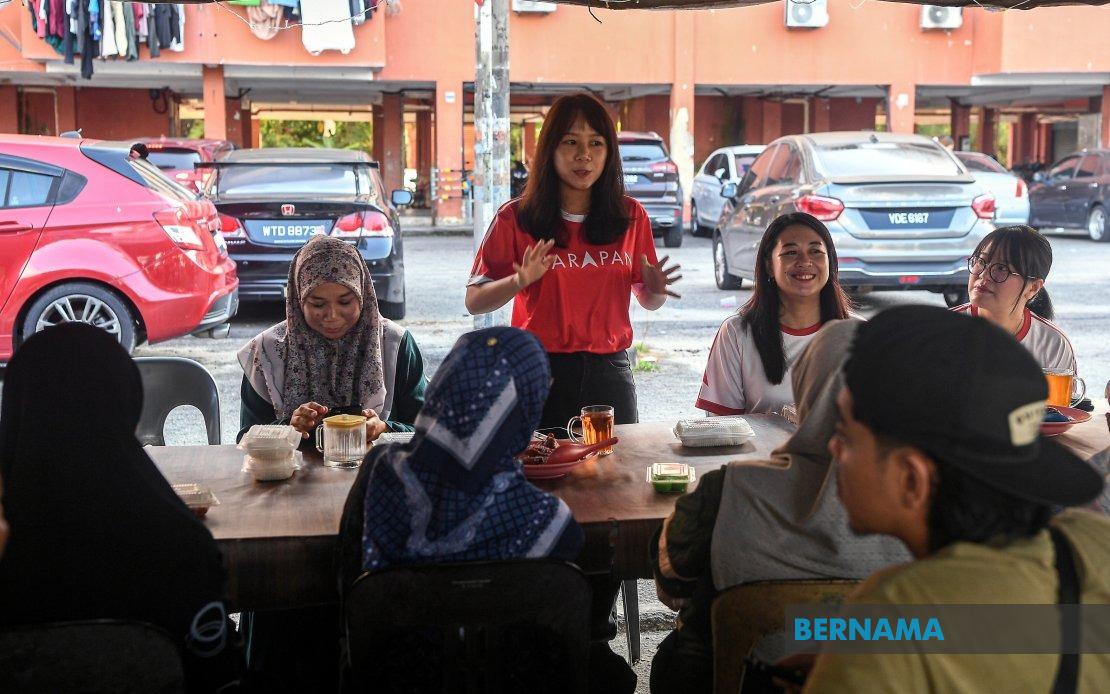
The Johor Jaya state constituency race has emerged as a contest shaped by competing visions for attracting and retaining younger residents, with both major coalition candidates positioning their campaigns around economic opportunity and infrastructure development. Lee Wern Yiing, the Pakatan Harapan nominee, represents a generational shift in Malaysian politics. The 30-year-old recently weighed a lucrative career path in Singapore against returning to political service at home. She ultimately chose to abandon the prospect of well-compensated expatriate work to engage in community activism, a decision she attributes to optimism about Malaysia's reform trajectory following her tertiary education in the republic in 2018.
Lee's entry into formal politics came through working as a special officer for Liow Cai Tung, the previous Johor Jaya assemblyman, before securing the PH nomination to contest the seat herself. Her political philosophy emphasises transparent communication with younger demographics, whom she argues possess greater political engagement than conventional wisdom suggests. Serving as chief of the Johor DAP Socialist Youth wing, she contends that young voters conduct their own analysis of government performance and policy effectiveness rather than remaining indifferent to electoral outcomes. This assessment drives her campaign strategy, which blends digital engagement with ground-level community initiatives including the Johor Jaya Run programme.
The substantive policy platform Lee presents centres on three interrelated challenges affecting younger Malaysians: employment scarcity, housing accessibility, and rising living costs. She proposes leveraging the Johor-Singapore Special Economic Zone as an engine for sustained job creation, arguing that full capitalisation of the cross-border economic initiative could establish employment ecosystems robust enough to reverse youth outmigration patterns. Her rhetorical focus emphasises transforming Johor Jaya into a destination where young professionals and families genuinely want to establish their lives rather than departing for perceived opportunities elsewhere. The underlying premise reflects broader anxieties throughout Malaysia regarding brain drain and the hollowing of provincial economies as talent concentrates in major urban centres and neighbouring city-states.
Barisan Nasional's candidate Chan San San approaches the contest from a foundation of extended community exposure and institutional experience. Framing herself as an "anak Plentong" with over a decade of grassroots engagement, Chan positions her track record as evidence that political representation requires translating genuine community concerns into actionable governance rather than treating constituent problems as abstract statistics. Her professional background encompasses service on the Johor Bahru City Council, where she navigated the technical dimensions of municipal governance, alongside volunteer work with the MCA Crisis Relief Squad and involvement in the MCA party apparatus.
Chan's campaign platform prioritises four interconnected development objectives. Foremost among these is strengthening local economic dynamism through targeted interventions designed to support small and medium enterprises and broader commercial activity. She simultaneously advocates positioning Johor Jaya as an eastern Johor Bahru transportation nexus that would integrate the constituency with the planned Rapid Transit System infrastructure connecting the wider conurbation. This emphasis on connectivity reflects understanding that modern urban development increasingly depends on seamless movement of residents across expanding metropolitan areas. Her third focus addresses persistent traffic congestion, a quality-of-life issue affecting daily commutes and commercial operations alike. Implicit in Chan's platform is the notion that incumbent-style governance and accumulated institutional knowledge provide practical advantages in translating campaign pledges into tangible improvements in service delivery.
The distinction between the two major candidates illuminates broader patterns in contemporary Malaysian politics. Lee represents the technocratic reformer archetype, emphasising policy innovation and engagement with demographic cohorts through modern communication channels. Her decision to return from abroad and embrace political participation suggests confidence that systemic change remains possible through the electoral process. Chan, conversely, embodies the grassroots organiser tradition, stressing accumulated wisdom gained through extended community interaction and the patience required to translate broad aspirations into incremental governance improvements. Both candidates, however, address nearly identical substantive concerns: the need to provide viable economic futures for younger Malaysians within their home constituencies rather than driving migration to Singapore or Kuala Lumpur.
The broader Johor state election context underscores the strategic importance of constituencies like Johor Jaya. With 172 candidates contesting 56 state legislative seats, individual contests occur within competitive dynamics that shape statewide outcomes. The election takes place amid national conversations regarding economic competitiveness, infrastructure modernisation, and the capacity of state governments to address cost-of-living pressures affecting ordinary Malaysians. Johor, as Malaysia's most industrialised southern state and a crucial component of the broader Klang Valley economic system, holds particular significance in these discussions. Constituencies proximate to Singapore, like Johor Jaya, face distinctive challenges regarding labour market competition and the tendency for skilled workers to commute across the causeway rather than establish permanent residence.
The four-cornered contest involving Lee, Chan, Parti Bersama Malaysia's Lau Yi Leong, and independent candidate Lim Hun Peaw reflects Malaysia's diversifying political landscape. The presence of newer political formations and independent candidacies suggests voter willingness to experiment beyond traditional coalition boundaries, though the PH-BN duopoly remains dominant in most constituencies. For Johor Jaya specifically, the outcome may depend significantly on whether younger voters respond more positively to Lee's reform-oriented messaging and digital-native campaign approach or remain persuaded by Chan's emphasis on institutional experience and documented community service.
Implications for the regional economy extend beyond Johor itself. How effectively Malaysian constituencies attract and retain skilled younger workers influences broader Southeast Asian labour market dynamics and competitive positioning. Singapore's economic success has partly depended on drawing Malaysian talent across the border through superior remuneration and career prospects. Candidates like Lee, who explicitly advocate making Johor an appealing alternative to expatriate employment, identify retention of human capital as a priority that state and federal governments must address through economic policy and quality-of-life improvements. The Johor-Singapore Special Economic Zone, mentioned prominently in both candidates' platforms, represents a potential mechanism for creating high-value employment without requiring brain drain across national borders.
The July 11 polling date will determine which candidate receives the mandate to represent Johor Jaya, but the substantive campaign discourse suggests broader consensus that developmental challenges require sustained attention to economic fundamentals. Early voting occurs on July 7, providing opportunities for those unavailable on polling day to participate. Whichever candidate prevails will inherit inherited community expectations regarding service delivery and economic management. The prominence of infrastructure, employment, and cost-of-living concerns in both major candidates' platforms indicates these issues will define the competitive benchmarks against which constituents judge performance during the ensuing term. For Malaysian policymakers observing state-level dynamics, the Johor election offers crucial data regarding public priorities and receptiveness to various governance philosophies.

