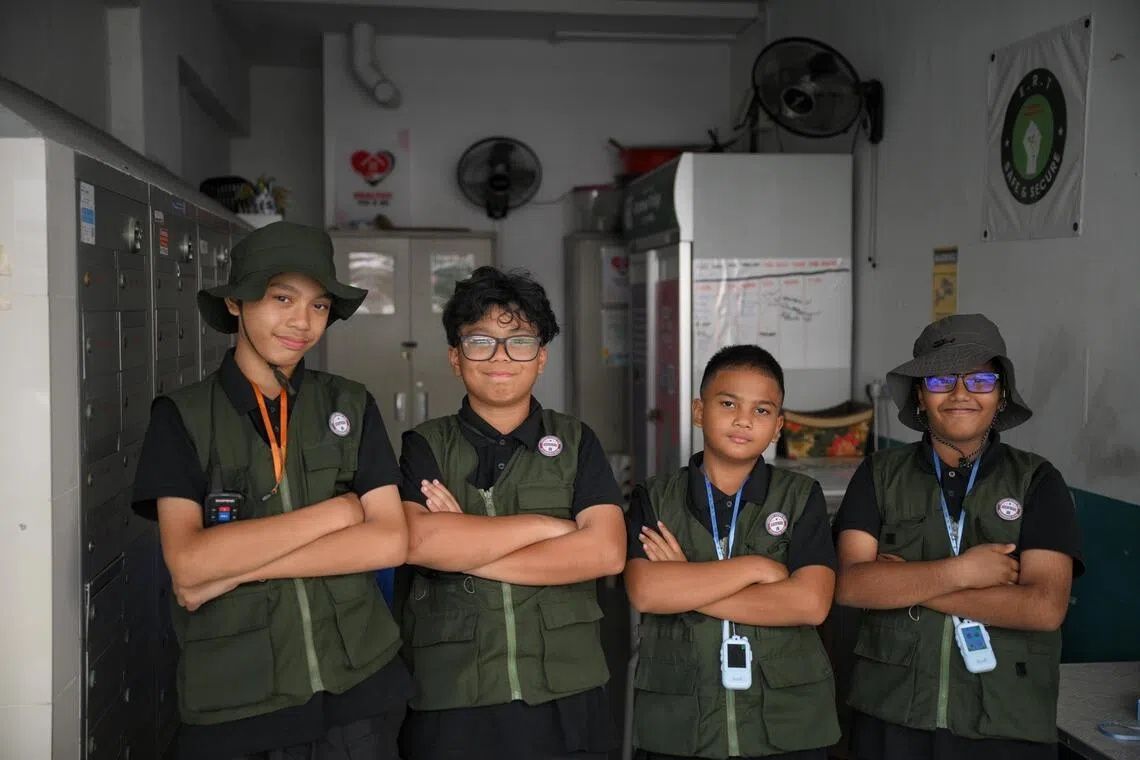
In the public housing estates of Singapore's Lengkok Bahru, an unusual form of neighbourhood watch has taken root. Four primary schoolchildren—Rafieq Sahin Rafizal, 12; Aaron Sarandev, 11; Al-Mirza Danish, 12; and Didie Andiqa Muhaimin, 14—have become daily sentries, patrolling their blocks in matching vests to protect their community from common urban hazards. Their journey began not with grand ambitions but with a simple act of frustration by one boy observing repeated theft from a community fridge intended to help low-income families.
Rafieq's initial concern centred on a particularly acute problem facing his neighbourhood: strangers systematically depleting the unlocked refrigerator that his mother, Marlina Yased, had established to provide free milk and drinks for schoolchildren before they head to class. Rather than mount a guard duty that would consume Rafieq's time, his mother conceived a more constructive solution. She encouraged her son and his friends to channel their energy into broader neighbourhood protection, transforming a frustration into a mission that would address multiple community concerns simultaneously. This shift from passive security to active community engagement has proven remarkably effective in reshaping both the neighbourhood's conditions and the boys' own development.
Since August 2025, the Emergency Response Team LB has conducted systematic daily patrols across six blocks of their estate, documenting problems through photographs and alerting Marlina, who then notifies the appropriate authorities and management staff. Their responsibilities extend well beyond preventing fridge theft. The team identifies hazardous accumulations of bulky waste, instances of vandalism, and particularly dangerous instances of personal mobility devices being charged in common areas—a fire risk that poses genuine safety concerns in densely populated public housing. This comprehensive approach to neighbourhood monitoring demonstrates an understanding of community safety that extends far beyond the initial trigger for their formation.
The tangible benefits of the boys' patrols have manifested in numerous ways throughout their neighbourhood. They have assisted elderly residents with mobility constraints in transporting groceries from shops, intervened to resolve disputes between younger children, and created a visible presence that appears to deter some problematic behaviour. However, their most sobering discovery came earlier in 2026 when they detected an unusual odour emanating from a flat. After alerting Marlina, who notified estate cleaners and neighbouring residents who contacted police, authorities discovered the decomposed remains of an elderly man who had died inside. This discovery underscores how such community monitoring can serve a lifesaving function, providing an additional layer of oversight that might detect genuine emergencies in estates where residents sometimes face profound isolation.
The recognition of their efforts has culminated in an extraordinary honour. In August 2026, the four boys will participate in Singapore's National Day Parade as part of a segment celebrating ordinary Singaporeans whose contributions strengthen national life. For each of them, this will represent their inaugural experience in this iconic annual celebration. The selection reflects broader societal appreciation for their commitment, acknowledging that meaningful community service need not originate from formal institutions or adult-led programmes. Instead, when young people identify problems in their immediate environment and marshal the discipline to address them daily, they demonstrate a form of civic engagement that arguably carries greater authenticity than many official initiatives.
The origins of their mission trace back to 2023, when Marlina established the community fridge with sponsorship from local businesses to assist financially stretched neighbours. The locked sections contain groceries and food items reserved for specific purposes, while the deliberately unlocked compartment holds milk and beverages accessible to any child in the neighbourhood. This arrangement reflects a nuanced understanding of community economics and child welfare—Marlina observed that while some residents appropriately took drinks for personal consumption, others were systematically emptying the fridge and removing three-quarters of the milk supply intended for children. Rather than escalate this into a conflict or impose stricter controls that would undermine the fridge's charitable purpose, she opted for the boys' patrol solution, which simultaneously addresses the immediate problem while creating meaningful activity for young people.
Marinna articulated her vision for the team with particular clarity when explaining her reasoning to neighbours. She emphasised that the boys wanted to establish themselves as a visible resource within the community—young people whom residents could approach for assistance with shopping, errands, or other needs. During their patrols, they would simultaneously monitor for legitimate safety hazards including fire risks and littering. This dual-purpose approach transforms the boys from mere enforcers into community ambassadors and service providers, fundamentally altering how their presence is perceived. Rather than being viewed as neighbourhood informants, they function as helpful neighbours who happen to be younger and more energetic than most adult residents.
The operational structure the team has established demonstrates remarkable organisational sophistication for children their age. Each day after school concludes, the boys don distinctive vests displaying their names and team insignia before departing in pairs to cover their assigned blocks. They maintain continuous communication with Marlina and fellow volunteer Fahmidah Farihullah, 21, using walkie-talkies to coordinate their activities and report observations in real time. This communication infrastructure transforms scattered patrols into a coordinated system capable of responding promptly to issues as they emerge. The team originally comprised seven members but has contracted to four, suggesting that sustaining this level of daily commitment presents genuine challenges even for motivated young people.
Rafieq drew inspiration for the team's name from Singapore's Emergency Response Team, the police unit that addresses high-risk incidents. This nomenclature choice reveals something important about how he conceptualises their role—not as playground enforcers but as service-oriented first responders operating within their immediate domain. When discussing his commitment, he articulated a perspective that many adults would consider mature: the understanding that community service requires discipline and sacrifice. His observation that the boys could play at any time but consciously choose to dedicate one daily hour to neighbourhood protection reflects a prioritisation of collective welfare that cannot be assumed among young people in any society, including relatively prosperous and orderly Singapore.
Didie joined the team for reasons that many adolescents might recognise—he had unstructured time and sought something meaningful to occupy his energy. However, the experience has apparently transformed his perspective and behaviour. Aaron, a Primary 5pupil, reports that daily patrols have taught him responsibility and perseverance, particularly on occasions when motivation flags but he maintains his commitment. These statements suggest that the patrol activity functions as a character-building exercise, instilling habits and values that extend beyond neighbourhood protection into broader dimensions of the boys' development.
Reactions from residents have evolved from initial scepticism to general appreciation. Nasha Asrin, a 27-year-old resident and mother of five, expressed particular satisfaction that the boys channelled their youthful energy into productive neighbourhood activities rather than the kind of aimless loitering that occasionally characterises public housing estates. This observation highlights an implicit social function of the team—they model constructive engagement with community space and time, potentially influencing other young people toward similar choices. Marlina herself has observed marked improvements in the boys' academic engagement and personal discipline. She reports receiving feedback from their mothers indicating improved school attendance and enhanced concentration in academic work, suggesting that the patrol responsibility has created positive spillover effects across multiple dimensions of their lives.
The Emergency Response Team LB represents an instructive case study for Southeast Asian urban policymakers and community organisers. Rather than relying exclusively on formal municipal services or security apparatus to maintain neighbourhood conditions, this model demonstrates how structured youth engagement can simultaneously address practical problems, develop young people's civic consciousness, and strengthen informal community bonds. In densely populated public housing contexts—common throughout Malaysia, Singapore, and other regional cities—such approaches might prove both cost-effective and developmentally valuable. The visible presence of young people invested in their immediate environment may also offer subtle deterrent effects that formal security measures cannot replicate. As Singapore observes and celebrates their participation in the National Day Parade, their example offers a template that communities elsewhere might thoughtfully adapt to their own contexts and circumstances.

