Twenty university students engaged in substantive discussion about a critical policy question facing Malaysia's energy future at the inaugural Minister's Cup debate, held alongside the 7th International Sustainable Energy Summit (ISES) 2026 in Kuala Lumpur this month. The competition examined whether Malaysia should broaden its renewable energy exports to regional neighbours whilst simultaneously ensuring the nation meets its own electricity needs—a tension that sits at the heart of strategic energy planning across Southeast Asia.
The debate motion, "Should Malaysia expand exports of renewable energy-based electricity to neighbouring countries while meeting domestic demand?", represents a genuine policy dilemma for Malaysian policymakers navigating the region's energy transition. As Southeast Asian economies increasingly pivot toward decarbonisation, questions about renewable capacity allocation have become urgent. For Malaysia, which has positioned itself as a potential clean energy hub for the region, decisions about whether to prioritise domestic consumption or regional export revenues carry significant economic and geopolitical implications. The students' engagement with this substantive question reflects a broader shift toward involving younger voices in energy governance conversations.
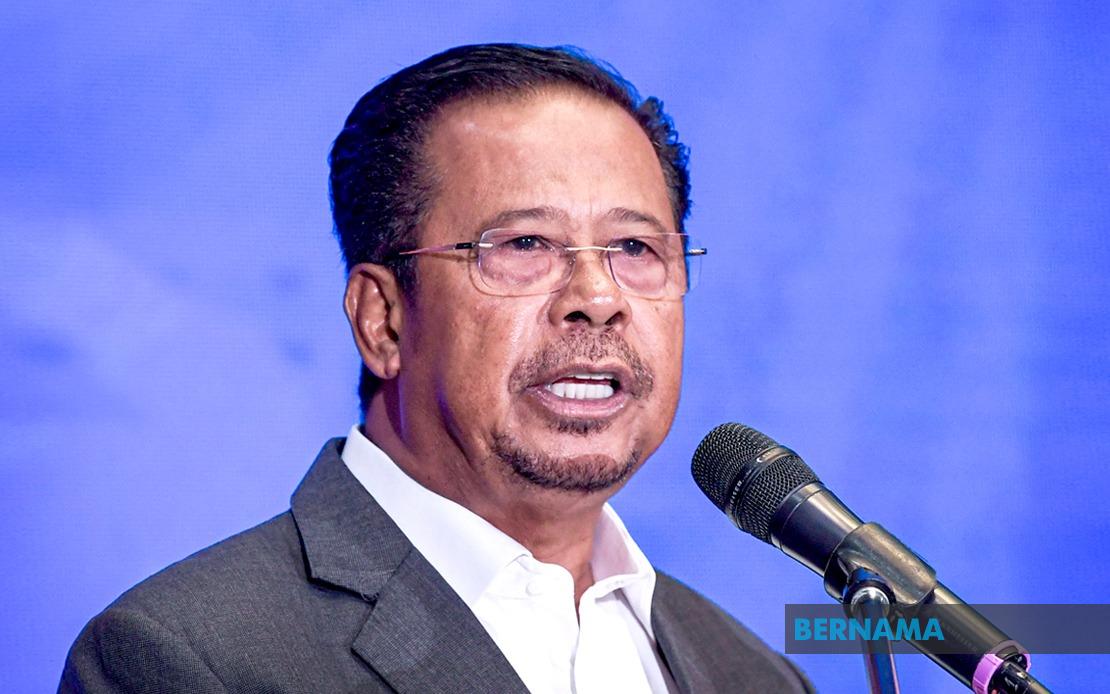
Deputy Minister of Energy Transition and Water Transformation Datuk Seri Abdul Rahman Mohamad, who chairs the Malaysia Energy Literacy Programme (MELP) steering committee, presented the championship trophy to the Government team and acknowledged the Best Debater award winner. The presence of Chief Secretary to the Government Tan Sri Dr Wan Ahmad Dahlan Abdul Aziz and Sustainable Energy Development Authority Malaysia (SEDA) chairman underscored the official significance attached to the competition. This ministerial-level engagement signals that Putrajaya views youth participation in energy policy debates as sufficiently important to warrant high-level government representation.
SEDA's Strategic Communications director Izzad Zalman Abdul Kader articulated the rationale behind incorporating debate into energy literacy initiatives, explaining that structured argumentation creates an accessible pathway for younger generations to deepen their understanding of complex policy frameworks. Rather than passive recipients of information, students become active participants capable of evaluating trade-offs, weighing competing priorities, and articulating informed positions. This pedagogical approach recognises that energy literacy extends beyond technical knowledge to encompass critical thinking about policy choices and their societal consequences.
The Minister's Cup Debate functions as the flagship initiative within MELP 2026, a national programme administered by SEDA Malaysia with the explicit objective of cultivating energy awareness among Malaysia's younger population. MELP's broader mission addresses a genuine knowledge gap: many Malaysians lack comprehensive understanding of how electricity is generated, distributed, and managed across the national grid. By providing verified information and fostering informed decision-making, the programme aims to shift public discourse toward evidence-based discussions about energy security, renewable transition timelines, and investment priorities.
Muhammad Uwais Mohd Hazril Munir @ Umar, a twenty-year-old law student at Universiti Malaya who won the Best Debater award, highlighted debate's unique capacity to render opaque policy questions comprehensible to general audiences. Through structured argumentation presenting competing perspectives, complex technical and strategic questions become accessible to listeners without specialist knowledge. His observation reflects recognition that public support for energy transitions ultimately depends on citizens' ability to understand the reasoning behind policy decisions—a critical factor often underestimated in technocratic approaches to energy governance.
Fellow participant Afiq Athmar Mohamed, a twenty-one-year-old business and economics student, emphasised the collaborative dimension of the competition, noting that partnership between government ministries, statutory agencies, and media outlets created momentum for substantive public discourse around energy matters. This multi-institutional approach reflects an implicit understanding that embedding energy literacy within popular conversation requires coordination across sectors. When competing institutions unite around educational objectives, the resulting initiatives carry greater legitimacy and reach.
Mohamed's observation about raising public awareness across age demographics underscores an important aspect of Malaysia's energy transition challenge: securing social licence for the shift away from fossil fuels demands engagement strategies extending beyond academic circles and industry specialists. Public acceptance of renewable energy infrastructure—including solar installations, hydroelectric projects, and grid modernisation—depends partly on understanding among diverse population segments. Youth-oriented programmes like the Minister's Cup debate contribute to this broader social education process.
The emphasis on transitioning from non-renewable to renewable energy sources reflects Malaysia's positioning within regional and global decarbonisation frameworks. As Southeast Asia confronts climate imperatives whilst managing rapid economic development, energy choices made over the next five to ten years will prove consequential. By engaging university students in substantive debate about energy export policies, MELP creates space for younger Malaysians—who will inherit the consequences of today's decisions—to participate meaningfully in shaping national energy trajectories.
The competition's focus on renewable energy specifically reflects Malaysia's developing renewable capacity and regional competitive advantages. Unlike some neighbouring economies with abundant hydrocarbon reserves, Malaysia's renewable energy potential centres primarily on solar capacity and remaining hydroelectric opportunities. Strategic decisions about whether to develop renewable generation primarily for domestic consumption or for regional export will influence the nation's economic positioning and energy security posture throughout the 2030s. Student engagement with this question through structured debate helps crystallise the stakes involved.
Beyond the immediate policy discussion, the Minister's Cup debate represents an institutional commitment to youth participation in energy governance. Many Malaysian students will enter professional roles—whether in engineering, policy, business, or public administration—where energy decisions intersect with their work. Early exposure to rigorous debate about energy policy choices cultivates habits of evidence-based reasoning that can shape professional contributions across sectors.
The competition also demonstrates recognition that energy literacy cannot remain confined to specialist domains. As energy systems grow increasingly complex and digitised, and as renewable integration reshapes electricity markets, informed public discourse becomes essential. Debate competitions function as accessible entry points for young people to engage substantively with energy topics, potentially inspiring deeper engagement whether through further education, professional development, or civic participation.

