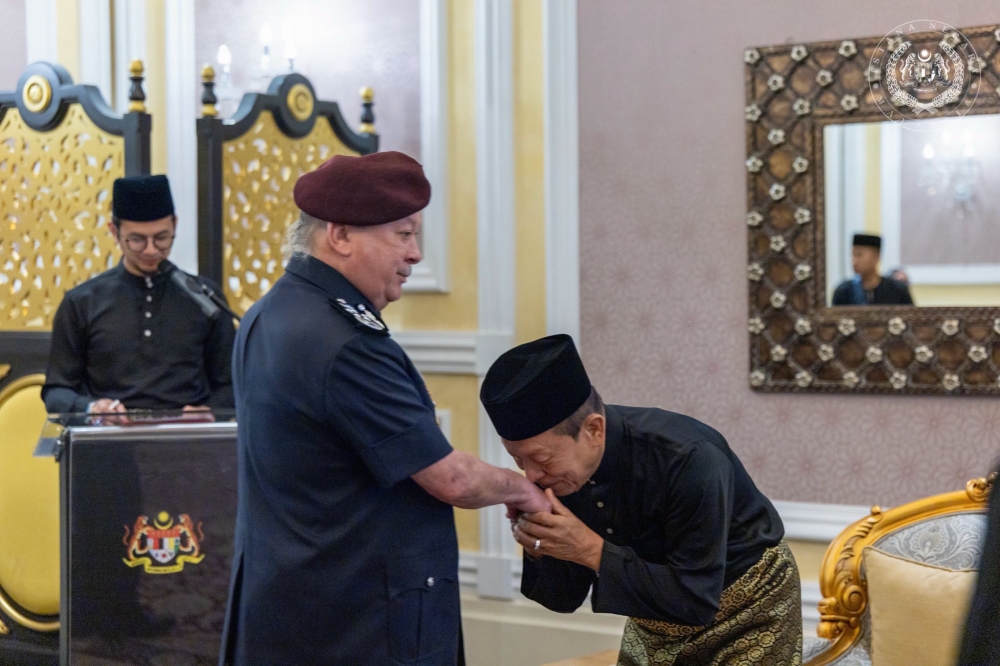
His Majesty Sultan Ibrahim, King of Malaysia, received Tan Sri Azam Baki, Chief Commissioner of the Malaysian Anti-Corruption Commission (MACC), in audience at Istana Negara on July 14. The formal meeting provided an opportunity for detailed discussion regarding the anti-corruption agency's current activities and strategic direction as it continues to tackle graft across the public and private sectors.
The briefing underscores the continued engagement between the monarchy and key institutional leaders responsible for upholding Malaysia's governance standards. MACC occupies a crucial position within the nation's integrity framework, wielding investigative powers and prosecutorial capacity across numerous sectors. By receiving regular updates directly, the Yang di-Pertuan Agong maintains an informed perspective on how effectively the commission executes its mandate and adapts to emerging corruption challenges.
Tan Sri Azam Baki has served as MACC Chief Commissioner since 2019, overseeing a period marked by several high-profile investigations and enforcement actions. The agency has demonstrated increased assertiveness in pursuing cases involving elected officials, government officials, and corporate figures. This audience provided an avenue for the Chief Commissioner to discuss performance metrics, resource allocation, and any legislative or operational adjustments the commission deems necessary to strengthen its investigative capabilities.
From a governance perspective, regular interaction between constitutional heads of state and anti-corruption authorities reflects international best practices in institutional accountability. Malaysia's commitment to combating corruption has broader implications for regional competitiveness, foreign investment confidence, and public trust in government institutions. Transparency regarding MACC's work and its direct communication with the highest constitutional office demonstrates institutional maturity.
The timing of such briefings often coincides with significant developments within MACC's portfolio. Recent years have witnessed the commission pursuing cases involving substantial sums, complex corporate transactions, and senior government functionaries. Each audience represents an opportunity to discuss case progress, investigative challenges, and whether the existing legal and financial framework adequately supports the agency's enforcement objectives.
For Malaysian observers and international stakeholders monitoring governance developments, such meetings signal institutional prioritization of anti-corruption work. The Yang di-Pertuan Agong's willingness to allocate time for detailed briefings from MACC leadership demonstrates that combating graft remains a royal and constitutional concern. This sends important messages to the civil service, the business community, and the broader public about the seriousness with which Malaysia treats integrity and financial accountability.
MACC's mandate extends across criminal investigations, civil litigation to recover assets, and engagement with international counterparts on transnational corruption cases. The commission has increasingly relied on forensic accounting expertise and digital investigation techniques to uncover complex schemes. Such operational details would form part of any comprehensive briefing to the highest constitutional authority, allowing for informed discussion of institutional capacity and identified gaps.
The audience also reflects the multi-layered approach Malaysia has adopted toward governance reform. Beyond MACC, the nation operates through various accountability mechanisms including parliamentary oversight, the judicial system, and regulatory bodies within individual sectors. Coordinating these elements effectively requires consistent communication, and the monarchy's engagement with MACC leadership contributes to this broader ecosystem of checks and balances.
International observers have periodically assessed Malaysia's anti-corruption framework, with assessments varying based on enforcement consistency and case outcomes. Regular high-level engagement with MACC demonstrates institutional commitment to addressing these assessments constructively. For investors and trading partners evaluating Malaysia as a jurisdiction, evidence of serious anti-corruption infrastructure provides reassurance regarding the business environment and regulatory predictability.
The briefing mechanism also serves an informational function for the Yang di-Pertuan Agong personally. As constitutional head of state, the King must comprehend the institutional landscape across which executive government operates. Understanding MACC's challenges, successes, and strategic priorities enables the monarchy to exercise its constitutional responsibilities with appropriate contextual knowledge, particularly regarding areas where royal assent or constitutional advice may be required.
Moving forward, the continued dialogue between the Palace and MACC leadership reflects ongoing institutional evolution. Malaysia's anti-corruption agenda remains dynamic, responding to new methodologies employed by those seeking to evade accountability. Whether through asset recovery mechanisms, international cooperation frameworks, or enhanced investigative tools, the commission's work requires sustained support and strategic direction that audiences such as this facilitate.
The meeting also positions MACC within the broader narrative of Malaysian governance in 2024. As the nation navigates political transitions and economic adjustments, maintaining institutional integrity becomes increasingly important. Regular engagement between constitutional authorities and enforcement agencies ensures that anti-corruption efforts remain insulated from temporary political fluctuations and grounded in stable constitutional frameworks that transcend electoral cycles.

