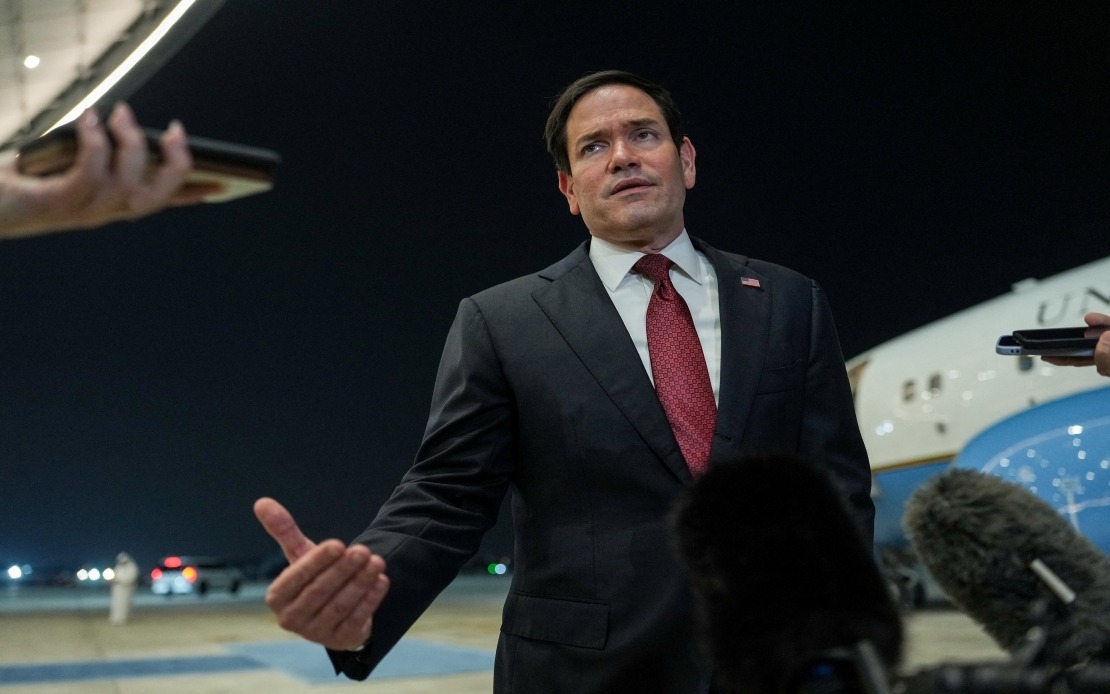
The planned visit by Chinese President Xi Jinping to the United States is moving forward as scheduled for September, according to US Secretary of State Marco Rubio, signalling that diplomatic channels remain open despite mounting tensions between Washington and Beijing. Speaking to reporters at Joint Base Andrews on Sunday as he prepared to depart for an ASEAN foreign ministers' meeting, Rubio expressed confidence that the high-level engagement would proceed as anticipated, with Chinese officials continuing to send delegations to prepare logistical and protocol arrangements for the state visit.
The confirmation comes at a particularly delicate moment in US-China relations. President Donald Trump levelled fresh accusations against China on Thursday, claiming Beijing had interfered in the 2020 presidential election that he lost to Joe Biden. The allegation drew a swift rebuke from Beijing, which categorically rejected the claim. Such exchanges typically signal deepening rifts, yet both governments appear committed to maintaining the framework for high-level engagement that underpins diplomatic stability.
Rubio's remarks underscore a pragmatic approach to managing superpower competition. He acknowledged that disagreements between major powers are inevitable and often substantial, but stressed that the United States and China bear a shared responsibility to preserve channels of dialogue and maintain functional relations. This framing reflects an understanding that despite ideological and strategic differences, the costs of complete diplomatic estrangement are prohibitively high for both nations and the global system dependent on their cooperation.
The timing of Xi's visit carries particular significance for regional observers. The Chinese leader's trip to Washington in September would represent one of the most consequential diplomatic engagements in the Asia-Pacific calendar, potentially setting the tone for US-China relations through the remainder of Trump's term and beyond. For Southeast Asian nations, including Malaysia, the health of US-China ties directly influences regional security dynamics, trade flows, and alignment pressures.
China's Foreign Ministry confirmed that both capitals remain in active communication regarding the planned state visit later in 2024. This official acknowledgement from Beijing suggests that despite public tensions, back-channel diplomacy continues to function. The presence of Chinese Foreign Minister Wang Yi at Tuesday's ASEAN foreign ministers' meeting in Manila provides an immediate opportunity for informal discussions between US and Chinese officials, potentially smoothing any procedural complications ahead of the September engagement.
The diplomatic calendar is significant for the region. ASEAN members, particularly those with substantial economic ties to both Washington and Beijing, closely monitor the trajectory of superpower relations. Malaysia, as a trading partner with interests spanning both blocs, has a vested interest in preventing the US-China relationship from deteriorating into outright confrontation. The continuation of high-level visits and dialogue mechanisms suggests that despite rhetorical volleys, the underlying structure of engagement remains intact.
Rubio's statement that Chinese officials were continuing to send preparatory teams indicates that administrative and logistical work for the visit remains on schedule. Such groundwork typically begins months in advance, involving discussions about security arrangements, venue selection, protocols, and the substantive agenda. The fact that these preparations are proceeding normally suggests that neither side views recent tensions as sufficient cause to derail the engagement.
Trump's May visit to Beijing, during which he personally invited Xi to visit Washington on September 24, had already established the framework for reciprocal state visits. Such exchanges at the presidential level are among the highest-stakes diplomatic moments, requiring meticulous preparation and careful management of messaging to ensure both sides' domestic constituencies receive appropriate framing. The continuation of these preparations indicates that both governments view the visit as sufficiently important to weather near-term tensions.
For Malaysia and other Southeast Asian nations, the September visit could provide clarity on the contours of future US-China competition in the region. Whether the two powers emerge from their meetings with a shared understanding on certain red lines, or whether they crystallise their differences, will shape regional security calculations for years to come. ASEAN's role as a neutral venue for diplomatic engagement has grown in importance precisely because the bloc maintains relationships across both camps.
The emphasis Rubio placed on maintaining dialogue despite disagreements reflects a recognition that in an era of nuclear-armed powers with interconnected economies, the alternative to managed competition is unacceptable. While the Trump administration has taken a more confrontational rhetorical stance toward Beijing than some of its predecessors, the continuation of state visits and high-level engagement demonstrates that strategic pragmatism ultimately prevails over campaign rhetoric.
For observers tracking US-China relations, the September visit represents a crucial test of whether the two powers can compartmentalise disputes and maintain functional diplomacy. The success or failure of this engagement could influence not only bilateral relations but also regional stability, trade patterns, and the international rules-based order that Southeast Asian nations depend upon for prosperity and security.

