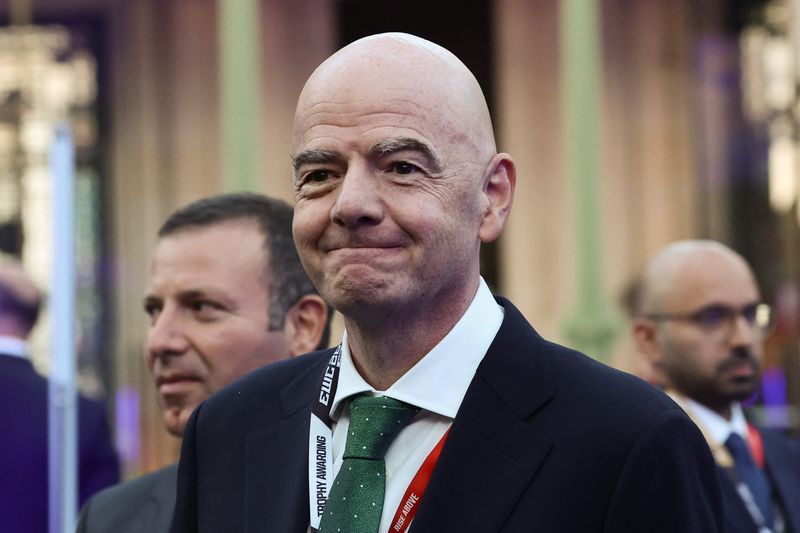
An unprecedented alliance of World Cup champions and celebrated international footballers has openly challenged FIFA's current leadership, demanding immediate transformation at the sport's global governing body. The group, which includes French 1998 World Cup winners Emmanuel Petit, Bixente Lizarazu and Robert Pires, American women's champion Briana Scurry, and England international Lucy Bronze, issued a coordinated statement accusing FIFA President Gianni Infantino of allowing power to distort institutional decision-making and undermine the sport's foundational principles.
The intervention marks a significant escalation in the ongoing crisis surrounding Infantino's presidency, which has already drawn opposition from major continental confederations including UEFA, the AFC, and CONCACAF. The Swiss administrator has faced intensifying scrutiny following his controversial proposal to create a commercial entity that would have privatized a fifth of FIFA's tournament rights—a plan he subsequently abandoned amid widespread backlash. Despite this retreat, Infantino has shown no indication of stepping aside from a position he has occupied since 2016, even as internal and external pressure mounts considerably.
The players' statement carries particular weight given the stature and geographic diversity of its signatories. Beyond the French and American stars, the group encompasses Peru's celebrated forward Claudio Pizarro, Argentina's Juan Sebastian Veron, Togo's Emmanuel Adebayor, and global icons Didier Drogba and David James. These figures collectively represent multiple continents and generations of football excellence, lending their declaration a moral authority that transcends individual national interests or personal grievances. As officially recognized FIFA legends—former players designated for their contributions to the sport who participate in exhibition matches and charity initiatives worldwide—these individuals possess a unique platform to articulate concerns about institutional direction.
The coalition's core grievance centers on a perceived fundamental disconnect between FIFA's current trajectory and football's essential values. In their statement, the players articulated a concern resonating with millions of supporters globally: under present leadership, the sport has progressively drifted from its foundational principles toward prioritizing institutional self-interest. This characterization directly challenges Infantino's stewardship by suggesting that his decision-making capacity has been compromised by the accumulation and exercise of power, blinding him to considerations beyond organizational benefit.
For Malaysian and Southeast Asian readers, this institutional crisis at FIFA carries tangible implications for regional football development. As AFC member nations, Malaysia and its neighbors depend on FIFA governance structures that maintain equitable distribution of resources, transparent tournament allocation processes, and protection of competitive integrity. Any weakening of FIFA's institutional credibility through leadership dysfunction potentially undermines confidence in major tournament assignments and could affect development funding that flows through FIFA's regional confederations to emerging football nations.
The players' call extends beyond mere criticism to demand structural reform that would fundamentally democratize FIFA's operations. They specifically advocate for genuine participation rights for both players and supporters in determining how football is governed, positions previously marginal to FIFA's hierarchical decision-making apparatus. This democratic aspiration represents a philosophical challenge to the technocratic model under which Infantino has operated, suggesting that legitimate governance requires input from those most directly invested in the sport's integrity and development.
The timing of this intervention proves strategically significant given Infantino's scheduled re-election next year. Senior figures within world football's regional powerhouses have been discussing whether to advance a formal no-confidence vote before the scheduled ballot, according to information available to international news organizations. The players' public statement effectively elevates pressure on these institutional actors to move decisively rather than allowing the situation to drift toward an ordinary electoral process that might otherwise validate Infantino's continuation.
Historically, FIFA has resisted meaningful player representation in governance, treating athletes primarily as performers rather than stakeholders in institutional decision-making. The coordinated emergence of this players' coalition suggests a shifting calculus within football's professional ranks, where accumulated grievances over commercialization trends, tournament scheduling pressures, and perceived disregard for player welfare have coalesced into organized political action. The statement's emphasis on silence ending indicates these figures view their intervention as part of a broader awakening within the global football community.
Infantino's attempted privatization scheme, which prompted the current crisis, represented a particularly aggressive attempt to restructure FIFA's revenue model and institutional architecture. While ostensibly designed to modernize FIFA's commercial operations and attract institutional investment, the proposal effectively would have ceded significant control over world football's most prestigious tournament rights to private investors—a transfer many stakeholders viewed as fundamentally incompatible with FIFA's status as a non-profit sports federation. The players' intervention suggests this episode crystallized broader concerns about institutional mission drift.
The AFC and other regional confederations facing this governance challenge must weigh their own institutional interests carefully. These organizations depend on FIFA for tournament scheduling, technical support, and development funding, creating potential costs to overt opposition. Yet the emergence of player-led pressure may provide cover for confederation leaders to support institutional reform without appearing to act from purely self-interested motivations. The coalition's emphasis on rebuilding trust and structural change frames the conflict around philosophical questions about football's governance rather than factional disputes.
The players' assertion that good-faith FIFA staff members exist within the organization but require structural change to effect meaningful reform acknowledges that institutional dysfunction reflects systemic problems rather than individual conspiracies. This framing preserves space for potential resolution while insisting that cosmetic adjustments prove insufficient and genuine reform requires redistributing decision-making authority. It simultaneously positions change as inevitable and necessary rather than merely optional or desirable.
As this governance crisis develops toward a potential inflection point in the coming months, Malaysian football stakeholders should monitor proceedings closely. Outcomes of FIFA's internal struggles directly affect tournament scheduling, development resource allocation, and the confederation's overall credibility in advancing Asian football interests. Whether the players' intervention proves decisive in catalyzing leadership change remains uncertain, but their coordinated intervention signals that FIFA's institutional legitimacy increasingly depends on demonstrating genuine responsiveness to stakeholder concerns beyond administrative convenience.

