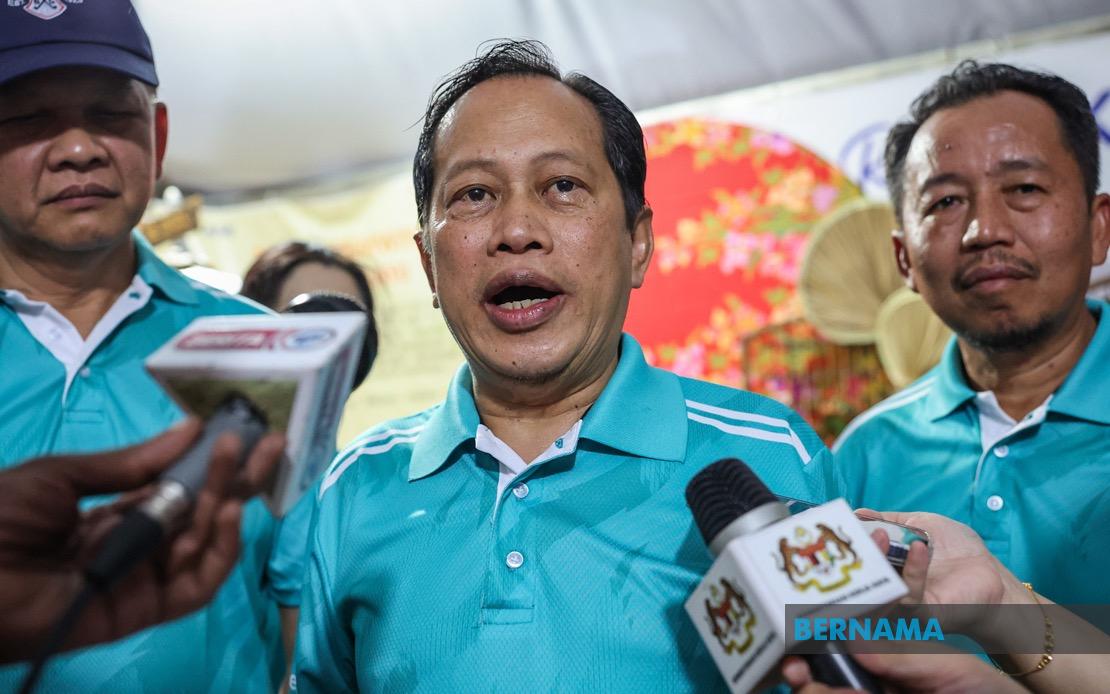
Malaysia's Works Ministry (KKR) is making a strategic push to secure the highest development budget allocation among all government departments for the 2027 fiscal year, signalling an ambitious agenda for nationwide infrastructure expansion and maintenance. Deputy Works Minister Datuk Seri Dr Ahmad Maslan revealed the ministry's plans at the Cultural Night Run in Batu Kawan, outlining preparations underway across multiple subordinate agencies to justify an enhanced funding request during budget negotiations with the Finance Ministry later this month.
The allocation request carries particular significance given Malaysia's ongoing need to modernise and maintain its extensive transportation network. Ahmad explained that the ministry received approximately RM10 billion in the previous budget cycle, with RM9 billion directed specifically towards development initiatives. By seeking an increase from this baseline, KKR aims to address the substantial backlog of infrastructure projects and enhance maintenance of existing assets across the country's highways and road systems. The ministry has instructed its divisions and operating agencies to compile detailed input submissions, with a formal presentation scheduled before Finance Minister II on August 28.
Among the key agencies contributing to this budget submission are the Malaysian Highway Authority (LLM), the Construction Industry Development Board Malaysia (CIDB), and the Public Works Department (JKR). Each organisation brings distinct priorities reflecting their operational responsibilities, from highway maintenance and construction oversight to industry development and workforce coordination. This coordinated approach demonstrates how Malaysia's infrastructure sector is consolidating its requirements into a unified ministerial proposal, recognising that infrastructure investment often requires cross-agency collaboration and sustained funding to achieve measurable outcomes.
Beyond traditional construction and maintenance work, the Works Ministry is positioning itself as a technology innovator within Malaysia's transport ecosystem. Through LLM, the ministry is aggressively advancing smart highway initiatives that integrate digital systems, artificial intelligence, closed-circuit television surveillance, intelligent lane management, and integrated navigation solutions. This technological modernisation represents a significant departure from conventional infrastructure approaches, reflecting global trends in intelligent transportation systems and data-driven traffic management.
Central to these technological efforts is TuJu, a locally-developed navigation application created by LLM that positions itself as Malaysia's third major navigation platform alongside Waze and Google Maps. Unlike its international competitors, TuJu specialises in highway-specific functionality, providing users with real-time CCTV feeds, toll rate information, location data for rest and recreation facilities, emergency assistance availability, and traffic updates directly connected to LLM's centralised Traffic Control Centre. This hyperlocal approach addresses gaps that international applications leave unfilled, offering Malaysian motorists information specifically relevant to their driving experience on domestic highways.
The infrastructure supporting TuJu demonstrates the scale of Malaysia's highway monitoring capabilities. The LLM Traffic Control Centre operates hundreds of CCTV cameras distributed across the country's 34 highways, creating a comprehensive surveillance and data collection network. These systems monitor routes throughout peninsular Malaysia, including both major bridges in Penang and critical economic corridors that connect regional trade hubs. By integrating TuJu with existing government applications like KKR and MYJalan, the ministry creates an interconnected reporting ecosystem where users can submit observations about road conditions, accidents, or infrastructure defects directly to authorities.
Malaysia's highway network, operated by 28 separate concessionaires managing 34 distinct highway routes totalling more than 2,000 kilometres, presents unique coordination challenges. More than half of this network remains under PLUS Malaysia Berhad's management, making that concession a critical component of national connectivity. Ahmad's emphasis on technology implementation across this fragmented operational landscape suggests recognition that modern traffic management requires standardised data systems and interoperable technologies, despite the commercial separation between individual concessionaires.
The ministry is also advancing toll collection technology through Multi Lane Free Flow (MLFF) systems that permit electronic toll payment without requiring vehicles to stop at traditional plaza booths. Ahmad clarified that MLFF implementation operates on a business-to-business model between concessionaires rather than through direct government expenditure, with individual operators selecting either internal subsidiaries or external service providers to manage the technology. PLUS Malaysia has already adopted JustGo as its MLFF solution, demonstrating practical implementation of this approach. This market-driven model potentially accelerates deployment while limiting public sector budgetary burden, though it raises questions about service standardisation and user accessibility across different highway operators.
The Cultural Night Run event serving as backdrop for these budget announcements attracted 5,000 participants, including 114 international visitors from 18 countries, reflecting the Works Ministry's broader engagement with community and youth initiatives. Coordinating this event required collaboration between the Works Ministry, the Entrepreneur Development and Cooperatives Ministry (KUSKOP), the Youth and Sports Ministry (KBS), Penang state government, the Malaysia Co-operative Societies Commission (SKM), aviation industry bodies, amateur athletics associations, municipal authorities, bridge operating companies, and numerous corporate partners. This extensive partnership structure underscores how infrastructure ministries increasingly view their role as encompassing community engagement and multi-stakeholder coordination alongside traditional construction and maintenance functions.
For Malaysian motorists and transportation professionals, the ministry's budget push carries practical implications. Increased funding could accelerate highway maintenance cycles, reduce congestion through improved traffic management technologies, and enhance emergency response capabilities. The TuJu navigation platform addresses a genuine market gap by providing domestic highway information that international applications cannot deliver, while MLFF implementation promises reduced congestion at toll collection points—a persistent frustration point for Malaysian drivers during peak travel periods. However, realising these benefits depends on securing adequate budget approval and ensuring effective coordination among the numerous agencies and private concessionaires involved in Malaysia's complex highway system.
The timing of this budget request coincides with broader Malaysian infrastructure ambitions outlined in developmental plans emphasising digital transformation and smart city initiatives. By framing infrastructure investment through technological modernisation and efficiency gains, the Works Ministry positions itself within contemporary policy priorities rather than presenting conventional capital requests. This strategic messaging likely strengthens its case for budget priority, particularly when fiscal constraints typically force difficult allocation decisions among competing ministerial demands. The August 28 meeting with the Finance Minister II will ultimately determine whether the ministry's aspirations translate into budgetary reality, with implications extending beyond transport infrastructure to broader national economic competitiveness and citizen quality-of-life considerations.

