Malaysia's Works Ministry has embarked on an intensive monitoring programme targeting 50 infrastructure projects that have fallen behind schedule, according to Works Minister Datuk Seri Alexander Nanta Linggi. The flagged projects represent roughly six per cent of the ministry's total portfolio of 865 projects currently under implementation across the country. This coordinated approach reflects growing concern within the government about project delays that have accumulated across various sectors and regions, with implications for public infrastructure development and economic productivity.
The minister disclosed that the identification of these underperforming projects stems from a broader performance review, with particular attention paid to regional variations. In Kelantan alone, only seven of the 104 KKR projects have been classified as problematic, suggesting that delays are unevenly distributed across different states. The ministry's proactive stance comes amid sustained pressure to deliver public works on time and within budget, particularly given the substantial public funds committed to these initiatives and their direct impact on connectivity and quality of life for communities nationwide.
The underlying causes of delays reveal the complex operational environment facing infrastructure delivery in Malaysia. Contractors facing financial instability or inadequate management capabilities have emerged as a significant factor, while land acquisition bottlenecks continue to hamper progress on numerous schemes. Utility relocation—involving the rerouting of electricity, water, and telecommunications networks—adds substantial time to many projects, as does the discovery of unforeseen site conditions such as underground obstructions that escaped detection during the initial planning phase. These structural challenges underscore why infrastructure timelines in Malaysia frequently slip beyond original schedules and why flexible governance frameworks are essential.
In tackling the problem, the ministry has adopted a differentiated approach that avoids one-size-fits-all solutions. For projects nearing completion with only ten to fifteen per cent of work outstanding, the government may grant extensions of time rather than terminate contracts and engage new contractors—a pragmatic decision that accounts for the substantial costs associated with mobilising replacement contractors and potentially duplicating effort. This nuanced stance reflects an understanding that termination, while sometimes necessary, can paradoxically delay final delivery and inflate total expenditure. However, the ministry has made clear that such accommodations are not automatic and are granted only when circumstances genuinely warrant flexibility.
Governance structures have been reconfigured to strengthen accountability and expedite decision-making. The minister has tasked his deputy with comprehensive oversight of all 50 flagged projects, with weekly reviews conducted following Cabinet meetings to assess progress and identify remedial measures. This regular cadence allows the ministry to detect emerging problems early and respond with appropriate interventions. For projects demonstrating persistent underperformance, the government retains the authority to remove underperforming contractors or terminate contracts outright, though any such decision must be executed carefully and in accordance with proper governance protocols to mitigate legal risks and potential disputes.
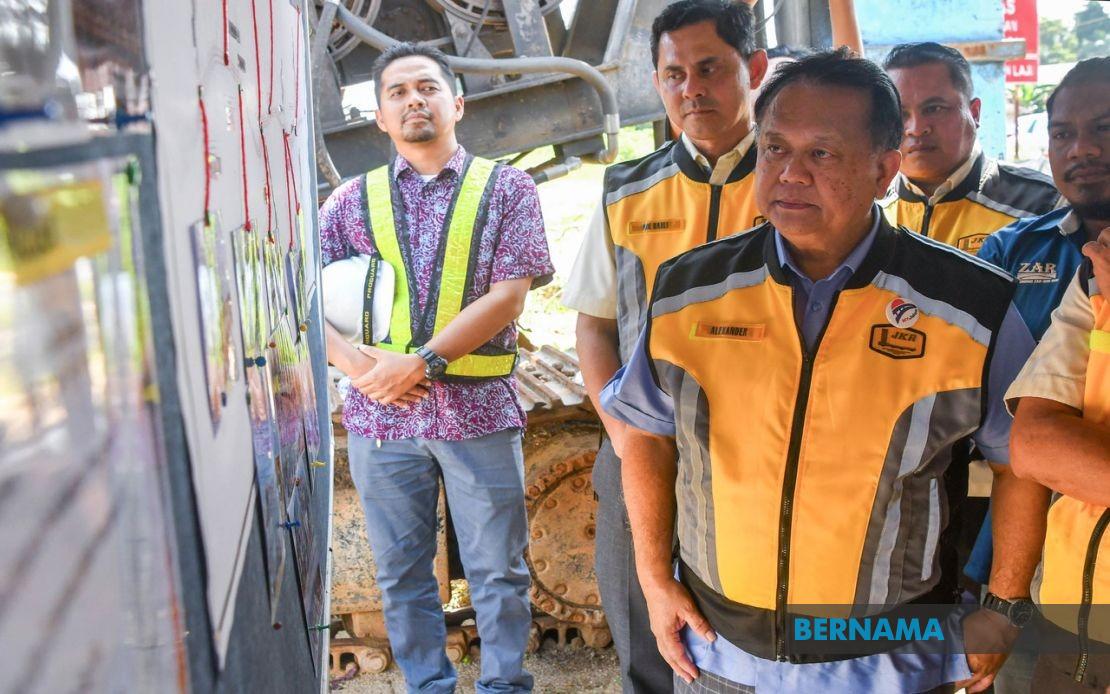
The FT209 and FT131 road upgrading project in Kelantan, which the minister visited, exemplifies both the scale of infrastructure ambition and the complexities involved in delivery. This RM191 million initiative, stretching six kilometres through the Kota Bharu region, aims to alleviate chronic traffic congestion between Kubang Kerian and Pengkalan Chepa. As of the minister's statement, the project had achieved 71.61 per cent physical progress and is scheduled for completion in September 2026, meaning it remains within the implementation window despite the substantial work yet required. The project's financial footprint extends beyond its contract value, as land acquisition involving 300 parcels has already consumed more than RM200 million—a reminder of how acquisition costs often exceed initial estimates.
The road upgrading project has generated secondary impacts requiring ministerial intervention, particularly regarding flooding experienced by residents adjacent to the construction zone. The minister responded by instructing contractors to urgently construct a temporary 40-metre drainage channel, demonstrating how major infrastructure works can disrupt existing environmental and hydrological conditions. This reactive mitigation measure, addressing a problem raised by the local Member of Parliament, will remain in place until the main project concludes. Such incidents highlight the social dimension of infrastructure delivery and the necessity for government to remain responsive to community concerns even while projects are in progress.
The broader challenge facing Malaysia's infrastructure sector lies in reconciling the quantity of ambitious projects in the pipeline with the capacity of the construction industry to deliver them efficiently. The identification of 50 problematic projects from 865 nationwide suggests systemic issues extending beyond individual contractor capability or project-specific circumstances. Contractor financial viability, supply chain disruptions, and the technical complexity of modern infrastructure all contribute to delays. Additionally, competition for resources—from skilled labour to materials to equipment—means that delays in one project can cascade across others, creating network effects that amplify sectoral challenges.
Looking forward, the ministry's weekly monitoring regime and willingness to take decisive action against persistently underperforming contractors signals a tougher approach to project accountability. This represents a recalibration from past practice, where delays sometimes accumulated without commensurate corrective measures. However, success will depend on whether the monitoring infrastructure translates into genuine improvements in delivery rates or merely documents declining performance. The experience of similar oversight initiatives in other countries suggests that monitoring alone is insufficient without concurrent efforts to address underlying systemic factors—including contractor capacity building, supply chain resilience, and realistic scheduling practices that incorporate appropriate contingency for the Malaysian construction environment.

