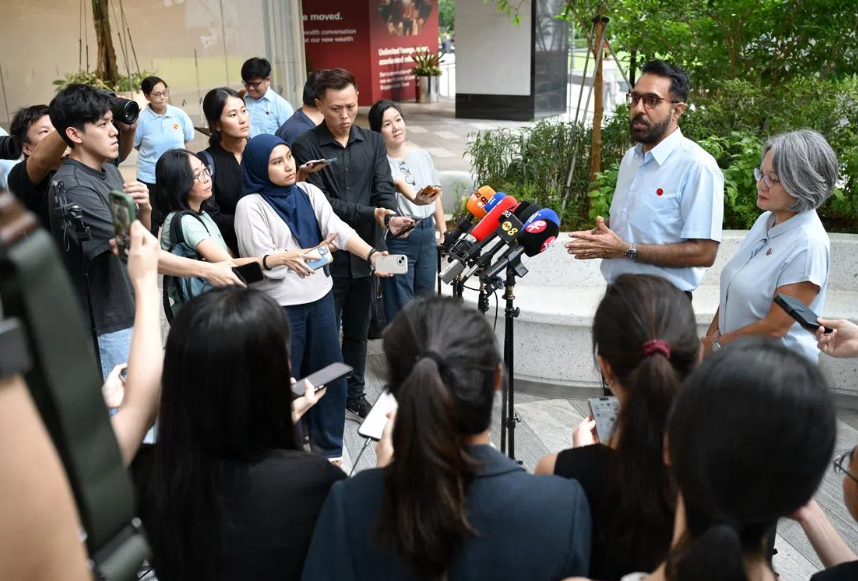
The Workers Party has decisively settled its leadership question, but the broader challenge of winning over sceptical middle-ground voters remains unresolved. After nearly six hours of meetings on June 28, party chief Pritam Singh faced down a vote of no confidence triggered by cadres unhappy with his conviction for misleading Parliament. He emerged victorious with a supermajority of 82 votes from 106 cadres, preserving his position as secretary-general and returning unopposed as party chief. The show of unity, complete with endorsements from veteran figures like former party chief Low Thia Khiang, marks a turning point for Singapore's main opposition party as it moves past nearly five years of internal turbulence.
The crisis that prompted Sunday's challenge stemmed from the 2021 Raeesah Khan saga, which exposed a chain of institutional failures at the party's highest levels. Khan, then the Workers Party's Sengkang GRC MP, had fabricated an account of police mistreatment during a parliamentary speech. When the fabrication emerged, Singh, as party leader, was found to have played a role in prolonging her deception rather than immediately correcting the record. Parliament's Committee of Privileges concluded that Singh had contravened parliamentary rules, leading to a court conviction for lying to Parliament. Even after a High Court appeal upheld the guilty verdict in December 2025, Singh remained defiant, directing critics to his website rather than offering substantive public reflection on the episode.
What the June 28 votes revealed is instructive: the party's institutional machinery has prioritised loyalty and cohesion over accountability. The disciplinary panel investigating Singh's conduct found he had indeed breached the party's Constitution, yet the formal sanction imposed—a letter of reprimand—struck many observers as remarkably lenient. The party's upper leadership had already signalled its support by refusing to nominate a replacement for Singh when Parliament voted to remove him from the Leader of the Opposition role, a position subsequently awarded to Prime Minister Lawrence Wong. The cadre vote on Sunday simply ratified what the leadership had already decided: Singh would remain, and the party would move forward together.
This solidarity should not be entirely dismissed. Opposition parties across Southeast Asia have suffered severe damage from public infighting and leadership upheavals, and the Workers Party's ability to close ranks quickly prevents it from becoming another cautionary tale of internal collapse. Sylvia Lim, the party chair who has held her position for 23 years, used the post-election interview to signal that leadership renewal was a priority going forward, hinting that fresh faces would take more visible roles. Singh's re-election also underscores a harder reality: the Workers Party currently lacks a credible challenger with sufficient public stature and parliamentary experience to mount a serious leadership bid. The fact that no cadre stepped forward to contest despite efforts to encourage one reveals the depth of Singh's entrenchment.
Yet the party's survival strategy now hinges on whether voters will accept the same calculus the cadres have endorsed. The May 2025 general election, held while Singh's lower court conviction was already a matter of record, appeared to vindicate the party's approach. The Workers Party not only consolidated its existing constituencies but expanded its presence by securing two Non-Constituency MP seats, gaining ground against the People's Action Party for the first time in years. This electoral performance persuaded many party loyalists that the saga had been settled in the court of public opinion, and that voters had effectively given Singh a mandate to continue.
However, this interpretation may underestimate the political calculation of Singapore's middle-ground voters. Surveys and election results suggest that a significant portion of the electorate—those who are neither committed PAP supporters nor Workers Party loyalists—remain swing voters whose support is conditional on perceived credibility and competence. For this cohort, a conviction for parliamentary dishonesty carries reputational weight that campaign momentum cannot entirely erase. The Workers Party's institutional embrace of Singh, despite his legal conviction, sends a mixed message to voters who are weighing whether to trust the opposition with greater parliamentary responsibility.
For Malaysia and other Southeast Asian democracies, the Workers Party episode offers relevant lessons about how opposition parties navigate leadership crises. The decision to prioritise institutional unity over a genuine accountability process reflects a common dilemma: opposition movements often lack the resources and institutional depth to withstand prolonged internal division, yet their credibility as alternatives to incumbent governments depends partly on demonstrating stronger ethical standards and accountability mechanisms. The Workers Party's choice—to close ranks and move forward—is pragmatic but also risky. It preserves the party's organisational cohesion but may reinforce perceptions among sceptical voters that the opposition operates by different rules than it expects from those in power.
The practical implications for Workers Party strategy are now becoming clear. With internal uncertainty resolved, the party can focus on parliamentary work and raising its profile on policy issues. Lim's comments about leadership renewal suggest the party hopes to position younger or fresher figures more prominently, potentially deflecting attention from Singh's legal troubles. This approach worked reasonably well during the May election, when a broader campaign message about expanding choice in Parliament resonated with voters. However, the party faces a timing problem: Singh's conviction remains legally and politically recent, and the decision to retain him at the helm, despite the findings of a disciplinary panel, may continue to dog the opposition's efforts to appeal beyond its traditional base.
The question now is whether the Workers Party can translate cadre unity into expanded voter support. The party's growth in recent years has been real, but it still operates as a clear underdog against the PAP and faces less sustained scrutiny from voters and media than government figures endure. This asymmetry may have helped the party weather the Raeesah Khan crisis better than it might otherwise have. Yet as the Workers Party seeks to attract the middle-ground voters necessary for any serious challenge to PAP dominance, the party's handling of its leadership crisis will remain a reference point. Voters assessing whether to support opposition candidates will be watching closely to see whether the Workers Party's emphasis on party unity translates into genuine institutional reform or merely kicks the harder questions down the road.
Singh's path forward depends on demonstrating that his continued leadership produces tangible benefits for the party's electoral prospects and parliamentary influence. The cadres have given him their blessing, but that support is implicitly conditional. If the party continues to expand its footprint and raise important issues in Parliament, the internal crisis may fade from public memory. If, however, the party stagnates or becomes consumed by recurring divisions, the decision to retain Singh despite his conviction will be viewed as a critical error in judgment. For now, the Workers Party has bought itself time and breathing space, but the broader test of whether middle-ground voters accept the party's logic will play out over the coming months and years.

