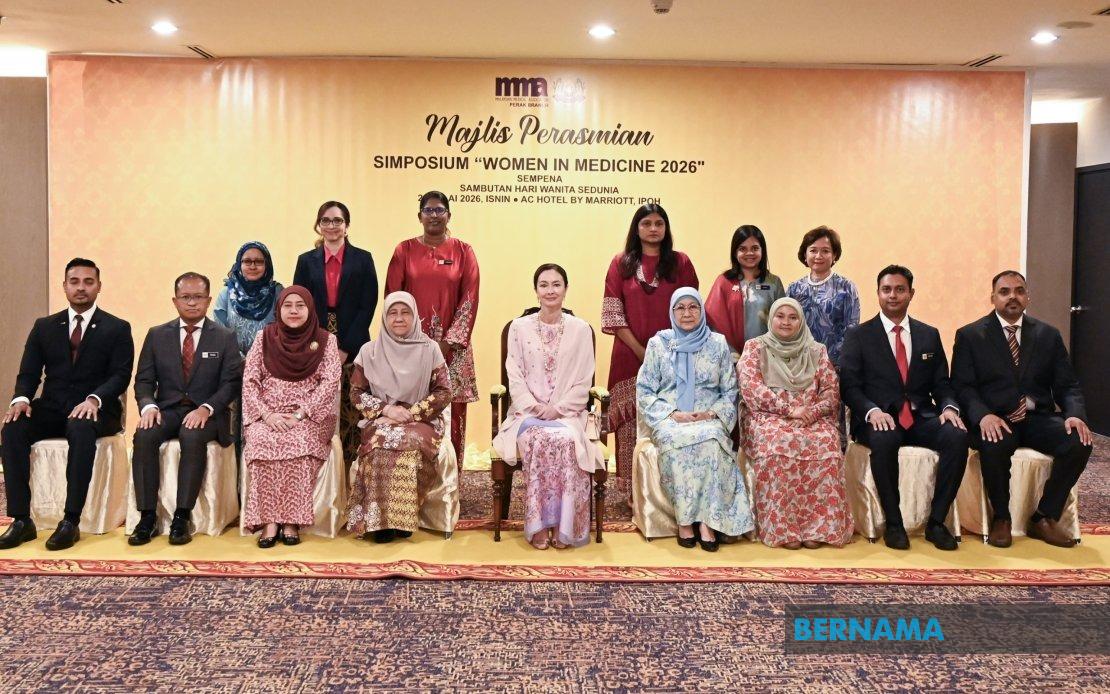
Medical professionals in Perak have made a strong case for expanding women's representation in healthcare leadership, arguing that female perspectives and decision-making capacity are fundamental to tackling the sector's mounting challenges. Speaking at the Women in Medicine 2026 Symposium in Ipoh, Dr Monesh Pillai, chairman of the Perak Malaysian Medical Association, stressed that women bring distinctive strengths to the profession—broader viewpoints, heightened compassion, and a genuine commitment to patient-centred care—qualities increasingly vital as the healthcare landscape transforms.
The Malaysian medical sector faces multifaceted pressures that demand fresh thinking and adaptive management approaches. Mental health crises are intensifying, chronic non-communicable diseases continue spreading, Malaysia's population is ageing rapidly, healthcare systems are embracing digital technologies, and artificial intelligence is reshaping clinical practice. These interconnected challenges cannot be effectively navigated through conventional frameworks alone, Dr Pillai argued, underscoring why including women in senior roles represents not tokenism but strategic necessity.
Dr Pillai's remarks centred on a fundamental premise: the nation's healthcare system requires women not simply participating in governance structures but actively shaping policy and direction. He called explicitly for women to occupy senior positions where they can influence long-term strategy, resource allocation, and clinical priorities—a departure from historical patterns where female professionals, regardless of qualifications, often remained in subordinate roles. This shift would benefit patients, institutional performance, and society broadly, he suggested.
The symposium, held under the patronage of Tuanku Zara Salim, Raja Permaisuri of Perak, aligned with International Women's Day observances and drew participation from senior health officials and medical leaders across the state. The event reflected growing recognition within Malaysia's medical establishment that gender representation in leadership directly correlates with organisational effectiveness and innovation capacity—a principle increasingly documented in global healthcare research.
Dr John Emmanuel, the organising committee chairman, expanded on this argument during his address, articulating how empowering women strengthens not only professional standing but tangible patient outcomes. He emphasised that empowerment transcends simply creating positions; it demands actively establishing environments where women can lead authentically, contribute substantially, and develop their capabilities fully. Without such systemic commitment, opportunities alone remain insufficient to generate meaningful change.
Emmanuel highlighted how medicine's understanding of women's roles has evolved significantly. Contemporary healthcare no longer confines women to clinical practice alone but recognises their contributions across administration, research, education, nursing, pharmacy, allied health fields, and advocacy. This broader conception acknowledges women's multifaceted professional identities while addressing persistent gaps in senior leadership where women remain underrepresented despite comprising substantial portions of the healthcare workforce.
The International Women's Day theme—'For All Women and Girls: Rights. Equality. Empowerment'—provided the symposium's intellectual framework, positioning women's advancement as interconnected with systemic equity rather than individual achievement. This framing resonates particularly in Southeast Asia, where healthcare systems increasingly recognise that inclusive leadership models generate superior outcomes for vulnerable populations, including marginalised women, children, and economically disadvantaged communities.
The symposium featured presentations by prominent healthcare figures including Datuk Dr Adeeba Kamarulzaman, president and pro vice-chancellor of Monash University Malaysia, who addressed the trajectory from clinical medicine to global health policy-making—a pathway historically underrepresented by women despite their capacity to excel in such roles. Similarly, Dr Sangeetha Siniah, a paediatric immunologist and infectious disease specialist at Sunway Velocity Medical Centre, presented on critical health areas where female clinical and research leadership has expanded options for vulnerable populations.
For Malaysian healthcare stakeholders, this discussion carries immediate relevance. The country's medical profession, like regional counterparts, faces pronounced brain drain, burnout among practitioners, and difficulty retaining talent—challenges potentially addressable through inclusive leadership structures that value diverse perspectives and support career progression for all capable professionals. When women encounter glass ceilings or tokenistic appointments, institutional knowledge and problem-solving capacity deteriorate.
The presence of state leadership, including the wife of the Perak Menteri Besar and the state health director, signalled official recognition that women's healthcare leadership constitutes a governance priority rather than peripheral concern. This institutional backing matters considerably in Malaysia's hierarchical professional culture, where visible support from senior figures legitimises organisational change initiatives and provides political cover for structural reforms.
Beyond immediate implications for Perak's healthcare sector, these discussions reflect broader regional patterns. Across Southeast Asia, medical systems grapple with similar pressures—ageing populations, chronic disease burdens, technological disruption, and workforce sustainability challenges. Nations demonstrating success in these areas consistently feature robust female participation in strategic planning and decision-making roles, suggesting that Malaysia's investment in women's medical leadership represents not merely equity advocacy but pragmatic health system strengthening.
The symposium's timing and composition suggest that Malaysian medical associations increasingly view gender equity through strategic rather than solely moral lenses. This reframing may prove decisive in accelerating substantive change, as it positions women's advancement as organisational imperative rather than social obligation—a distinction that historically proves more persuasive to institutional leadership structures.
As Malaysia navigates healthcare transformation over coming decades, the question of who leads these efforts matters profoundly. The Perak Medical Association's clear advocacy for women's participation in decision-making signals recognition that healthcare excellence demands drawing from the complete spectrum of available talent and perspective, irrespective of gender. Whether institutions translate this rhetoric into structural change—through mentorship programmes, transparent promotion pathways, and genuine power-sharing—will ultimately determine whether such advocacy generates lasting professional transformation.

