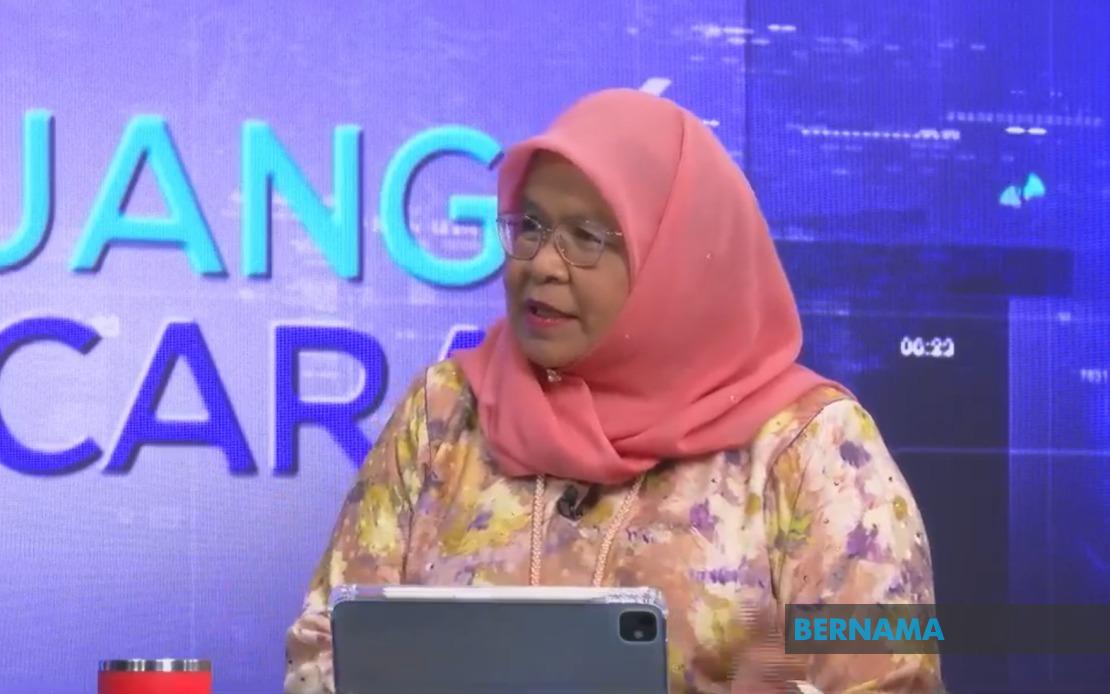
Empowering women to occupy decision-making positions demands far more than simply opening doors; it requires comprehensive institutional support, targeted training programmes, and a genuine shift in how organisations regard female capabilities, according to Datuk Seri Dr Maimunah Mohd Sharif, the Government's Sustainable Urban Development advisor. Speaking at a public forum, the former Kuala Lumpur mayor stressed that women's advancement into leadership roles directly influences whether policy frameworks adequately reflect their needs and lived experiences, making their participation at the highest levels essential to effective governance and organisational decision-making.
The data supporting such calls for systemic change remains stark. While women now represent 56.4 per cent of higher education participation according to 2025 figures, they occupy only 27 per cent of management-level positions—a disparity that indicates educated women face substantial barriers when transitioning from study to senior roles. Within Parliament, female Members constitute just 13.5 per cent of the chamber, whilst women in the Cabinet account for 16.1 per cent of ministerial appointments. These figures underscore a persistent gap between women's educational qualifications and their representation in spaces where policy decisions materially affect national outcomes.
Maimunah's advocacy reflects growing recognition among policymakers that underutilising half the population's talents represents both a moral failing and an economic inefficiency. She encouraged women to actively pursue available opportunities while simultaneously acquiring the knowledge and credentials necessary to excel once in position. Her framing suggests responsibility extends bilaterally—organisations must create genuine pathways whilst women must equip themselves and demonstrate readiness. The 50 per cent representation benchmark she mentioned represents not radical ambition but proportional fairness, acknowledging that competence rather than gender ought to determine selection.
Parallel insights emerged from Datuk Mona Suraya Kamarudin, a non-executive independent director at Nomura Asset Management, whose experience within the financial sector illuminates challenges women face in male-dominated industries. She observed that whilst women typically possess strong technical capabilities and substantial professional experience, they remain clustered at middle-management tiers rather than ascending to executive suites. This pattern suggests that obstacles constraining upward mobility operate beyond individual competence, pointing instead toward systemic gatekeeping and informal networks that favour traditional career trajectories.
Kamarudin's experience indicates that merit-based sectors like finance theoretically operate on gender-blind principles—if someone can effectively manage financial portfolios and institutional assets, rational employers should recruit regardless of gender. Yet persistent underrepresentation in leadership roles suggests either that informal biases persist despite espoused meritocratic values, or that women face additional friction in demonstrating capabilities to decision-makers controlling advancement opportunities. Her assertion that people select competent professionals irrespective of gender, whilst statistically true in principle, sidesteps why such principles fail to translate into proportional representation.
Both speakers acknowledged that professional advancement for women cannot be divorced from family structures and domestic responsibilities. Kamarudin emphasised that spousal and familial support networks meaningfully influence whether women can fully commit to demanding career trajectories. This observation reflects Malaysian social realities where women disproportionately shoulder care work and household management alongside employment. Without acknowledging these structural demands and creating institutional flexibility—through parental leave policies, childcare support, and flexible working arrangements—professional opportunity alone proves insufficient to retain talented women in advancement pathways.
The Malaysian context presents particular complications. As a developing economy with growing female educational participation, the nation risks squandering accumulated human capital if systemic barriers prevent women from translating qualifications into influence. Southeast Asian neighbours display varying success rates in female leadership representation, providing both cautionary tales and models worth emulating. Countries demonstrating higher female participation in decision-making have typically implemented mandatory board quotas, parental support policies, and deliberate sponsorship programmes connecting emerging female talent to established leaders.
Training and leadership development programmes emerge from the discussion as critical infrastructure rather than peripheral luxury. Women entering senior roles often lack access to informal mentorship networks and sponsor relationships that historically accelerated male advancement. Structured development programmes can partially substitute for these advantage-granting networks whilst building confidence and capabilities necessary to navigate organisational politics successfully. Yet such programmes require genuine institutional commitment and resources; token training without corresponding changes to hiring and promotion practices yields marginal results.
The broader implication for Malaysian governance and business is that demographic representation at decision-making levels should function as a strategic objective rather than charitable gesture. When women shape policy and corporate strategy, outcomes demonstrably improve across measurable indicators from public health to financial management. The current gaps between female educational achievement and leadership representation suggest Malaysia is operating substantially below optimal efficiency, leaving talent unutilised and perspectives unrepresented in consequential decisions.
Maimunah's call for women to seize opportunities when presented, paired with calls for systemic support and trust in capabilities, reflects a balanced approach acknowledging both individual agency and structural constraints. Women cannot overcome systemic disadvantages through determination alone, yet structural opportunity without qualified candidates ready to perform yields hollow advancement. The resolution requires simultaneous movement on multiple fronts—expanding opportunity, providing genuine training and sponsorship, cultivating family-friendly workplace policies, and fundamentally reconceiving decision-making roles as positions where female perspectives contribute distinct and valuable dimensions rather than simply filling quotas or achieving demographic parity.
As Malaysia continues developing economically and politically, the question of female leadership representation becomes increasingly urgent. The nation possesses educated women capable of occupying senior positions; what remains lacking is the comprehensive institutional commitment to systematically developing, advancing, and trusting them with genuine authority. Until such commitment materialises across government, private sector, and civil society simultaneously, the gap between female educational participation and leadership representation will persist, representing unrealised potential and incomplete utilisation of national human resources.

