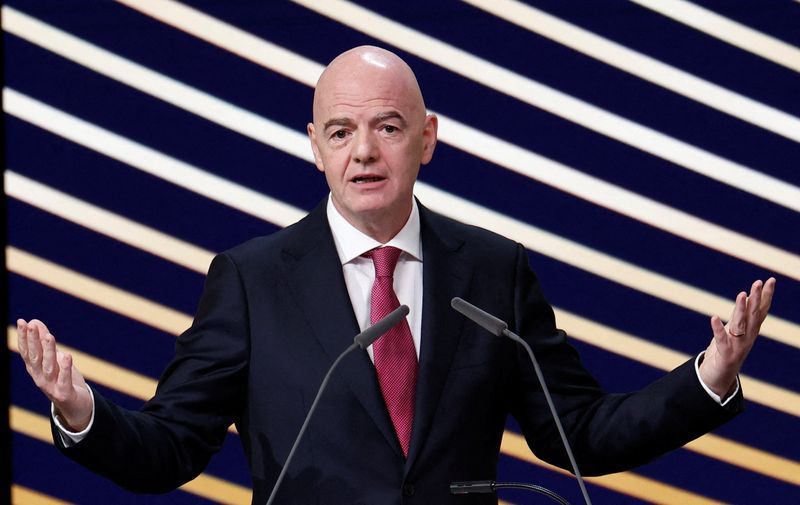
The governance crisis engulfing FIFA has found unexpected champions in two women who occupy rare positions of influence within European football's power structures. Laura McAllister of Wales and Lise Klaveness of Norway, serving as the only female members of UEFA's executive committee, have emerged as vocal opponents of FIFA President Gianni Infantino during turbulent weeks that have exposed fractures in football's global administration. Their prominence in the escalating standoff marks a significant moment for gender representation in a sport historically monopolized by male decision-makers at the highest echelons.
The immediate catalyst for the institutional upheaval stems from Infantino's attempt to fast-track approval for FIFA Football Enterprises, a private equity venture designed to restructure football's commercial operations. The proposal triggered fierce resistance from UEFA and other regional confederations, with Wales becoming the first national association to withdraw support for Infantino's re-election bid. The reverberations quickly spread through FIFA's own bureaucratic apparatus, forcing Infantino to convene an emergency meeting in Morocco as the political ground shifted beneath him. What began as a commercial initiative has evolved into a comprehensive challenge to his leadership and the governance philosophy he represents.
McAllister, serving as UEFA vice-president, articulated a measured perspective on the possibility of female leadership at FIFA while acknowledging the substantial structural barriers that remain. She expressed cautious optimism about the prospect of a woman eventually leading global football, yet tempered such hopes with frank realism about the sport's entrenched patriarchal infrastructure. Her assessment reflected understanding that merit alone cannot overcome institutional resistance rooted in decades of masculine dominance within international sporting bureaucracies. The political landscape surrounding FIFA's presidency remains weighted heavily against candidates lacking the networks and relationships traditionally built through exclusive male-dominated corridors of power.
The governance crisis has gained additional momentum from an unexpected quarter: Sepp Blatter, FIFA's former president, publicly endorsed the notion that the time has come for a woman to lead the organization. This intervention from a figure synonymous with FIFA's controversial history added symbolic weight to arguments about institutional renewal and fresh perspectives. Yet such endorsements, while welcome, cannot obscure the practical complications inherent in achieving genuine leadership transformation within FIFA's complex political ecosystem spanning multiple continents and competing national interests.
McAllister emphasized that the current turmoil extends far beyond the failed FFE initiative, instead reflecting deeper pathologies embedded within FIFA's governance framework. She catalogued a succession of controversies that have eroded institutional credibility: FIFA's entanglement with the failed European Super League project, political controversies surrounding World Cup venues and operations, and the contentious decision to rescind a red card for American striker Folarin Balogun following intervention by United States President Donald Trump. Each incident represents not merely operational missteps but symptoms of governance structures inadequate to insulate football from commercial pressures and political interference.
For McAllister and Klaveness, their resistance springs from principles grounded in careers spanning professional playing experience and professional expertise beyond football. Both played international football for their respective nations before transitioning into governance roles. McAllister holds credentials as a political scientist while Klaveness trained as a lawyer, bringing intellectual frameworks and professional standards from domains outside the insular football administration ecosystem. This background infuses their critiques with demands for institutional integrity and values-based leadership rather than purely transactional management of football's commercial apparatus. They articulate a vision of football as a universal social institution rather than a privatized commercial asset to be restructured according to investor preferences.
The fundamental tension animating their position concerns football's essential character and purpose. McAllister contends that allowing private capital to dominate football's structural transformation threatens the sport's core identity and social mission. She argues that football's value derives from its accessibility across all socioeconomic strata, from grassroots participation through elite professional competition, and its capacity to reach communities regardless of national wealth or development status. When private equity capital becomes the organizing principle, such universality becomes subordinated to profit maximization, fundamentally altering the sport's relationship to society. Women's involvement in football administration, she suggests, may predispose decision-makers toward protecting these broader social dimensions rather than narrowing focus exclusively to commercial extraction.
The statistical reality of female representation within FIFA's membership reveals the magnitude of structural imbalance requiring redress. Among FIFA's 211 member associations, merely ten are presided over by female presidents, despite women representing half of global humanity and increasingly dominant participation in football at grassroots and professional levels. Klaveness's position as a female national federation president remains exceptional rather than normalized. This profound underrepresentation persists despite parallel developments in other Olympic sports, where governance structures have accelerated female advancement into senior leadership positions. The International Olympic Committee now operates under female leadership, and the Olympic Games have achieved gender parity in athlete participation, establishing paradigms that football has demonstrably failed to emulate.
McAllister cautioned against adopting aggressive strategies to accelerate female advancement to FIFA's presidency, instead advocating for patient institutional building and sustained momentum accumulation. She characterized the approach as methodical rather than revolutionary, recognizing that precipitous campaigns might generate counterproductive political resistance within FIFA's geographically dispersed and culturally heterogeneous membership. Any successful presidential candidacy would require support extending well beyond UEFA's European constituency into confederations across Africa, Asia, and the Americas, each operating within distinct political contexts and governance traditions. McAllister's gradualism reflects strategic calculation about how institutional transformation actually occurs within international sports governance rather than ideological compromise on gender equity objectives.
Industry observers including Michael Payne, formerly responsible for Olympic Committee marketing operations, contextualize FIFA's gender equity shortcomings against comparative international sports governance. Payne highlighted the International Olympic Committee's pioneering efforts toward gender parity over two decades, establishing 50-50 gender balance among competing athletes and expanding female representation within governance structures. Football presents a starkly different picture: the men's World Cup remains the sport's preeminent global competition, while the women's tournament occupies a decidedly subordinate position within international football's institutional hierarchy and commercial ecosystem. This structural subordination reflects and reinforces the barriers confronting female leaders seeking positions at FIFA's apex.
The immediate political outcome remains uncertain, yet the crisis has crystallized debates about football's governance future and female leadership representation. Whether Infantino survives the current challenge or departs, the questions raised by McAllister and Klaveness regarding institutional values, political independence, and leadership representation will persist. Their resistance has demonstrated that opposition to FIFA's current trajectory need not emanate exclusively from established football power brokers but can emerge from officials motivated by principles of institutional integrity and broader social responsibility. For Malaysian readers and Southeast Asian observers, the governance debates unfolding at FIFA's highest levels carry implications for how regional and national football associations exercise agency within international structures and what standards should govern football administration across all jurisdictional levels.
Looking forward, the trajectory toward greater female representation in global football governance will likely depend upon sustained pressure from female leaders within regional confederations combined with evolving expectations regarding institutional accountability and values-driven administration. The women currently challenging FIFA's establishment are simultaneously building infrastructure and precedent for successors who might ultimately lead the world's most popular sport. Their principled resistance during the current crisis has established intellectual and moral frameworks that transcend immediate political outcomes, potentially reshaping how football governance conceptualizes leadership, representation, and institutional purpose across continents.

