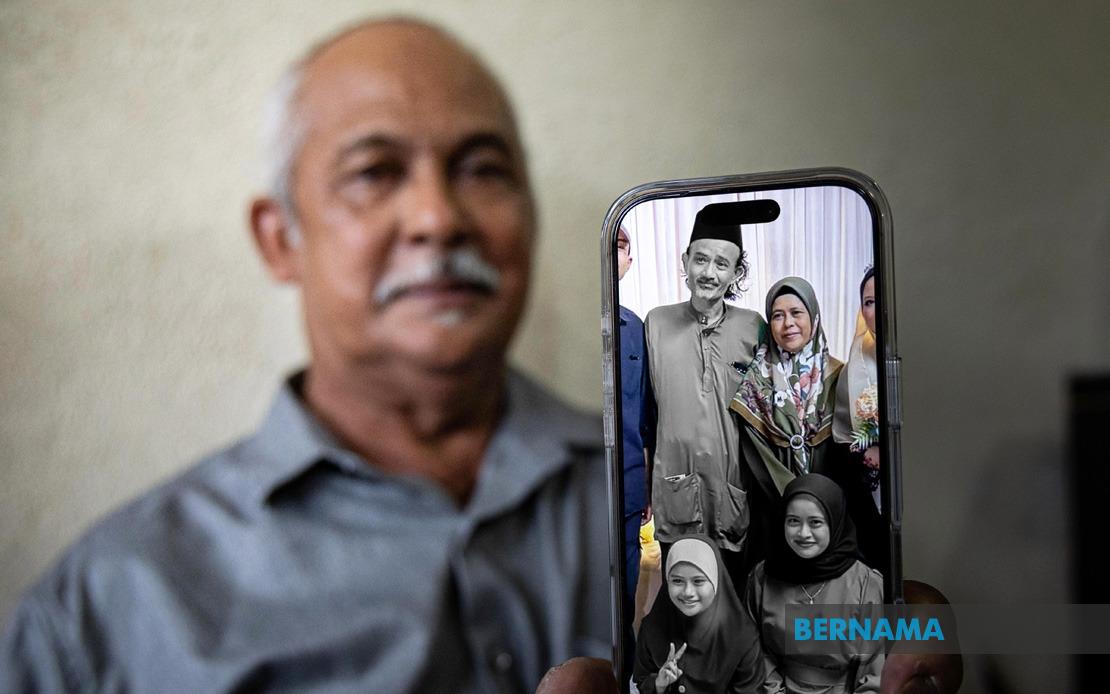
A woman who survived a catastrophic road accident involving a Malaysian Immigration Department (JIM) truck in Kuala Lumpur remains in a state of cognitive distress as she grapples with the loss of her immediate family. Norhayati Razali, 55, has been receiving treatment at Kuala Lumpur Hospital following the collision on Jalan Sultan Ismail that resulted in the deaths of her husband and two children on Wednesday. Though she has progressed sufficiently to move from intensive care to a regular ward and can now consume food and liquids independently, medical staff report that persistent memory impairment stemming from serious head injuries continues to affect her recovery.
The nature of Norhayati's cognitive challenges has created an emotionally complex situation for her family. Her brother, Mohd Nadzri Razali, explained to media that despite being shown her family members' bodies and receiving detailed explanations of what had transpired, Norhayati appears unable to retain this traumatic information. Within a day of receiving this devastating news while still in hospital, she inquired about the whereabouts of her husband and children, raising questions among relatives about whether the information has registered in her consciousness or whether the grief is manifesting as a form of protective amnesia. Mohd Nadzri expressed uncertainty about the trajectory of his sister's mental recovery, noting that the family cannot determine whether her questions reflect genuine memory loss or difficulty processing the sudden tragedy.
Beyond the psychological dimension of Norhayati's injuries, she sustained extensive physical trauma across multiple body systems. Her medical records indicate injuries to both upper and lower extremities, including damage to her hands, waist, knees, and legs, in addition to the head injuries that have proven most debilitating. The combination of orthopedic and neurological injuries means her rehabilitation will likely be prolonged and multifaceted. Her family remains uncertain about the timeline for recovery and whether she will eventually be deemed stable enough for transfer to a medical facility closer to her home in Perak, which would ease the burden on relatives attempting to provide daily support during her recuperation.
The logistics of caring for Norhayati have presented their own challenges for the family unit. Mohd Nadzri, who is 69 years old, has not yet been able to visit his sister in the capital due to transportation difficulties and his unfamiliarity with Kuala Lumpur's road network. He expressed concern about attempting to drive independently to the hospital, preferring to arrange a ride with someone familiar with the city. This situation underscores the practical hardships that accidents create beyond the immediate medical crisis, placing strain on aging family members who must balance emotional support with the realities of distance and accessibility.
The circumstances surrounding the accident itself raise serious questions about vehicle operations and road safety protocols. The JIM truck was operating with its beacon and siren activated while en route to Chow Kit for an immigration enforcement operation targeting undocumented migrants. According to available evidence, the empty truck proceeded through an intersection controlled by traffic signals despite the light being red, entering the intersection on what appears to have been an illegal maneuver despite the activation of emergency signals. The truck subsequently collided with a Proton Saga vehicle that was traveling with a green light, establishing a clear sequence of events that suggests the immigration vehicle's driver either misjudged the intersection or assumed emergency status provided legal clearance to proceed against traffic signals.
The impact of the truck's collision with the Proton Saga initiated a chain reaction that involved multiple vehicles and pedestrians. The force of the impact caused the truck to lose directional control, veer off its intended path, and strike pedestrians in the vicinity before colliding with an Inokom Matrix vehicle. Four members of Norhayati's family were struck in this sequence of events, with three fatalities and one serious injury. The multiplicity of impacts suggests a high-velocity collision with significant energy transfer, explaining the severity of injuries sustained by those involved.
Norhayati's family has articulated a clear expectation that the investigation into the accident be conducted with transparency and rigorous adherence to procedural standards. Mohd Nadzri specifically called for examination of traffic camera footage from the intersection, indicating that surveillance recording should provide definitive evidence of the sequence of events and which vehicle violated traffic signals. The family's emphasis on justice and accountability suggests they may pursue legal remedies beyond the official investigation, particularly if findings do not adequately explain the circumstances or assign responsibility in ways the family considers appropriate.
The incident raises broader questions about the operational protocols for emergency vehicles in Malaysia, particularly regarding the exercise of privileges granted by flashing lights and sirens. While emergency response vehicles are typically afforded certain latitude in traffic law to expedite critical operations, this privilege carries commensurate responsibility and accountability. The apparent violation of a red traffic signal by the JIM truck, whether intentional or due to driver error, resulted in loss of life that might have been preventable through stricter adherence to traffic regulations or more cautious intersection navigation despite emergency status.
For the Malaysian public, this accident serves as a sobering reminder of the vulnerabilities inherent in sharing urban spaces with large vehicles and the importance of consistent enforcement of traffic laws regardless of whether a vehicle bears emergency markings. The involvement of a government vehicle operated by the Immigration Department may also raise questions about departmental training standards and whether sufficient emphasis is placed on defensive driving techniques and careful risk assessment when emergency status is claimed.
Norhayati's slow physical and cognitive recovery will likely extend over many months, and the psychological trauma of knowing she has lost her husband and children while struggling to maintain awareness of that fact creates a uniquely challenging therapeutic situation. Medical and mental health professionals will need to balance supporting her adaptation to severe loss with addressing the neurological deficits that currently impede her ability to fully process and grieve. Her family, meanwhile, must manage their own grief while providing the stable, patient support needed for her rehabilitation.

