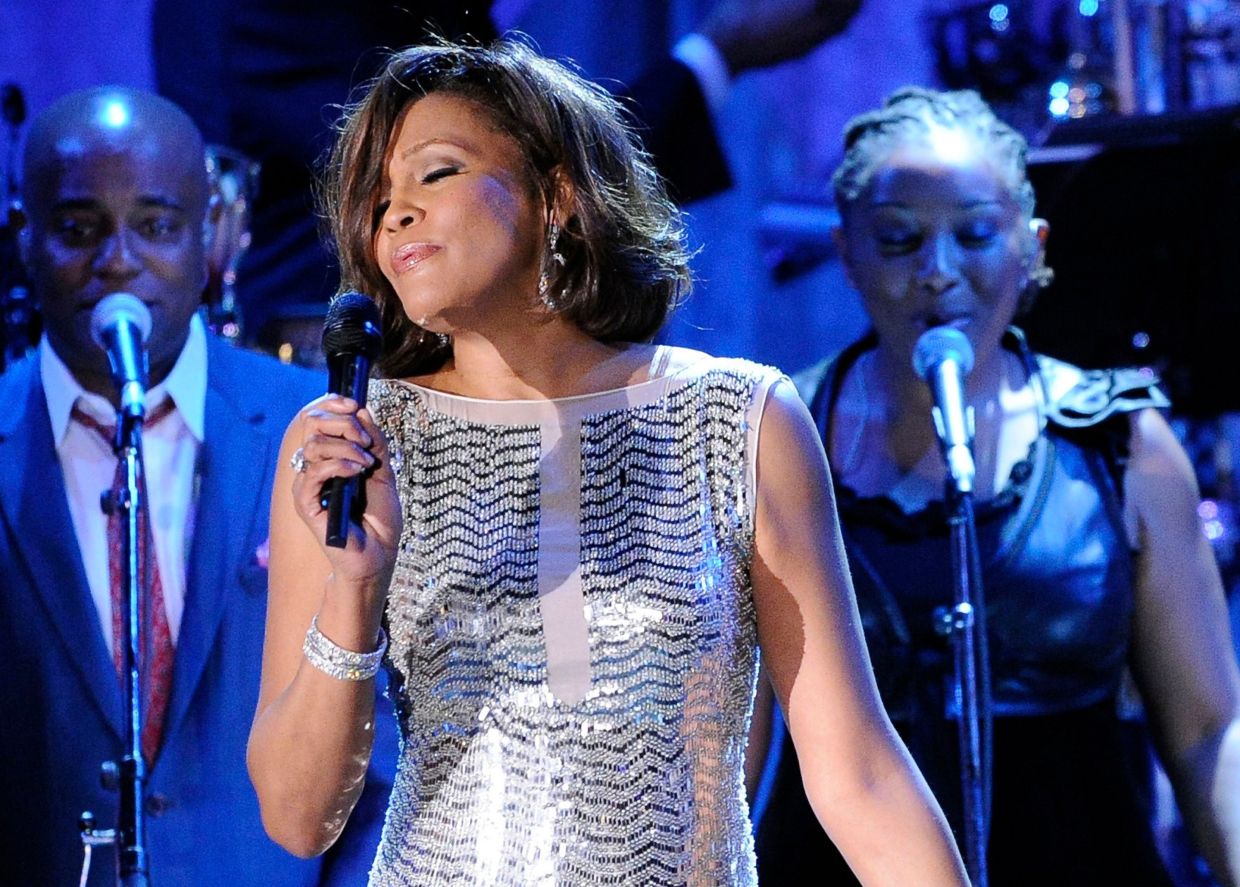
Whitney Houston's enduring influence on popular culture continues to unfold nearly four decades after she first made her mark on the music industry. With celebrations marking what would have been her 63rd birthday on August 9, the late singer's estate has launched fresh tributes designed to introduce her unparalleled artistry to new audiences while reinforcing her status as one of music's greatest voices.
A newly compiled album featuring all 11 of Houston's Billboard Hot 100 No.1 singles represents the cornerstone of these birthday commemorations. The collection stands as a comprehensive testament to a recording career that consistently produced chart-dominating hits, each one leaving an indelible mark on popular music. These were not merely commercial successes—they became the soundtracks that defined entire generations and touched the lives of millions globally. The compilation underscores how Houston's vocal prowess transcended the typical lifespan of pop hits, with her songs maintaining cultural relevance decades after their original release.
Running parallel to the music collection is the unveiling of a Whitney Houston Barbie doll, a landmark moment for the singer's legacy as it marks her first-ever appearance as a Mattel collectible. According to Pat Houston, the estate executor and the late singer's sister-in-law, this achievement carries profound personal significance. Houston revealed that conversations about bringing Whitney to life as a Barbie doll had been ongoing for more than two decades, making the eventual realization of this vision a deeply emotional milestone. The decades-long journey from initial concept to final product exemplifies how meaningful projects often require patience and the right moment for their fruition.
Pat Houston's stewardship of her sister-in-law's legacy reflects a philosophy rooted in purposeful curation rather than indiscriminate expansion. When asked about potential biopic projects comparable to the recent critical acclaim surrounding Michael Jackson's film adaptations, Houston carefully avoided making premature commitments. Her reticence stems not from lack of opportunity but from a deliberate strategy to protect the integrity of Houston's memory and artistic contributions. This measured approach indicates that the estate views each new project as a significant decision requiring careful consideration rather than routine business.
The influence of Clive Davis, Houston's longtime collaborator and mentor, remains central to how the estate conceptualizes her legacy. Davis, who recently passed away, played a transformative role in Houston's career that extended far beyond traditional artist-management relationships. The bond between Davis and Houston represented a genuine mutual respect and love that shaped not only her commercial trajectory but also her artistic development. Pat Houston emphasized that Davis spoke of Whitney Houston in nearly every music industry conversation until his death, demonstrating the permanence of their creative partnership in the broader story of popular music.
Looking forward, the estate is exploring multiple avenues for sharing Houston's vast catalogue and previously unseen performances. Pat Houston indicated that numerous projects remain under development, though she declined to discuss specific details until definitive agreements are finalized. This confidentiality reflects industry standard practice for major entertainment initiatives, particularly when multiple stakeholders and licensing considerations are involved. The estate's willingness to explore diverse formats—from music releases to live performance presentations—suggests a recognition that Houston's artistry can be celebrated through various mediums beyond traditional studio recordings.
One particularly intriguing possibility Houston raised involves releasing live performances that have remained unavailable to North American audiences despite being seen in other parts of the world. Such a strategy would serve the dual purpose of introducing international performances to the American market while demonstrating the full breadth of Houston's gift as a live performer. Her stage presence and ability to command an audience represented a dimension of her talent that studio recordings, however exceptional, could only partially capture. Making these archival performances accessible would fulfill what Pat Houston described as one of her ultimate goals for stewarding the singer's memory.
The estate's cautious approach to new projects reflects a broader awareness that overexposure or poorly conceived tributes could potentially diminish rather than enhance Houston's standing. Pat Houston explicitly stated her commitment to avoiding oversaturation of the market with poorly purposed initiatives. This perspective demonstrates sophisticated understanding of how posthumous celebrity management functions in contemporary culture, where missteps can quickly erode public goodwill and damage an artist's legacy. Every new release or exhibition must justify its existence through meaningful contribution rather than mere commercial exploitation.
For Malaysian audiences and Southeast Asian readers more broadly, Whitney Houston's legacy carries particular resonance as a global cultural icon whose influence transcended geography and demographic boundaries. Her vocal technique, emotional depth, and fearless interpretation of material established standards that continue to influence contemporary singers across all genres. The estate's thoughtful stewardship ensures that future generations will continue to discover and appreciate what made Houston's voice singular and her artistry transformative. As new projects gradually emerge from development, they promise to deepen understanding of an artist whose contributions to music remain fundamentally irreplaceable.

