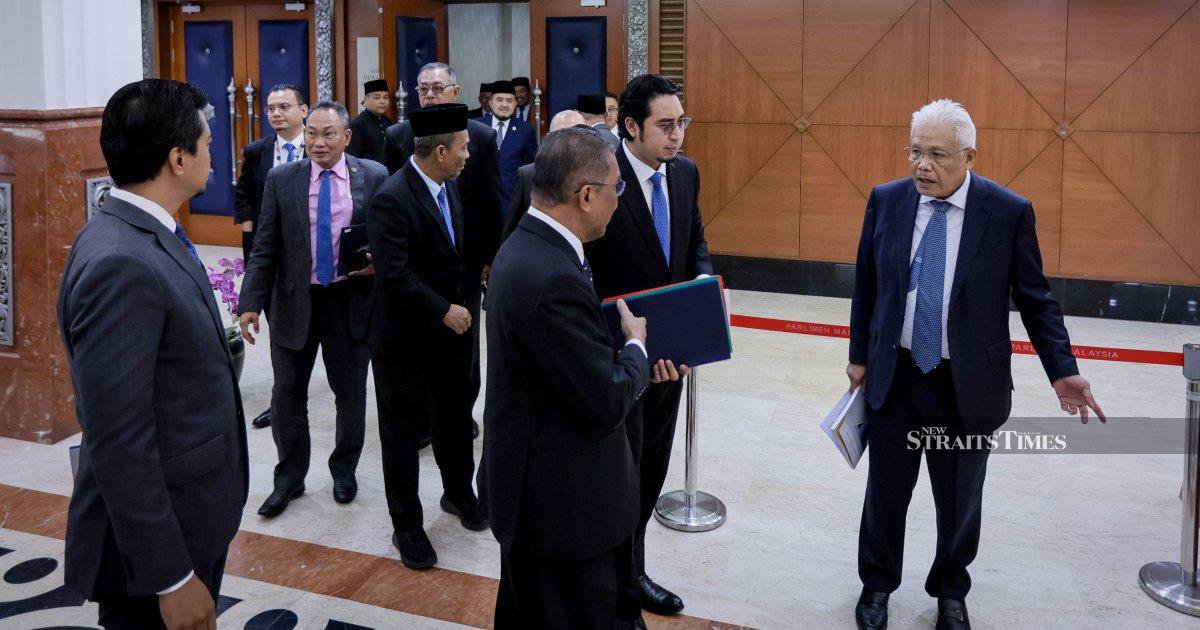
The opposition's decision to walk out of Parliament following the tabling of the Royal Commission of Inquiry report on Tabung Haji has once again placed parliamentary protest tactics under scrutiny, exposing a fundamental inconsistency in how Malaysia's political actors view dissent and parliamentary procedure. The walkout, intended as a dramatic statement of disapproval, reveals an enduring pattern in Malaysian politics where the legitimacy of protest depends almost entirely on one's position in the political equation rather than on any objective standard of behaviour or principle.
Parliamentary walkouts occupy an unusual space in democratic practice. Ostensibly, they represent a principled stand by lawmakers who believe the situation has become so untenable that their continued presence would constitute tacit endorsement of proceedings they find unconscionable. Yet they also carry an inherent performative element that cannot be entirely divorced from their symbolic intent. The opposition members who stormed out were simultaneously making a genuine statement of principle and creating a visual spectacle designed to capture media attention and register public dissatisfaction. Both dimensions exist simultaneously, and attempting to separate them cleanly is largely futile.
What makes the Tabung Haji walkout particularly illustrative of this contradiction is how it highlights Malaysia's inconsistent treatment of such tactics across the political spectrum. Government-aligned MPs have previously deployed identical strategies when confronted with legislation or reports they deemed unacceptable, and in those instances, similar walkouts were frequently characterized as necessary expressions of parliamentary frustration. The same action, performed by different actors, somehow transforms in its moral and political character depending on which side initiates it. This selective interpretation suggests that what truly matters in Malaysian politics is not the principle underlying the protest, but rather whose interests are being advanced.
The Tabung Haji situation deserves particular attention because it involves an institution that has touched the lives of hundreds of thousands of Malaysian pilgrims and their families. The Royal Commission inquiry into the fund raised serious questions about governance, mismanagement, and the protection of public assets accumulated through decades of savings by ordinary Malaysians preparing for the Hajj pilgrimage. The opposition's frustration, therefore, likely reflects genuine public concern rather than mere partisan gamesmanship. However, the decision to express that concern through a parliamentary walkout raises strategic questions about effectiveness and alternative approaches.
Walkouts as a tactic occupy a peculiar position in terms of their actual impact on policy or institutional accountability. A dramatic exit from the chamber generates headlines, captures social media attention, and provides opposition figures with a powerful symbolic gesture they can later reference in speeches and campaign materials. Yet the practical consequences often prove minimal. The business of Parliament continues in the absence of the protesting members, reports are still tabled, votes still occur, and the walkout rarely prevents the government from advancing its legislative agenda. In this sense, walkouts function primarily as public communication tools rather than as mechanisms that meaningfully obstruct or redirect government action.
The Malaysian context adds additional layers to this analysis. Parliamentary opposition has been significantly constrained in recent years by what many observers characterize as a shrinking democratic space. When normal channels for registering dissent—committee scrutiny, detailed parliamentary questioning, extended debate—have been hollowed out by procedural streamlining or majoritarian dominance, dramatic tactics like walkouts become more tempting. They offer opposition members a way to claim that they fought, that they refused to be silent collaborators, even if the practical consequences remain marginal. From this perspective, walkouts represent not an optimal strategy but rather a symptom of deeper institutional dysfunction.
For Malaysian readers and observers, this situation reflects broader questions about parliamentary culture and the health of democratic institutions. A parliament where dissent is expressed primarily through walkouts and dramatic gestures rather than through robust debate and substantive challenge suggests institutions under strain. It indicates that normal mechanisms of accountability and scrutiny may have deteriorated, pushing lawmakers toward more visible but less substantive forms of protest. The frequency with which walkouts occur in contemporary Malaysian politics suggests that Parliament is no longer serving effectively as a forum where government actions are thoroughly examined and defended.
The Tabung Haji walkout also raises practical questions for the opposition about strategic priorities. While generating headlines and symbolizing resistance holds undeniable value, sustained engagement with detailed criticism of the RCI findings—through speeches, press conferences, and public explanation of the fund's problems—might ultimately prove more persuasive to voters evaluating performance and competence. Parliamentary theatrics, however justified, can sometimes overshadow substantive policy critique in ways that ultimately disadvantage the opposition's broader political positioning.
From a Southeast Asian perspective, Malaysia's experience with parliamentary walkouts reflects tensions common across the region. Democracies throughout Asia grapple with questions about how opposition should function when institutional constraints limit its effectiveness. Countries like Thailand, Myanmar, and Indonesia have all experienced parallel dynamics where dramatic parliamentary gestures substitute for deeper institutional checks on executive power. Understanding Malaysia's walkout culture requires positioning it within this broader regional context of democracy under pressure.
Moving forward, the challenge for Malaysian Parliament lies in reconstructing institutional norms and procedures that make such dramatic protests unnecessary. When opposition members feel compelled to walk out, it signals that normal channels of dissent and scrutiny are inadequate. This should prompt reflection from all political actors about whether parliamentary procedures, debate allocation, committee structures, and question-and-answer sessions are genuinely affording meaningful opportunities for government accountability. The goal should be a parliament where serious disagreements can be expressed through substantive challenge rather than through the limited vocabulary of performative protest.
Ultimately, the contradiction embedded in how Malaysia treats parliamentary walkouts—legitimate when deployed by allies, illegitimate when used by opponents—cannot be resolved through argument or principle alone. It requires broader political commitment to consistent standards of parliamentary behaviour regardless of which side benefits in any particular instance. Until that commitment exists, walkouts will remain simultaneously dismissed as grandstanding and justified as necessity, each assessment depending entirely on political perspective rather than on any objective measure of democratic practice or institutional health.

