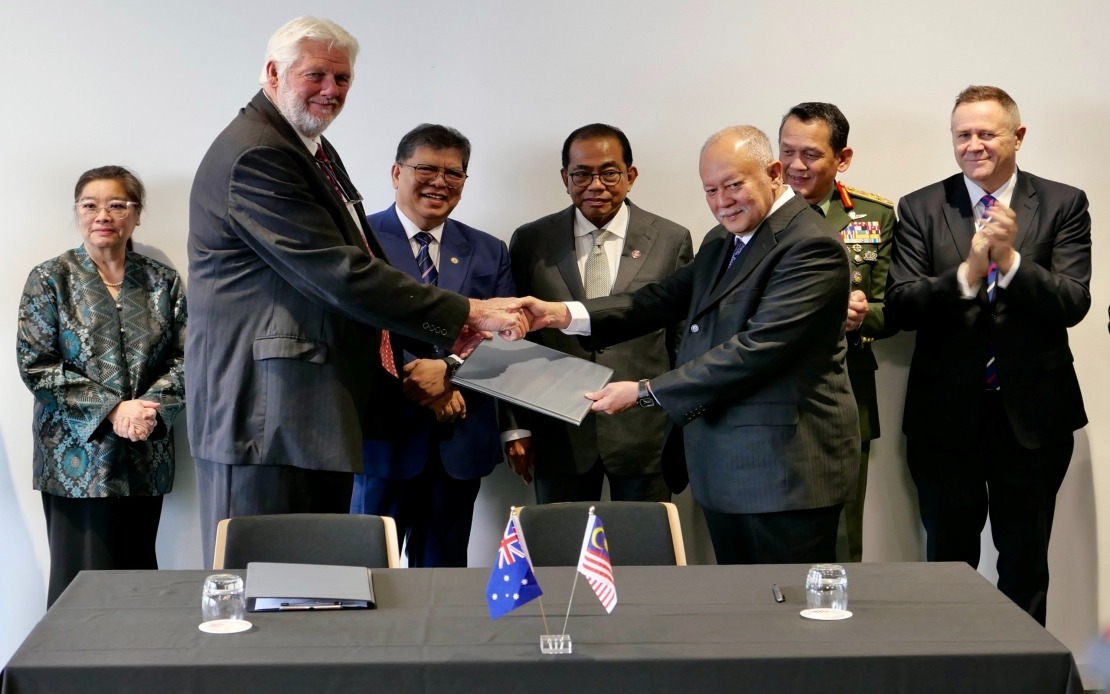
Malaysia has moved to strengthen its indigenous defence manufacturing base through a landmark partnership between Weststar Defence Industries Sdn Bhd and Australian firm Rocket Technologies International Pty Ltd, an initiative that Defence Minister Datuk Seri Mohamed Khaled Nordin heralded as pivotal to the nation's long-term security posture. The collaboration represents a deliberate strategy to transition Malaysia from a consumer of advanced defence technology towards a domestically capable producer of sophisticated systems, particularly in the strategically important domains of rocketry and missile engineering.
The deal, formalised during Mohamed Khaled's working visit to Australia, addresses critical gaps in Malaysia's defence industrial capacity. Under the arrangement, Weststar will construct and operate a manufacturing facility within Malaysia to initiate rocket production within the next two years, with plans to subsequently pivot towards missile fabrication. This phased approach reflects both the technical complexity involved and the need to build requisite expertise incrementally across the Malaysian industrial base.
The partnership directly supports the National Defence Industry Policy (DIPN), a comprehensive framework designed to cultivate domestic expertise in designing, developing, and producing defence systems. By anchoring this collaboration through Weststar, Malaysia gains a proven local champion with established credentials in the defence sector, while RTI contributes technical sophistication and access to global supply networks. The combination enables Malaysia to leapfrog intermediate stages of development that might otherwise consume years of independent research.
Beyond immediate manufacturing benefits, the arrangement opens pathways for Malaysian companies to integrate into RTI's international supply chain. This exposure to global defence procurement ecosystems provides smaller and medium-sized Malaysian firms with opportunities to develop capabilities in component manufacturing, testing, and quality assurance—skills that extend far beyond the bilateral partnership. The integration into advanced defence supply networks positions Malaysia as a credible supplier in regional and potentially global markets, generating export revenue and employment throughout the supply chain.
The signing ceremony, conducted by Weststar Group founder and group managing director Tan Sri Dr Syed Azman Syed Ibrahim and RTI founder Allan James Payne at the National Convention Centre in Canberra, underscored the high-level political commitment both nations have invested in the arrangement. Mohamed Khaled's explicit reference to Australian government support signals that this collaboration enjoys backing from both the Malaysian federal administration and Canberra, removing potential regulatory obstacles and facilitating technology transfer protocols that typically govern sensitive defence partnerships.
Malaysia's delegation during the Australian visit included Royal Malaysian Air Force chief General Tan Sri Muhamad Norazlan Aris, Universiti Pertahanan Nasional Malaysia (UPNM) vice-chancellor Lt Gen Datuk Wira Arman Rumaizi Ahmad, and National Aerospace Industry Corporation Malaysia (NAICO Malaysia) chief executive officer Prof Shamsul Kamar Abu Samah. This composition deliberately brought together military end-users, defence education institutions, and government aerospace entities, reflecting a whole-of-nation approach to capability development. The delegation's tours of the Institute for Space, Defence and Advanced Technologies at the University of Southern Queensland, particularly visits to composite manufacturing and hypersonics laboratories, highlighted the critical importance Australia's defence sector places on academia-industry collaboration.
This institutional architecture—leveraging university research facilities, defence contractors, and government agencies in integrated ecosystems—represents a sophisticated approach that Malaysia can potentially replicate domestically. The exposure to how Australia structures defence innovation partnerships may influence how Malaysia organises collaborations between UPNM, NAICO Malaysia, and private sector participants like Weststar. Such institutional learning often proves as valuable as the specific technical knowledge transferred through defence partnerships.
Mohamed Khaled's parallel engagement with Australian Defence Minister Richard Marles demonstrates that the Weststar-RTI deal fits within a broader strategic realignment of Malaysia-Australia defence relations. Discussions centred on deepening bilateral defence ties and identifying emerging areas of mutual strategic interest. For Malaysia, closer defence cooperation with Australia provides both technological access and operational interoperability benefits, particularly relevant given shared maritime security challenges in the Indo-Pacific region and the increasing sophistication of naval and air threats.
The parliamentary-level engagement during the visit—including meetings with Dewan Rakyat Speaker Tan Sri Johari Abdul, Australian Speaker Milton Dick, and multiple parliamentarians—reinforces that defence industry development transcends narrow military concerns. Sustained parliamentary dialogue supports ratification of technology transfer agreements, removal of tariff barriers, and alignment of defence acquisition standards. Such legislative engagement signals to both Malaysian and Australian constituencies that defence cooperation enjoys broad political endorsement.
From Malaysia's strategic perspective, developing indigenous rocket and missile capabilities reduces dependency on traditional external suppliers and enhances operational sovereignty. Nations controlling their own critical defence systems gain political autonomy in crisis situations and reduce vulnerability to supply disruptions or politically-motivated embargoes. For a mid-sized regional power like Malaysia, this autonomy carries particular significance given evolving geopolitical tensions and the importance of demonstrating credible self-defence capabilities to potential aggressors and reassuring allies of genuine security commitments.
The two-year timeline for commencing rocket production establishes a concrete milestone against which progress can be measured. Achieving this target requires simultaneous construction of manufacturing infrastructure, recruitment and training of highly skilled personnel, establishment of quality assurance protocols meeting international standards, and integration with RTI's design and testing regimes. Failure to meet this deadline would signal capacity constraints in Malaysia's industrial base; conversely, early achievement would demonstrate genuine progress and potentially attract additional foreign defence partnerships.
Looking forward, this partnership may serve as a template for Malaysia's broader defence industrial ambitions. If successful, the Weststar-RTI model—combining a capable local champion with foreign technology partner in a defined production domain—could be replicated across other critical capability gaps. Malaysia's defence modernisation agenda encompasses unmanned systems, advanced radar technologies, naval platform upgrades, and cyber defence infrastructure; each domain offers potential for similar structured partnerships that blend foreign expertise with local manufacturing and workforce development.
The economic implications extend beyond defence spending and defence exports. Developing advanced manufacturing capabilities for rocket and missile production generates spillover benefits across Malaysia's broader industrial base. Precision manufacturing techniques, quality management systems, and supply chain sophistication developed for defence applications find application in aerospace, automotive, and electronics sectors. In this sense, defence industrial investment functions as a catalyst for upgrading Malaysia's overall manufacturing competitiveness, contributing to broader economic modernisation objectives aligned with high-income country aspirations.

