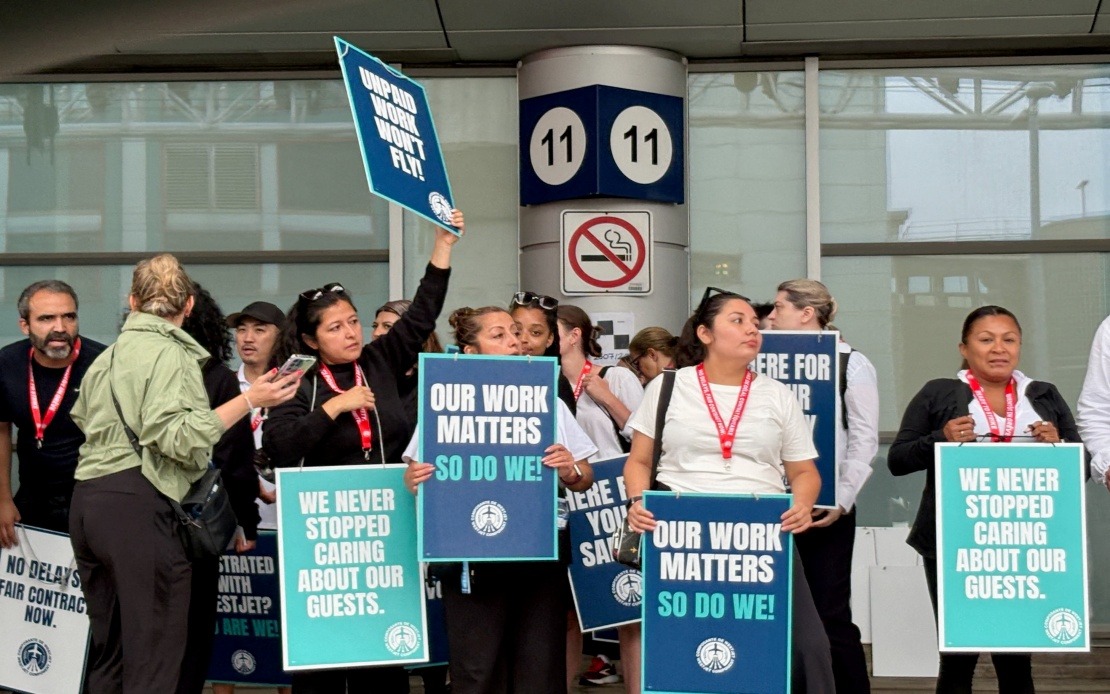
Over 4,000 flight attendants employed by WestJet, Canada's second-largest carrier, initiated strike action on Sunday, resulting in the cancellation of approximately 600 flights daily and creating widespread travel disruption affecting an estimated 250,000 passengers. The labour action came at a particularly sensitive moment for Canada's aviation sector, coinciding with one of the busiest travel weekends of the year as Monday marked a civic holiday across the country, amplifying the cascading effects of the walkout.
The financial implications for WestJet are substantial, with analysts projecting losses running into the millions of dollars as the airline attempts to manage the operational fallout and customer relations crisis. Beyond direct revenue losses, the carrier faces potential reputational damage and the challenge of rebuilding passenger confidence following the disruption. The strike represents a significant test for the company's labour relations strategy and its ability to navigate the increasingly complex demands of its workforce in an industry facing persistent post-pandemic challenges.
At the heart of the dispute lies a fundamental disagreement over fair compensation for flight attendants performing work outside their primary cabin service responsibilities. The union representatives are pressing for recognition and payment for ground duties executed before aircraft departure and following passenger disembarkation. These tasks, though essential to flight operations, have historically been treated as unpaid components of attendants' employment, a practice the workforce has determined is no longer acceptable.
The compensation framework that other major airlines have already adopted provides a clear benchmark for negotiations. Delta Air Lines pioneered the inclusion of ground work pay in 2022, establishing a precedent that has since gained traction across the industry. Air Canada, the nation's largest carrier, subsequently incorporated similar provisions into its February contract renewal, offering flight attendants remuneration equivalent to up to 70 per cent of their hourly rate for the hour immediately preceding takeoff. This evolutionary shift in industry standards demonstrates growing recognition that ground-based duties require proper financial acknowledgment.
The existing wage structure at WestJet reflects the traditional model that the union seeks to reform. Flight attendants currently receive hourly compensation ranging from $28.88 to $53.61 per credit hour, a scale that does not account for pre-flight and post-flight activities. The disparity between WestJet's compensation approach and the more progressive models implemented by its competitors has become increasingly difficult to justify to workers, particularly as industry standards continue to evolve toward greater recognition of total work performed.
Union leadership, represented by the Canadian Union of Public Employees, has articulated frustration with what it characterizes as WestJet's intransigence throughout an extended bargaining process. Alia Hussain, speaking on behalf of union members, emphasized that nearly eleven months of negotiation had failed to produce meaningful movement from management on the central issue. The union's decision to strike reflects a determination to break the deadlock that conventional negotiation channels have apparently failed to resolve, signalling that workers view their demands as fundamental rather than negotiable.
Canadian Federal Jobs Minister Patty Hajdu registered disappointment with both parties' inability to reach consensus, commenting through social media channels that the failure to agree represented a breakdown in the collective bargaining process. Her intervention, though non-committal regarding government involvement, underscores the political sensitivity surrounding labour disputes in the aviation sector and the government's interest in rapid resolution given the impact on Canadian travel and commerce.
WestJet's leadership, embodied in CEO Alexis von Hoensbroech, has acknowledged the gravity of the situation and its consequences for multiple stakeholders. The company has committed to providing full refunds for affected passengers, though financial compensation cannot adequately address the disruption to travel plans, business commitments, and personal schedules across the customer base. The airline's public position emphasizes mutual disappointment rather than adopting a confrontational stance, suggesting openness to continued dialogue with union representatives.
The implications of this labour dispute extend beyond WestJet's immediate operations and carry relevance for aviation sector dynamics across North America and potentially for Malaysian and Southeast Asian carriers observing international labour trends. The question of how ground work compensation is valued and remunerated increasingly shapes workforce expectations globally, as flight attendants and related aviation personnel leverage precedents established in other jurisdictions to advance similar claims in their own labour markets. Malaysian aviation companies and regional carriers may find themselves facing comparable demands as international employment standards gradually converge.
The timing of the strike during a major holiday weekend maximized its disruptive impact and negotiating leverage for the union, forcing immediate attention to resolution from both WestJet management and regulatory authorities. This strategic deployment of labour action reflects sophisticated understanding of pressure points within the aviation business cycle, where cancellations during peak travel periods inflict maximum economic damage on carriers and generate broader public attention to labour disputes that might otherwise receive limited coverage.
Resolution of this dispute will likely establish important precedent for WestJet's future labour relations and potentially influence how other Canadian carriers approach similar negotiations with their cabin crew workforce. Should WestJet eventually concede to ground work compensation provisions, the decision would further entrench this benefit as an industry standard expectation rather than an optional consideration. Conversely, if the airline successfully resists union demands, it may signal that not all carriers view this compensation model as economically viable or necessary, creating uncertainty about sectoral convergence around best practices.
The broader context involves evolving worker expectations in the post-pandemic aviation environment, where labour shortages and increased operational demands have strengthened employee bargaining positions. Flight attendants have emerged from the pandemic with greater assertiveness regarding workplace conditions and fair remuneration, reflecting their essential role in aviation operations and the difficulty of recruiting and retaining qualified personnel in an increasingly competitive labour market.

