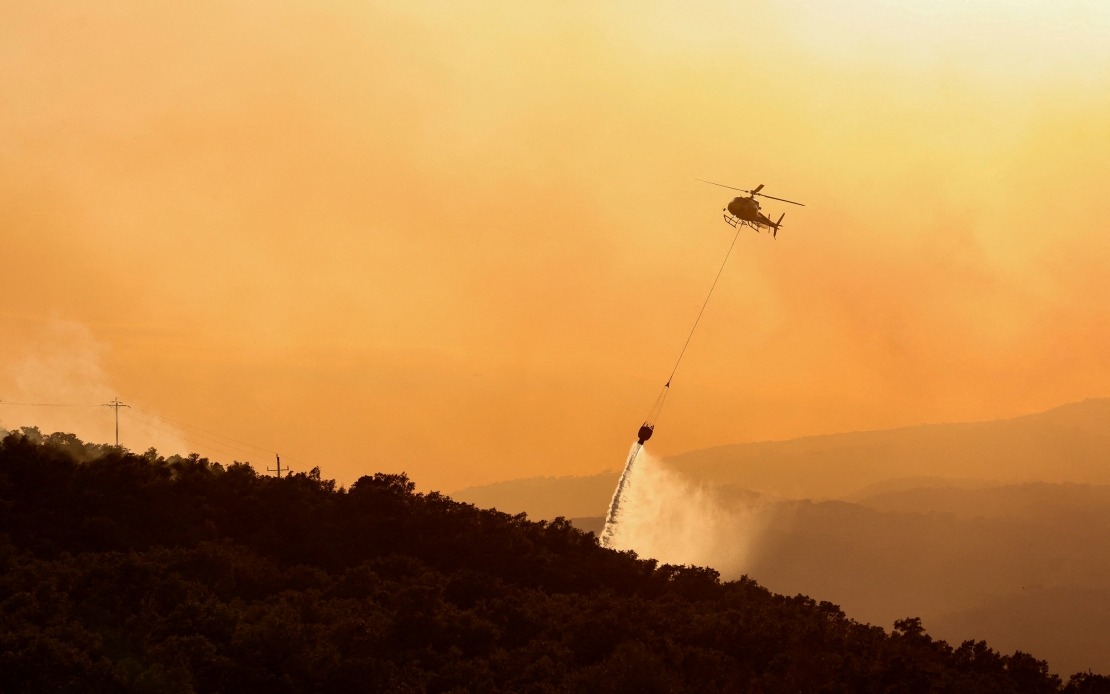
Celebrations of America's 250th birthday have been tempered by environmental crisis across the western United States, as communities from Colorado to Utah and beyond are forced to abandon traditional Fourth of July fireworks displays. The cancellations reflect the unprecedented severity of wildfire and drought conditions affecting the region, with fire officials warning that dangerous weather patterns and extremely dry landscapes create an unacceptable risk of catastrophic fires igniting from pyrotechnics.
The scale of the wildfire challenge became apparent when national incident reports documented 41 uncontained large fires burning across the country, placing the nation at its second-highest level of wildfire preparedness. This assessment underscores how stretched resources have become as multiple states grapple with simultaneous fire emergencies. The situation is particularly dire in the intermountain West, where decades of climate-influenced drought have created tinderbox conditions that allow fires to spread with frightening speed and intensity.
Utah has emerged as perhaps the most severely affected state, with Governor Spencer Cox implementing a statewide temporary restriction on fireworks use through July 5, though local governments retain authority to designate limited zones where celebrations may proceed under controlled conditions. The decision reflects the extraordinary circumstances: state drought monitors show 94 percent of Utah experiencing severe or extreme drought conditions. More alarming still, Utah State Forester Jamie Barnes characterised the current wildfire environment as entirely without parallel in recent experience, noting that fires are propagating faster than historical patterns would suggest. The statistical toll is staggering—Utah has already consumed more land to fire this year than during the entire preceding four years combined, a trajectory that suggests the fire season may break multiple records before autumn arrives.
Colorado faces similarly acute challenges across its landscape. The state's fire prevention division reported more than a dozen significant wildfires burning simultaneously during the week, compelling multiple municipalities to forgo their Independence Day celebrations. Cities including Durango, Vail and Pueblo all cancelled scheduled fireworks shows. Vail's decision marks the seventh cancellation since 1998, with the most recent occurring in 2021, yet fire officials characterise this year's activity as unusually dispersed across the entire state rather than concentrated in particular regions.
Colorado Springs, the state's second-largest metropolitan area, took the particularly cautious step of cancelling all Fourth of July fireworks events, with fire department officials citing extreme fire danger comparable to conditions that preceded the devastating 2012 wildfire, which destroyed more than 300 homes and claimed lives. Mayor Yemi Mobolade acknowledged the disappointment in a statement, recognising that forsaking celebrations during the nation's 250th anniversary milestone represents a genuine sacrifice. Yet the calculus is straightforward: the risk of human-caused ignition from fireworks outweighs the symbolic value of the traditional display.
The geographic scope of restrictions extends considerably beyond these two states. Wyoming, Nebraska, and New Mexico have all imposed limitations on fireworks use, driven by persistent drought or elevated wildfire danger in their respective jurisdictions. Notably, most professionally-conducted fireworks displays are proceeding, as these events typically employ far greater safety protocols and occur in controlled environments compared to consumer fireworks, which account for a disproportionate share of July 4 fire incidents.
Meteorological conditions are amplifying the danger substantially. National weather services warned that the period immediately following July 4 would feature strong winds and exceptionally low humidity across southwestern regions, conditions that elevate fire spread potential dramatically. Simultaneously, much of the eastern and central United States has been experiencing dangerously elevated temperatures, with some locations recording heat index values exceeding 46 degrees Celsius—conditions that stress vegetation and accelerate evapotranspiration, leaving landscapes increasingly vulnerable to ignition.
Scientific research illuminates the connection between fireworks and wildfire ignition. Philip Higuera, a fire ecology specialist at the University of Montana, explained to regional media that Independence Day represents a singular moment when the landscape absorbs an extraordinary concentration of ignition sources. Between 1992 and 2020, approximately 15,000 wildfires were recorded on July 4 alone across the United States—a single day accounting for a substantial portion of annual ignitions in some regions. The broader picture is equally sobering: across 2023, fireworks caused an estimated 32,000 fires nationwide.
Research compiled by Lauren Lowman, an associate professor at Wake Forest University, reveals a deeper climatic pattern underlying contemporary wildfire trends. Analysis of western United States fire records since 2001 demonstrates that nearly half of all land burned occurred during or immediately following heat wave episodes. This pattern suggests that extraordinary wildfire seasons are becoming increasingly correlated with extreme temperature events, a signature of climate change. As heat waves intensify and persist longer, the window for dangerous fire conditions expands, compelling communities to adopt more restrictive policies around any potential ignition sources.
For Malaysian and Southeast Asian observers, these cancellations offer instructive lessons about environmental limits and institutional adaptation. While the region experiences different fire dynamics—primarily related to agricultural burning and peatland degradation rather than uncontrolled wildfires—the principle remains identical: human activities and natural systems increasingly exist in tension. The willingness of American communities to sacrifice cherished traditions in response to environmental constraints demonstrates how climate pressures are reshaping social practices even in wealthy, technologically sophisticated societies.
The cascading implications extend to insurance, emergency services, and long-term demographic patterns in fire-prone regions. Communities repeatedly forced to restrict celebrations or evacuate residents during peak fire seasons may experience declining property values and population outmigration. Economic consequences for tourism-dependent areas like Vail and Colorado Springs could prove significant if fire seasons continue lengthening. Yet the immediate imperative—preventing catastrophic loss of life and property—leaves officials with limited choices when environmental conditions deteriorate to current levels.

