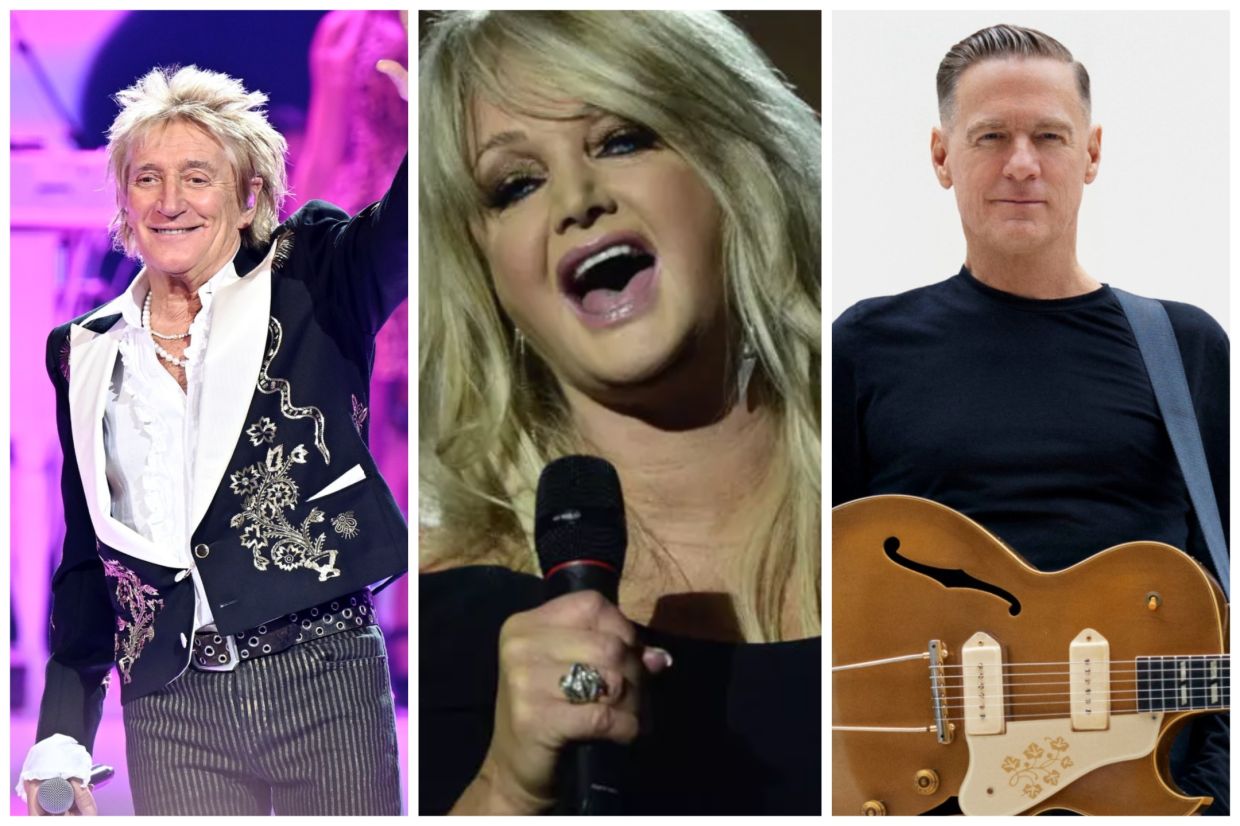
The music world mourned the loss of Bonnie Tyler on Thursday after the Welsh rock icon died unexpectedly at a Portuguese hospital, aged 75. Her family confirmed her passing through a Facebook statement, revealing she had succumbed to an illness for which she was receiving treatment. The news sparked an outpouring of tributes from fellow musicians and celebrities who had been touched by her distinctive artistry and warm personality throughout her decades-long career.
With her instantly recognisable husky voice, tousled blonde locks, and dramatic black eyeliner, Tyler epitomised the power ballad era of the 1980s. She became the defining voice of a generation that embraced sweeping, emotionally charged rock compositions, carving out a legacy that would outlast the decade in which she achieved her greatest commercial success. Prime Minister Keir Starmer expressed his sadness at her death, acknowledging Tyler as one of Britain's greatest recording artists whose music continues to resonate with audiences worldwide.
The tributes that flooded social media reflected the deep affection in which Tyler was held across the entertainment industry. Rod Stewart, the husky-voiced British rock legend, took to Instagram to celebrate their shared vocal qualities and their personal friendship, describing Tyler as a "true soul stirrer." Catherine Zeta-Jones, herself Welsh and someone who had invited Tyler to perform at her wedding, described her compatriot as an extraordinary woman whose vocal abilities matched her remarkable character. The Scottish classical singer Katherine Jenkins hailed Tyler as a true Welsh legend whose unmistakable voice inspired generations and elevated Wales onto the global stage.
Bryan Adams and Cliff Richard also joined the chorus of remembrance. Adams praised Tyler's exceptional voice and thanked her for creating a beautiful rendition of a song he had co-written, while Richard celebrated her infectious zest for life that had entertained audiences across the world. These testimonies underscored not merely her professional achievements but her impact on fellow artists who recognised in her a kindred spirit committed to their craft.
Bonnie Tyler's journey to stardom began in the Welsh town of Neath in 1951, where she was born Gaynor Hopkins and grew up as one of six children. Her father worked in the coal mines, while her mother managed the household, providing a working-class foundation that would shape her down-to-earth personality throughout her life. After leaving school at 16, she initially worked in a grocery shop while nurturing her passion for singing during whatever spare moments she could find.
Her breakthrough came in 1975 when talent scout Roger Bell discovered her performing in a Swansea nightclub. RCA Records signed her shortly afterwards, and she adopted the stage name Bonnie Tyler. A surgical procedure to remove nodules on her vocal cords proved fortuitous—her failure to rest her voice adequately during recovery inadvertently created the distinctive husky, sultry quality that would become her trademark. Rather than a setback, this medical circumstance gave her the very sound that would define her career and set her apart from contemporaries.
Tyler's most enduring achievement came with one of rock music's most iconic ballads, released in the early 1980s. The song achieved staggering longevity, reaching over one billion streams on Spotify in 2026, more than four decades after its original release. It sold over six million copies worldwide, while its music video garnered more than a billion views on YouTube, testament to its timeless appeal and the universal emotional resonance of its composition and performance. Throughout the 1980s, she released numerous successful albums and earned three Grammy Award nominations, cementing her status as a major international artist.
Over her career, Tyler released 17 studio albums and became particularly known for her authenticity and resistance to the trappings of celebrity culture. Despite her fame, she maintained her Welsh accent and preserved a grounded approach to life that endeared her to fans. She once remarked that she lived normally, declining to employ bodyguards and happily taking photographs with admirers at supermarket counters. This approachable demeanour stood in marked contrast to the larger-than-life image she projected on stage, making her simultaneously glamorous and relatable.
In 2013, Tyler represented the United Kingdom at the Eurovision Song Contest, a platform that introduced her work to new audiences across Europe. Her career was formally recognised when Queen Elizabeth II awarded her the Member of the Order of the British Empire (MBE) for services to music in 2022, an honour that acknowledged her decades of contribution to the cultural landscape. Throughout her later years, she and her husband Robert Sullivan, a former judo athlete, divided their time between Wales and the Algarve region of Portugal, maintaining strong ties to both her homeland and the continent where she eventually passed away.
Tyler's influence extended beyond commercial metrics to encompass the broader musical culture of her era. She helped establish the power ballad as a legitimate and commercially viable form of rock music, opening doors for numerous artists who would follow in her wake. Her refusal to compromise her artistic vision or personality for the sake of mainstream acceptance set a template for authenticity in an industry often demanding conformity. The passing of Bonnie Tyler marks the end of an era, yet her recorded legacy ensures that her voice will continue to touch lives across generations, particularly in Southeast Asia where her anthems remain beloved staples of karaoke culture and nostalgic playlists.

