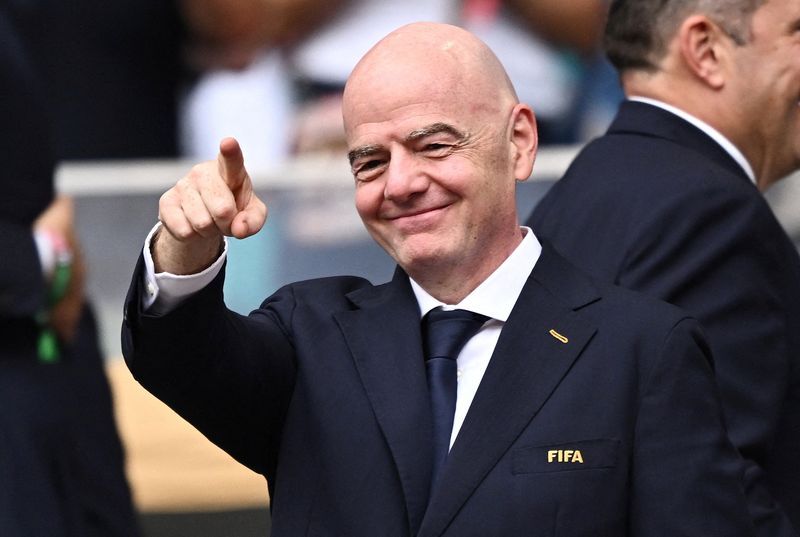
The Football Association of Wales has become the first national federation to formally withdraw its support for FIFA President Gianni Infantino's bid to secure another term leading world football, marking a significant blow to the Swiss executive's political standing. The Welsh decision came after FIFA's ambitious but ultimately doomed effort to raise as much as $4.2 billion through the sale of a minority stake in a new commercial entity managing major tournaments, including the World Cup, fell apart following sustained opposition from multiple stakeholders across the sport's governance structure.
The collapse of FIFA's equity scheme represents a rare public defeat for Infantino, who has largely operated with unchecked authority since assuming the presidency in 2016 following Sepp Blatter's departure. The plan would have transferred roughly 20% ownership of the competition-managing body to private investors, ostensibly to generate capital for football development worldwide. Yet the proposal triggered an unprecedented coalition of resistance spanning continental governing bodies, national associations, and other influential voices within international football's hierarchy, forcing FIFA to withdraw the initiative on Friday.
In its formal statement, the Welsh FA articulated a comprehensive indictment of Infantino's leadership, citing "failures in good governance, processes, leadership, values, stakeholder management, communications and sound judgement." The federation explicitly stated that the FIFA president had forfeited its confidence in his ability to steer the sport's premier institution. This language signals fundamental concerns extending well beyond the commercial scheme itself, suggesting deeper reservations about Infantino's management approach and strategic judgment in leading world football through its modern challenges.
The Welsh withdrawal represents merely the opening salvoes in what appears to be developing political turbulence for Infantino. Europe's governing confederation, UEFA, and the CONCACAF body representing North and Central American football both declared on Saturday that they had lost confidence in Infantino's leadership. UEFA, which had spearheaded the resistance to his privatisation proposal and welcomed its cancellation, subsequently issued a document preservation order—a legal tactic that halts the destruction of emails, files, and other data in anticipation of potential investigations or litigation. Although UEFA stopped short of publicly confirming reports that it intended to pursue legal action against FIFA over the failed scheme, the preservation order signals that European football leaders are preparing for potential court battles.
Infantino's political position has undergone a dramatic reversal from merely months earlier. In April, he had announced his intention to pursue a fourth consecutive term as FIFA president, an ambition that observers at the time considered likely to succeed given his previous two re-election victories had proceeded unopposed. His control over FIFA's machinery and the absence of organised opposition had created expectations that the 2027-2031 term would fall to him as a matter of routine procedure. However, the commercial proposal's spectacular failure has exposed underlying fractures in his coalition of support, revealing that numerous FIFA member nations and regional bodies harbour serious misgivings about his leadership style and strategic direction.
The March Congress in Morocco now looms as a crucial political juncture for the FIFA president. While his re-election had previously appeared virtually assured, analysts suggest the accumulated discontent revealed by the recent backlash could substantially complicate his path. National associations and confederations increasingly feel emboldened to voice concerns about FIFA's governance and decision-making processes, creating space for potential challengers to emerge or for collective pressure to mount against his candidacy. The scale and co-ordination of opposition to the commercial plan demonstrated that Infantino no longer commands the automatic deference his predecessors enjoyed.
The privatisation proposal itself had represented a fundamental reimagining of how FIFA monetises its most valuable asset—the World Cup competition. By establishing a separate commercial entity and ceding partial ownership to private capital, FIFA hoped to unlock substantial new revenue streams while ostensibly preserving football's developmental mission. However, stakeholders objected that the scheme concentrated excessive control in private hands, potentially compromised football's governance independence, and failed to guarantee that generated revenue would genuinely benefit grassroots development rather than enriching investors or senior FIFA officials.
For Malaysian and Southeast Asian football observers, this institutional turbulence at FIFA level carries practical significance. The global federation's internal divisions and governance challenges inevitably influence how it allocates resources, manages competitions, and prioritises regional development initiatives. Southeast Asian nations depend on FIFA's technical assistance programmes, capacity-building investments, and equitable competition formats. Leadership uncertainty and political instability at FIFA headquarters can translate into delayed decisions on tournament schedules, funding disbursements, and governance reforms that directly impact Asian football federations' operational planning and development strategies.
The convergence of withdrawals from Wales, UEFA, and CONCACAF suggests that Infantino faces an unprecedented coalition of opposition that extends across multiple continental confederations. This global alignment against his leadership represents a qualitative shift from previous FIFA leadership contests, where opposition typically remained fragmented or geographically concentrated. The breadth of criticism encompasses not merely disagreement over specific commercial proposals but fundamental questions about presidential judgment, governance competence, and stakeholder consultation. Whether this discontent crystallises into an organised challenge to his 2027-2031 re-election remains uncertain, but the momentum appears clearly against him.

