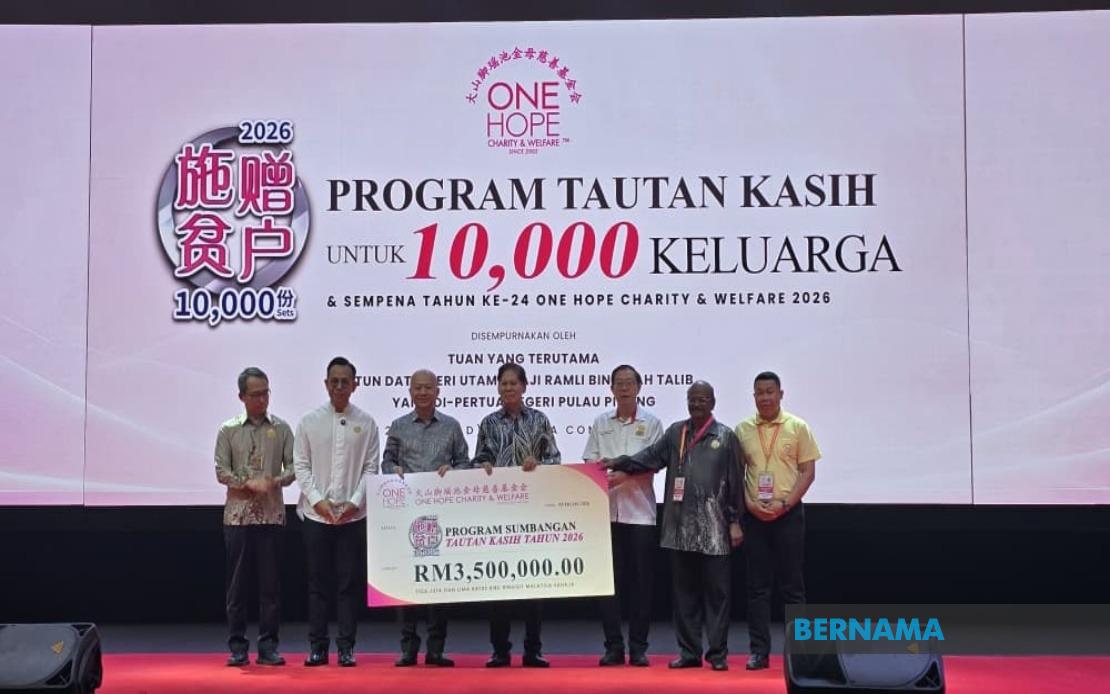
Robust welfare policies form the backbone of a compassionate nation, according to Minister of Entrepreneur Development and Cooperatives Steven Sim Chee Keong, who delivered this message during an event in Butterworth on August 9. Speaking at the One Hope Charity event, Sim stressed that any state genuinely committed to progress cannot ignore the plight of its most vulnerable citizens, emphasising that sustainable development requires simultaneous attention to social safety nets and economic growth.
Sim's remarks underscore a critical tension in Malaysia's development narrative. While the country has achieved middle-income status and established itself as a regional economic player, disparities in wealth and access to basic services remain stark across different communities and geographical regions. The minister articulated that inequalities in life circumstances demand corresponding inequalities in government support—a principle that challenges the notion that uniform policies can adequately serve diverse populations. His statement reflects growing recognition among policymakers that targeted interventions are essential rather than optional components of governance.
The minister characterised welfare initiatives as foundational to social cohesion, particularly in a multicultural democracy where trust between communities depends on tangible commitments to mutual welfare. By framing welfare policy as integral to national unity rather than merely a fiscal burden, Sim positioned social protection within Malaysia's broader project of building inclusive nationhood. This framing carries particular weight given ongoing concerns about economic mobility and the rising cost of living affecting ordinary Malaysians across different demographic groups.
One Hope Charity exemplifies the role non-governmental organisations play in extending welfare coverage beyond what government alone can deliver. The organisation, which operates across Penang and the broader Malaysian landscape, has mobilised substantial private sector engagement and philanthropic resources to address immediate needs. Founded in Bukit Mertajam, the charity has scaled impressively to become among the nation's largest welfare providers, demonstrating how grassroots initiatives can evolve into significant social infrastructure when guided by sustained commitment and effective management.
The financial scale of One Hope's operations reveals both impressive capacity and sobering necessity. The organisation distributes no less than RM20 million annually to beneficiaries, yet this substantial figure pales against the estimated scope of poverty and hardship nationwide. During the current year alone, more than 10,000 families received assistance comprising both essential goods and RM200 in cash grants, each package valued at approximately RM320. These amounts, while meaningful to recipients, reflect the modest nature of individual support that charitable organisations can sustain, suggesting that government welfare expansion remains essential for comprehensive coverage.
Between 2021 and 2025, One Hope Charity channelled over RM100 million across multiple intervention streams, including direct medical assistance, hospital support, medical equipment provision, and diverse welfare programmes. This five-year investment trajectory indicates deliberate expansion of the charity's social footprint, though the concentration of such large sums in private hands also raises questions about the sustainability and universality of welfare provision. As One Hope approaches its 25th anniversary in 2026, plans for RM30 million in new initiatives, including enhanced Medical Assistance Programmes, suggest the organisation envisions continued scaling of operations.
The presence of Penang Governor Tun Ramli Ngah Talib and his wife Toh Puan Raja Noora Ashikin Raja Abdullah at the event underscores the intersection of state leadership and philanthropic action. State governors occupy symbolic positions as guardians of community welfare, and their participation in charity events signals official recognition of non-governmental contributions to social well-being. This public endorsement carries implications for how state administrations view the division of labour between government agencies and civil society organisations in delivering social protection.
For Malaysian policymakers, One Hope's model offers instructive lessons about leveraging business networks and donor engagement to amplify welfare reach. The charity's explicit commitment to assisting people regardless of race, religion, or political affiliation addresses a fundamental challenge in diverse societies—ensuring that social support transcends communal lines. Such inclusive approaches, when successful, reinforce social trust and demonstrate to citizens that their government and civil society prioritise universal dignity over sectional interests. The question remains whether charitable contributions can be sustained indefinitely as a primary welfare mechanism or whether they signal gaps that government should systematically fill.
The minister's emphasis on continuous policy strengthening acknowledges that welfare frameworks require regular recalibration as economic conditions, demographic patterns, and social needs evolve. Malaysia's experience with rising inflation, employment volatility, and shifting family structures demands welfare systems sufficiently flexible to address emerging vulnerabilities. Young workers entering the gig economy, ageing populations requiring increased healthcare and long-term care support, and families disrupted by economic shocks all represent constituencies whose welfare needs may not be adequately captured by policies designed for previous eras.
For Southeast Asian observers, Malaysia's experience offers context within a region where welfare systems remain underdeveloped compared to developed economies. While countries like Singapore have built mandatory savings schemes and targeted subsidies, and Thailand has attempted universal healthcare, the broader region continues wrestling with how to balance economic competitiveness and social protection. Malaysia's reliance on charitable organisations for significant welfare provision reflects pressures common across middle-income Southeast Asian nations that have achieved rapid economic growth without necessarily developing comprehensive state welfare capacity.
The long-term sustainability of welfare policy depends on whether governments can mobilise sufficient fiscal resources while maintaining political will to prioritise social spending amid competing budgetary demands. One Hope's RM20 million annual distribution, impressive for a single charity, nonetheless illustrates the magnitude of need that government budgets must ultimately address. As Malaysia's population ages and healthcare costs escalate, welfare expenditure will necessarily increase, forcing difficult choices about taxation, spending priorities, and the appropriate balance between universal and targeted programmes.
Moving forward, Sim's call for strengthened welfare policies must translate into concrete budgetary allocations, streamlined programme delivery, and periodic assessment of whether existing frameworks reach those most in need. The involvement of civil society organisations like One Hope should complement rather than substitute for government responsibility. By acknowledging vulnerability as an inherent feature of human existence that any affluent society must address through deliberate policy architecture, Malaysian leadership signals commitment to building a nation where economic progress genuinely translates into improved security and dignity for all citizens, particularly those facing greatest hardship.

