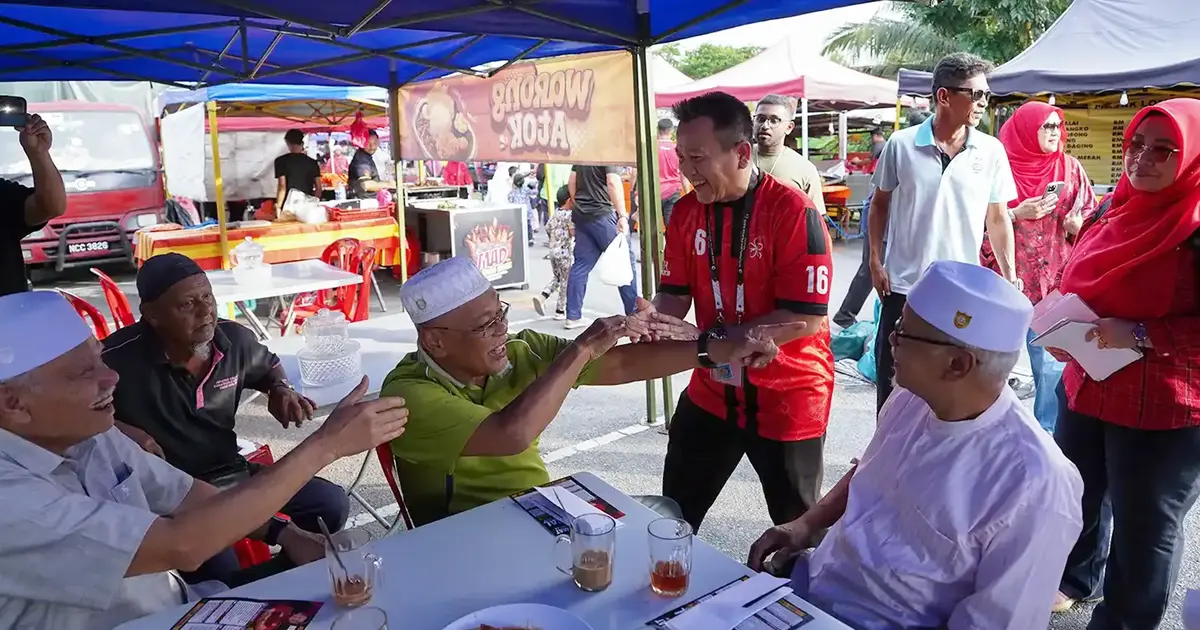
The entry of Wawasan as a third contestant in the Sikamat seat has created an unexpectedly competitive race that could test the resilience of Peninsular Malaysia's dominant political coalitions, according to Tun Faisal Ismail Aziz, whose comments highlight emerging fault lines within the ruling alliance structure. The three-cornered contest represents a departure from the relatively orderly seat distributions that have characterized recent state and federal elections, introducing an element of unpredictability that neither the Barisan Nasional nor PAS may have fully anticipated when they negotiated their respective electoral positions.
Tun Faisal's assessment points to deeper sources of voter frustration that transcend conventional party loyalties. The previous state administration's tenure has apparently left a residue of dissatisfaction among the electorate, creating space for alternative voices to gain traction. This discontent appears sufficiently widespread that it cannot be neatly contained within existing coalition frameworks, suggesting that accumulated grievances over service delivery, governance, or economic concerns have eroded the automatic support once commanded by establishment parties. The fact that such sentiments can attract interest in a smaller political vehicle like Wawasan indicates the degree to which voter preferences have become more fluid and conditional.
The ramifications for BN machinery are particularly significant given the coalition's traditional reliance on disciplined member-party hierarchies and predictable vote consolidation. When supporters of BN-aligned parties discover that their preferred party has not secured a particular seat, some inevitably migrate toward protest votes rather than support designated coalition partners. Wawasan's presence in Sikamat offers just such an outlet for frustrated BN sympathizers, potentially siphoning votes that would otherwise remain within the coalition ecosystem. This dynamic becomes especially problematic when internal coalition arithmetic has not been recalibrated to account for third-party competition.
PAS faces a similar though distinct vulnerability in this contest. The Islamic party has built its recent electoral success on effectively mobilizing its support base while maintaining strategic understandings with other parties. The introduction of Wawasan into a seat where PAS might have expected clear field advantage threatens the party's momentum-building in the state and raises uncomfortable questions about why additional voices have deemed it necessary to contest. For PAS supporters, such fragmentation may be interpreted as indicative of weakness or divided opposition, potentially denting the morale that typically characterizes successful electoral campaigns.
Wawasan's decision to enter the fray likely reflects calculations about its own organizational growth and electoral viability. Newer or smaller parties often require high-profile contests to establish their credibility and expand their footprint, using parliamentary or state-level campaigns as platforms for media attention and voter engagement. By contesting in Sikamat, Wawasan positions itself as a meaningful alternative worthy of consideration, rather than remaining a marginal force in Malaysian politics. However, this ambition comes at considerable risk, as the party necessarily draws fire from larger established competitors while attempting to build an independent identity.
The geographic context of Sikamat matters considerably in understanding how such a three-way contest might unfold. Constituencies vary widely in their demographic composition, economic conditions, and historical voting patterns. Some seats lean heavily toward particular coalitions due to long-established community ties, institutional structures, or demographic factors that create natural affinity with certain parties. If Sikamat contains significant pockets of voters genuinely alienated from both BN and PAS approaches to governance and policy, Wawasan might find genuine resonance. Conversely, if the seat's electorate remains predominantly aligned with coalition frameworks, Wawasan risks severe marginalization and internal recrimination.
Tun Faisal's warning carries weight partly because of his own extensive experience within Johor state politics and his understanding of the subtle mechanisms through which coalition politics operate. His assessment suggests not merely mathematical considerations about vote-splitting, but rather a deeper concern about coalition cohesion and member-party morale during a potentially decisive electoral cycle. When senior figures within the establishment feel compelled to comment publicly on third-party intrusions, it often signals genuine anxiety about electoral outcomes and coalition stability.
The broader implications extend to how Malaysian political coalitions manage internal diversity and accommodation. The BN-PAS understanding represents an evolution from earlier configurations, and its viability depends partly on whether member parties accept predetermined seat allocations and campaign discipline. Wawasan's entry tests whether this arrangement possesses sufficient flexibility and buy-in from all relevant stakeholders to withstand such disruptions. If the coalition fractures over a single seat, it raises questions about the foundations of what was presented as a comprehensive political realignment.
For ordinary Malaysian voters, particularly those in Sikamat, the expanded choice presents both opportunity and complexity. Rather than selecting between pre-arranged coalition options, constituents can evaluate substantive policy platforms and candidate credentials across a wider range of alternatives. Yet research consistently demonstrates that voter preference formation in multi-candidate environments becomes more complex, potentially advantaging better-organized and better-resourced competitors regardless of actual policy merits. The outcome in Sikamat may thus offer valuable insights into contemporary Malaysian electoral behavior and the actual depth of voter dissatisfaction with existing political arrangements.

