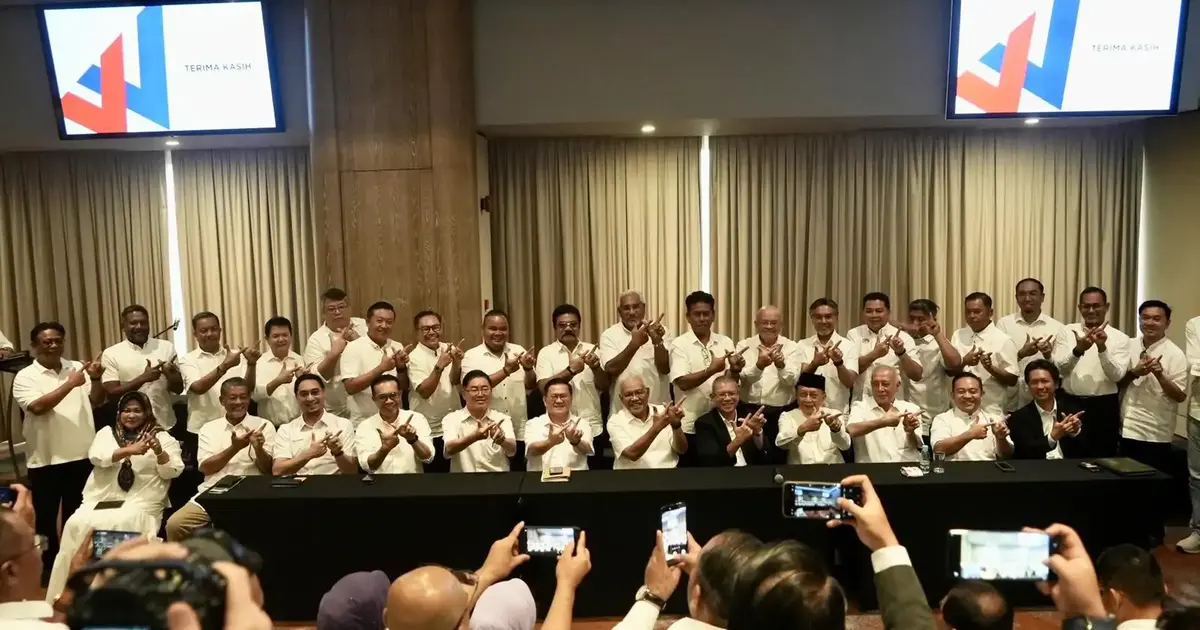
The admission of Wawasan into Perikatan Nasional has been formally settled through a majority decision at the coalition's highest decision-making body, according to PN election director Sanusi Md Nor. His statement puts to rest uncertainty surrounding the party's entry, which had sparked internal debate within the opposition alliance as competing factions weighed the strategic implications of expanding PN's membership base.
Sanusi's clarification comes at a time when PN is consolidating its position as a counterweight to the ruling Pakatan Harapan coalition. The addition of Wawasan represents an attempt to broaden PN's appeal across Malaysia's diverse political landscape, particularly among constituencies where the coalition has previously struggled to gain traction. For PN strategists, each additional component party theoretically strengthens negotiating leverage in future elections and parliamentary arrangements, though the calculus becomes complicated when existing members voice concerns about the newcomer.
Bersatu's objections to Wawasan's admission have been formally acknowledged by PN leadership, yet the Supreme Council proceeded with the majority vote regardless. This scenario reveals inherent tensions within opposition coalitions, where component parties must balance individual party interests against collective coalition strength. Bersatu's hesitation likely stems from concerns about internal power dynamics and the dilution of its own influence within PN's decision-making apparatus, a common friction point as political alliances expand.
The mechanics of PN's internal governance become crucial to understanding this outcome. The Supreme Council operates as the coalition's supreme authority, comprising senior leaders from member parties. A majority vote empowers the council to proceed with major strategic decisions even when dissenting voices emerge, though such outcomes inevitably create residual tension. Sanusi's public reassurance that Bersatu's position was "noted" represents an attempt to mollify the objecting party without reversing the decision, a delicate balancing act required to maintain coalition cohesion.
Wawasan's background and political positioning deserve scrutiny from Malaysian observers. As a newcomer to PN, the party brings its own grassroots networks, territorial strongholds, and voter demographics to the coalition's collective portfolio. The strategic calculation hinges on whether Wawasan's assets outweigh the organisational complications of integrating a new member into an already complex multi-party arrangement. Opposition coalitions across Southeast Asia frequently grapple with similar expansion challenges, balancing growth against internal stability.
For PN's overarching political strategy, this expansion signals confidence in the coalition's durability and attractiveness to previously unaligned parties. The fact that Wawasan sought admission suggests PN possesses sufficient electoral viability and organisational maturity to attract partners who might have previously remained independent or considered other alliances. This dynamic has implications for how Malaysian voters perceive the opposition landscape—a more inclusive PN may present itself as a more credible alternative government, or alternatively, may appear diluted and unfocused depending on voter sentiment.
The timing of Wawasan's admission reflects PN's preparation for future electoral contests. Rather than wait passively for opportunities, the coalition is actively fortifying its ranks. This proactive approach contrasts with the perception of a reactive opposition that merely opposes government policies without presenting coherent counter-narratives. By systematically expanding its membership, PN demonstrates forward momentum and organisational discipline, factors that resonate with political actors considering which coalition offers better prospects.
Bersatu's dissent, while overruled, should not be dismissed as inconsequential. Internal disagreements that reach the point of formal Supreme Council discussions often reflect deeper programmatic or ideological differences. These fault lines may resurface during campaign periods, when component parties must maintain unified messaging. Malaysian observers have witnessed coalition fractures during critical junctures—what appears settled today can unravel quickly under electoral pressure if underlying grievances fester unresolved.
The precedent established by this majority vote matters significantly for PN's future. Future membership applications will now reference this decision as the operative model. Parties considering joining PN will understand that their entry requires Supreme Council approval, and that individual member objections will not necessarily block admission. This clarity could accelerate additional recruitment efforts, or conversely, might discourage parties concerned about their own influence being marginalised within an expanding coalition.
From a regional perspective, PN's consolidation efforts reflect broader opposition coalition dynamics across Southeast Asia. From Thailand to the Philippines, opposition alliances constantly negotiate membership expansion against internal stability concerns. Malaysia's political trajectory increasingly mirrors these regional patterns, suggesting that PN and Pakatan Harapan will continue experiencing similar internal pressures as they mature as formal coalitions.
Moving forward, PN's leadership faces the challenge of translating this structural decision into substantive political advantage. Wawasan must be meaningfully integrated into campaign machinery, policy development, and parliamentary coordination. Bersatu's concerns, while acknowledged, require ongoing reassurance through meaningful portfolio allocations and influence over key coalition decisions. The Supreme Council's majority vote has determined the outcome, but execution will determine whether this expansion ultimately strengthens or complications PN's political standing.