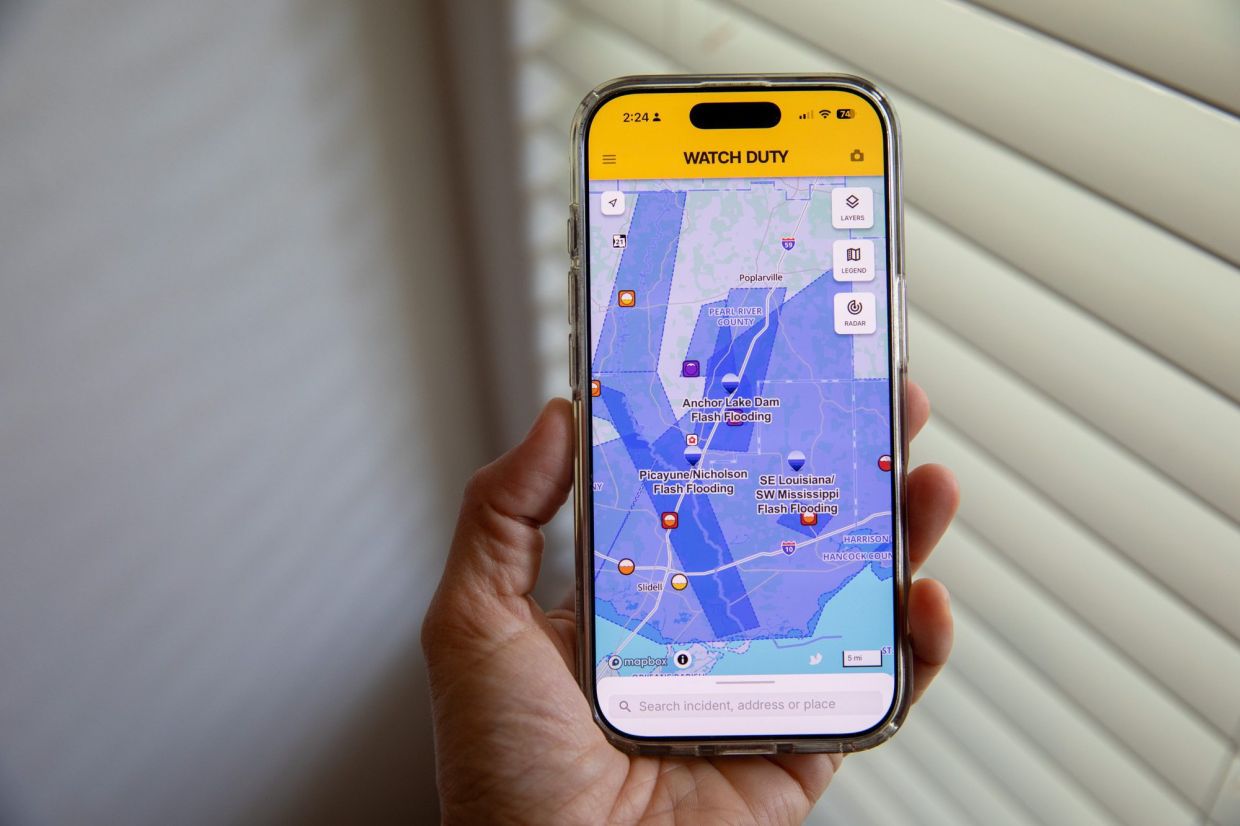
When a California wildfire threatened Matt Blea's Altadena home on the evening of 7 January 2025, the decision to evacuate or stay put became desperately urgent. A recommendation from a friend working in mountain rescue led Blea to a free application called Watch Duty, which provided real-time information about the fire's perimeter, official evacuation directives, and emergency response updates in one accessible location. The intelligence proved decisive; Blea departed with his family before the Eaton Fire ultimately consumed their residence. His experience was far from unique during that devastating week—over 2.5 million people across Los Angeles County relied on Watch Duty's consolidated data stream to navigate the crisis.
The infrastructure supporting this information flow represents a decentralised approach to emergency communication. Approximately two dozen full-time staff members worked alongside more than one hundred volunteers to monitor aircraft transmissions, emergency radio frequencies, and official agency communications. The result was a vetted, curated feed that moved information from sources to users with remarkable speed and accuracy. David Hertz, a Malibu resident serving as captain of his community's fire brigade, recognised the significance of this model. He emphasised that Watch Duty functioned as "a democratisation of data that empowers people"—particularly crucial in areas where official warning systems provided inadequate notice of the Eaton and Palisades fires, disasters that claimed 31 lives.
John Mills, the chief executive and co-founder of the donor-supported nonprofit organisation behind Watch Duty, established the service in 2021 following his own traumatic experience. When a fire approached his Northern California property, he received no official alerts or evacuation instructions—a communications failure that motivated him to build a solution. Mills recognised an enduring problem: while the United States maintains multiple alert systems operating through text messages, radio broadcasts, and other channels, the bureaucratic machinery required to issue specific warnings or evacuation orders frequently becomes entangled and dependent on human decision-making under extreme pressure. The critical information residents desperately needed often existed somewhere within government databases, but remained difficult to locate and understand.
Watch Duty's initial approach drew inspiration from volunteer radio operators who monitored emergency frequencies and shared updates through social media platforms. However, Mills quickly identified fundamental limitations with this strategy. Social media channels inevitably became cluttered with irrelevant content and misinformation that could obscure life-critical messages. Rather than accept these constraints, Mills—himself a software engineer and entrepreneur—assembled a team incorporating those volunteer monitors and fellow technical professionals to construct a purpose-built platform. His decision to establish Watch Duty as a nonprofit organisation proved strategically important, building credibility with the eventual user base that would exceed twenty million people. The nonprofit structure also facilitated fundraising, with the organisation receiving nearly US$6 million (RM24 million) in grants and donations during 2025.
The operational architecture supporting Watch Duty now encompasses approximately three hundred volunteer "reporters" who aggregate and authenticate information from diverse sources: radio scanner networks, satellite imagery, camera feeds, user-generated content, and official public announcements. This curated information becomes accessible through multiple delivery mechanisms—interactive maps, text feeds, and push notifications configured to activate even when devices are in silent mode. Watch Duty meteorologist Pete Curran, himself a retired firefighter, emphasised the practical advantage of this consolidation: "You're not going to have to go to multiple other entities, to the weather service, emergency management website, county website. It's in one place, in plain language, and it's going to wake you up if you're asleep." The application disseminates content in five languages, reflecting the demographic diversity of regions experiencing these emergencies.
Curran identified a crucial operational advantage that enables Watch Duty to sometimes outpace official agencies in publishing time-sensitive information. The volunteers and staff members possess a singular mandate—to monitor, collect, and disseminate emergency data. Unlike the responders managing actual incidents, Watch Duty personnel bear no responsibility for directing firefighting operations, rescue efforts, or incident command. This specialisation allows them to focus entirely on information gathering and verification, reducing the organisational friction that inevitably slows government communications channels.
The June 2025 decision to expand Watch Duty into flood monitoring reflected both the escalating frequency of dangerous precipitation events and the documented failures of existing warning systems. Nearly one year earlier, devastating floods across Texas Hill Country killed more than one hundred thirty people, prompting widespread criticism regarding why residents and visitors had not received adequate advance notice of the impending catastrophe. Dr Lori Moore-Merrell, who served as United States Fire Administrator under President Joe Biden and now holds a position on the Watch Duty board, articulated the meteorological reality driving this expansion: "We are seeing crazy rainfall in places that it's not normal for them. Maybe it's never happened before, but it's happening now, so you need to be aware." This observation carries particular relevance for Southeast Asian nations increasingly confronting unprecedented precipitation patterns associated with climate change and regional weather pattern shifts.
The flood monitoring module integrates data streams from the National Weather Service, National Oceanic and Atmospheric Administration, and United States Geological Survey. Users can access official flood warnings and watches, monitor river gauge measurements in real time, and receive notifications about potential dam or levee failures. Importantly, the application also enables users to understand their personal vulnerability during calmer periods—they can determine whether their property falls within a Federal Emergency Management Agency-designated flood zone or identify what river gauge readings would constitute danger in their specific location. Users may customise their notification parameters to receive alerts when specific gauges approach predetermined thresholds, creating an early warning system tailored to individual circumstances.
However, application developers and emergency management professionals acknowledge significant limitations inherent to technological solutions. Chad Berginnis, executive director of the Association of State Floodplain Managers, expressed qualified enthusiasm while noting a fundamental challenge: "I love seeing products like this come out, but one thing we know to be true in the Texas floods, is a warning is only as good as the knowledge to do something about it." Merely receiving notification of danger provides no benefit to individuals uncertain how to access evacuation routes or unpractised in executing emergency plans. Berginnis emphasised that effective disaster preparedness requires not simply documented procedures but regular rehearsal of evacuation scenarios and practical knowledge of available transportation routes.
The infrastructure supporting weather monitoring and public alert systems faces a separate vulnerability rooted in political decisions regarding federal funding. Proposed and enacted budget reductions to meteorological agencies and local emergency warning systems threaten the "eyes and ears" required for effective monitoring. Berginnis stressed that this institutional capacity cannot function without sustained financial investment: "At the end of the day, if you want eyes and ears out there, you've got to pay for it." This funding challenge carries implications for the United States and international contexts alike, as climate impacts intensify demands on already-strained emergency management systems.
Mills explicitly rejected any suggestion that Watch Duty could substitute for institutional emergency management infrastructure. The National Weather Service, professional fire services, and established government systems remain essential components of comprehensive emergency response. He encouraged users to maintain enrolment in their local alert systems alongside Watch Duty usage. This emphasis on complementary rather than replacement functionality reflects realistic understanding of the application's role within broader emergency ecosystems. Additionally, technology-based solutions inherently possess coverage limitations—the application benefits only those who have downloaded it and possess cellular connectivity to access its features.
Berginnis advocated for genuine redundancy in emergency warning systems, including humble but reliable technologies that function independently of internet infrastructure or smartphone adoption. He noted that inexpensive NOAA weather radios provide critical backup capacity when more sophisticated systems fail or reach unavailable populations. "Sometimes we get so focused on tech, we forget the easy stuff," Berginnis observed, highlighting the importance of maintaining diverse, overlapping warning mechanisms rather than consolidating all emergency communication into technology-dependent platforms.
For Southeast Asian policymakers and emergency management officials observing Watch Duty's expansion, several lessons emerge. The model demonstrates both the potential and limitations of leveraging volunteer networks and modern data integration to accelerate emergency communication. However, the underlying problem it addresses—communications gaps during disasters—reflects systemic challenges that technology alone cannot resolve. Effective emergency response requires sustained institutional investment, clear protocols, public education, and genuine redundancy across multiple communication channels. As climate change drives increased frequency of severe weather events across the region, Southeast Asian nations face mounting pressure to strengthen emergency warning capabilities through combinations of institutional reform, technological innovation, and community preparedness initiatives.

