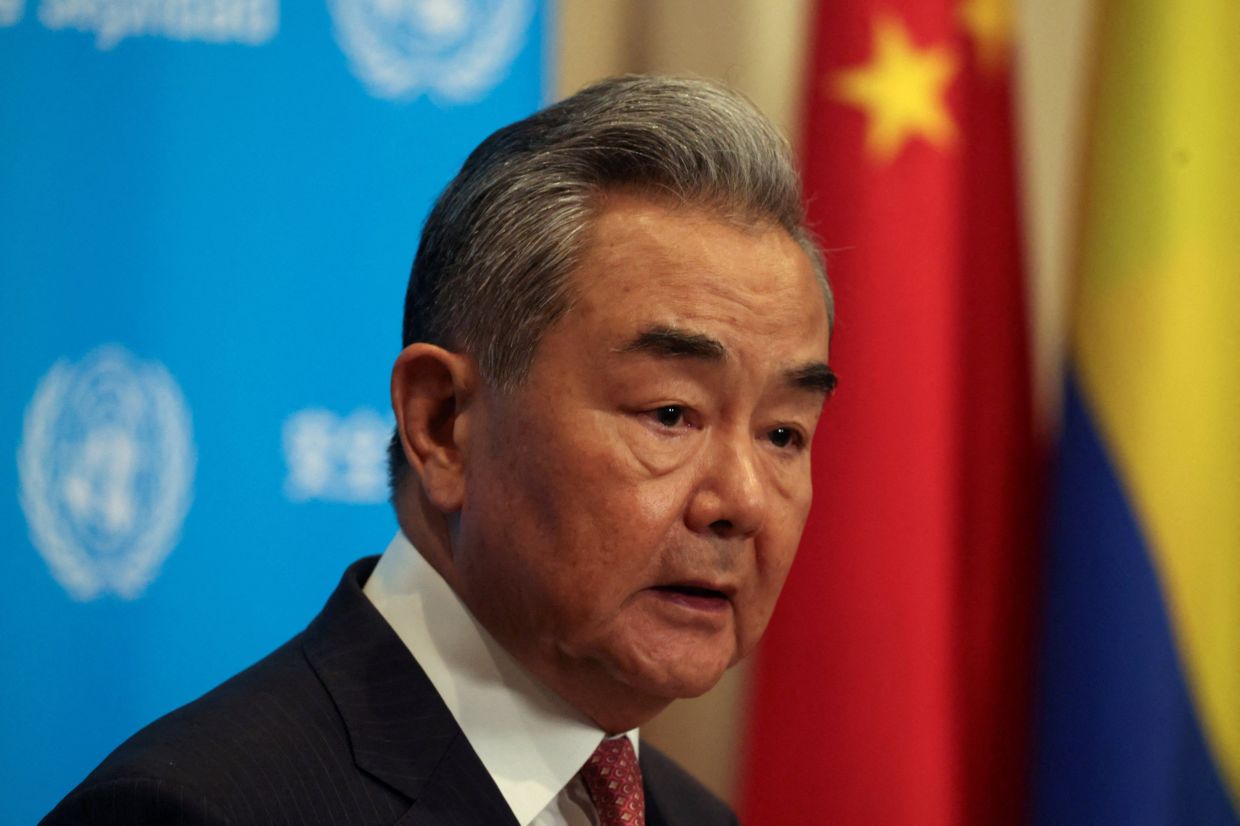
China's Foreign Minister Wang Yi has issued a pointed warning to US Secretary of State Marco Rubio regarding how Washington approaches the Taiwan question, underscoring Beijing's sensitivity on an issue it regards as fundamental to its sovereignty and core interests. The Tuesday conversation between the two diplomats reflects the persistent friction threatening to undermine efforts by both capitals to stabilise their relationship following a carefully choreographed summit between President Donald Trump and Chinese leader Xi Jinping earlier this year.
Wang emphasised to Rubio that maintaining constructive and strategically stable relations served the interests of both China and the United States, as well as the broader international community. His language suggests growing concern within Beijing's leadership about how the Trump administration may handle sensitive cross-strait issues, particularly given Rubio's historically hawkish stance towards China and his past support for strengthening ties with Taiwan.
The foreign minister outlined a framework for bilateral cooperation that requires both sides to move beyond rhetoric and commit to tangible action. He stressed that building a healthy relationship demands genuine movement towards each other and sustained commitment, rather than merely offering symbolic gestures or hollow pledges. This characterisation appears designed to test whether Washington is genuinely committed to the stated goal of constructive engagement or whether recent diplomatic overtures mask underlying strategic competition.
Wang's suggested approach involves expanding the scope of cooperation between the two countries while simultaneously managing points of contention and potential flashpoints. By lengthening what he termed the "list of cooperation" and simultaneously shortening the "list of problems", Wang articulated Beijing's preference for channelling US-China relations towards practical collaboration on shared challenges whilst containing disputes that could escalate into confrontation. This framework reflects a classical diplomatic approach aimed at rebalancing the relationship away from zero-sum competition.
The timing of Wang's message to Rubio carries particular significance given recent developments at the highest levels of government. During his earlier meeting with Trump, Xi Jinping himself raised the Taiwan question with unusual directness, cautioning that any mishandling of this sensitive matter could trigger conflict and plunge bilateral relations into what he described as an "extremely dangerous situation". Such language from China's paramount leader signals that Beijing views the Taiwan issue as a potential tripwire capable of derailing the broader stabilisation process.
The May summit between Trump and Xi was presented by Washington as a significant diplomatic achievement, complete with a published fact sheet outlining various agreements and commitments. Among these commitments was Chinese agreement to address American concerns regarding supply chain vulnerabilities, particularly shortages of critical materials essential to US industry and defence capabilities. The summit was framed within the administration as demonstrating Trump's ability to secure concrete benefits for American interests through direct engagement with Beijing.
Yet beneath the surface of reported progress, signs of strain continue to emerge between the world's two largest economies. While the relationship has largely stabilised since the May gathering, recent indicators suggest underlying tensions persist. These warning signals suggest that the optimism generated by the Trump-Xi summit may not have fully translated into sustained structural improvements in how the two sides manage their competition across multiple domains.
Rubio's ascension to the position of Secretary of State represents a particularly sensitive development for Beijing. His long record of scepticism towards engagement with China, combined with his advocacy for closer US ties with Taiwan, positions him as a potential flashpoint in the administration's China policy. Wang's cautionary message to Rubio appears calibrated to set boundaries around acceptable conduct on Taiwan whilst simultaneously signalling openness to dialogue with other elements of the Trump administration.
The broader context involves preparations for a potential state visit by Xi to the United States, an event that would carry enormous symbolic weight in demonstrating the durability of the stabilisation process. Such a high-profile visit would require both sides to demonstrate that their commitment to constructive relations extends beyond diplomatic pleasantries to substantive coordination and mutual respect for core interests. The visit cannot occur amid active cross-strait crises or escalating tensions over Taiwan.
For Malaysia and other Southeast Asian nations, the trajectory of US-China relations carries direct implications. The region has long sought to avoid being forced to choose between the two superpowers, preferring instead to benefit from engagement with both. Taiwan represents a particular flashpoint precisely because instability across the strait would almost certainly drag regional powers into a wider conflict, disrupting trade, threatening maritime security, and fundamentally altering the regional balance that has underwritten Southeast Asian prosperity and stability.
Wang's warning to Rubio essentially represents Beijing's effort to establish ground rules for engagement with the Trump administration, particularly with officials known to hold sceptical views about China. By raising the Taiwan question publicly and directly, Wang signals that Beijing will continue to defend what it considers non-negotiable principles even as it pursues constructive dialogue. The question for observers remains whether this dual approach can successfully prevent Taiwan from becoming a flashpoint that undermines the broader stabilisation project both sides claim to support.

