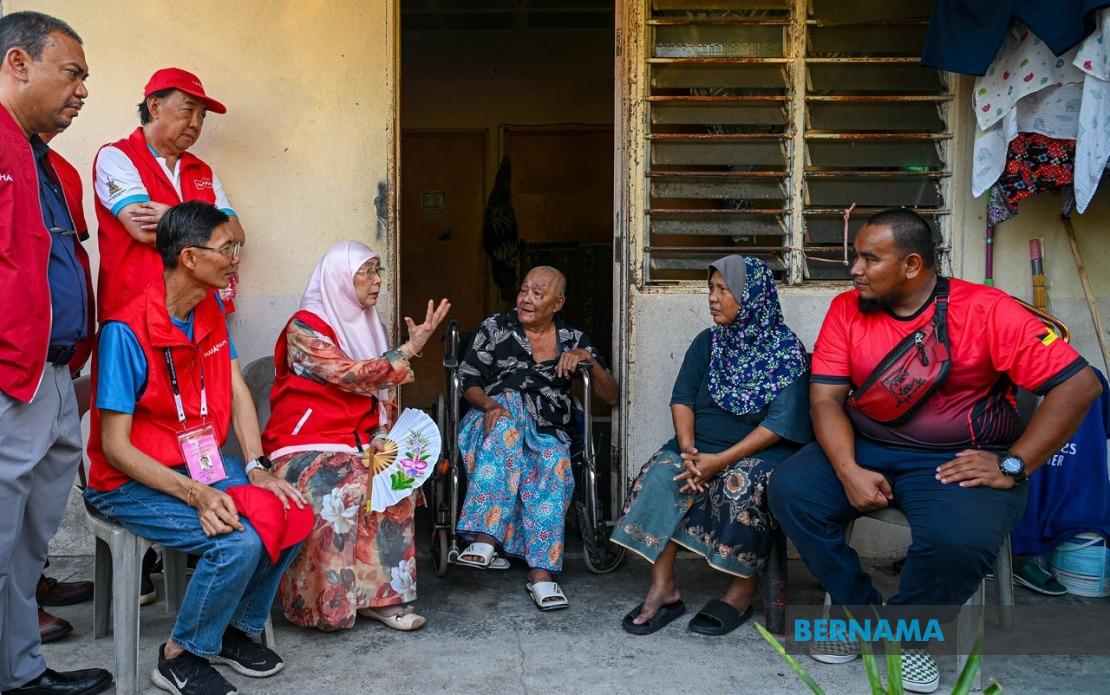
The PKR leader spent roughly twenty minutes at the home of Zaiton Hasan and Paimin Sapari in the Chuah area, accompanied by Datuk Yew Boon Lye, the Pakatan Harapan candidate contesting the Chuah State Legislative Assembly seat. The visit, which centred on understanding the circumstances of the residents and hearing directly about the challenges they navigate daily, underscores the coalition's grassroots engagement strategy ahead of polling day.
The couple, aged sixty and seventy-one respectively, both contend with serious medical conditions that have strained their household. Zaiton manages high blood pressure while her husband Paimin struggles with diabetes—chronic illnesses that demand ongoing treatment, medication, and lifestyle adjustments. Beyond health concerns, the pair faces economic pressures typical of many Malaysian pensioners and elderly households, where fixed incomes often fail to keep pace with rising living costs and medical expenses. Such visits, particularly by senior party figures, carry symbolic weight in electoral campaigns, signalling that opposition and coalition parties remain attentive to ordinary citizens' struggles.
Following the encounter, Zaiton expressed profound gratitude for the attention, remarking that the visit felt surreal and describing both Wan Azizah and Yew as genuinely warm and attentive. For residents in smaller constituencies and rural areas, personal visits from high-profile political leaders remain uncommon occurrences, making such moments memorable regardless of political affiliation. Zaiton's comments reflect a broader pattern in Malaysian electoral politics, where direct engagement by senior figures can forge emotional bonds and influence voter sentiment, particularly in constituencies where opposition presence may be less established.
The visit also coincided with a charitable gesture from the Port Dickson People's Spirit Welfare Association, which presented Paimin with a wheelchair to enhance his mobility and independence. This convergence of political outreach and welfare support—whether coincidental or strategically timed—illustrates how campaigns often weave humanitarian assistance into their messaging. For Paimin and Zaiton, the wheelchair addresses a tangible need that has almost certainly complicated their daily routines and reduced their ability to move about their home and community.
Datuk Yew Boon Lye, the Pakatan Harapan standard-bearer for Chuah, faces a direct contest against Pau Jeou Ching from Perikatan Nasional, the coalition led by Muhyiddin Yassin that has competed fiercely with PH across multiple recent elections. The Chuah constituency, part of Negeri Sembilan, reflects the broader political contest unfolding across the state, where both major coalitions are mobilising supporters and attempting to consolidate support among swing voters and constituencies where margins have historically been tight.
Negeri Sembilan has emerged as a politically contested state, with both Pakatan Harapan and Perikatan Nasional holding significant sway across its nine state constituencies. The 16th Negeri Sembilan State Election represents an opportunity for either coalition to strengthen its position, and campaigns have therefore intensified across multiple constituencies. Smaller state elections often serve as bellwethers for national sentiment, and performance in Negeri Sembilan could influence momentum heading toward any future federal contests.
The Election Commission has scheduled early voting for July 28, permitting certain categories of voters—including those working away from their constituencies or with mobility difficulties—to cast ballots ahead of the main polling day. Early voting provisions, though welcomed by many, also create extended campaign periods and require both major coalitions to maintain pressure and visibility over a longer timeframe. Polling day itself falls on August 1, at which point all registered voters in Negeri Sembilan will have the opportunity to cast their ballots.
For many constituencies like Chuah, which may comprise mix of urban, semi-urban, and rural areas, the composition of the electorate often determines electoral outcomes. Elderly voters, pensioners, and households experiencing financial strain represent a significant portion of the registered voting population, particularly in less developed regions. Political parties have long recognised that attention to the concerns of older voters—healthcare accessibility, pension adequacy, and cost of living—can translate into meaningful electoral support.
Wan Azizah's personal engagement in the campaign, rather than relying solely on local candidates to carry the coalition's message, signals that Pakatan Harapan views Negeri Sembilan as competitive and strategically important. Senior leaders often concentrate their campaign efforts on marginal constituencies where victory is uncertain, and their presence can energise party machinery while attracting media attention and legitimacy to local candidates.
The visit ultimately reflects the texture of Malaysian electoral politics at the state level, where personal relationships, community engagement, and demonstration of concern for residents' welfare remain powerful electoral tools. Whether such gestures translate into electoral support depends on numerous factors, including voter perceptions of the parties' broader records, economic conditions, and how effectively local and national narratives resonate across different voter demographics. For Zaiton and Paimin, the visit represented recognition of their struggles; for the broader campaign, it exemplified the human-centred approach that Pakatan Harapan seeks to project during this election cycle.

