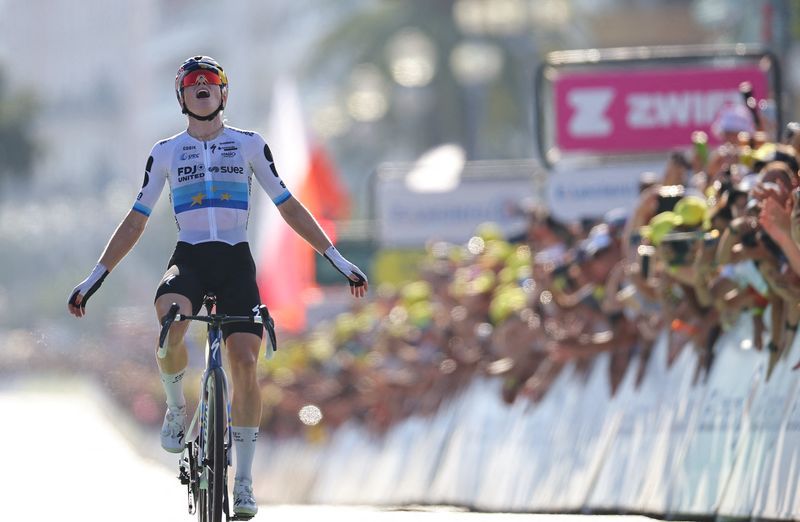
Demi Vollering of the Netherlands has seized control of the Tour de France Femmes by winning Saturday's brutal 171.9-kilometre mountain stage from Sisteron to Nice, displacing Kasia Niewiadoma-Phinney from the overall lead with just one day of racing remaining. The FDJ United-Suez rider's commanding performance on the steep Chemin de l'Arieta climb with six kilometres to go proved decisive, allowing her to break clear and extend her advantage during the subsequent descent into the Mediterranean city. Vollering now holds an eight-second lead in the general classification, though the decisive finale means the race outcome remains genuinely uncertain.
The dramatic reversal of fortune for Vollering came just 24 hours after she had lost considerable time to Niewiadoma-Phinney on Mont Ventoux, surrendering one minute and 16 seconds on the famous Provence summit. That setback could easily have demoralized a rider, yet the Dutch cyclist demonstrated the mental resilience required to compete at the highest levels of professional cycling, rallying her team and repositioning herself to strike when conditions favoured an aggressive approach. Her ability to recover from such a significant deficit in the mountains showcased not merely physical capability but the psychological fortitude essential in stage racing, where momentum and confidence fluctuate dramatically across consecutive days of competition.
Vollering's victory marked her fifth time wearing the yellow jersey during this edition of the race, a statistic that reflects the competitive nature of the 2026 Tour de France Femmes and the multiple occasions when race leadership has shifted between different contenders. She now joins four other riders who have held the overall lead at various points, illustrating how closely matched the top contenders remain. This pattern of leadership changes suggests a race where no single competitor has established the kind of dominance that would normally secure victory with a full day still to contest.
The stage itself witnessed an unexpected development before the racing even began. Pauline Ferrand-Prevot, the defending champion representing Visma-Lease a Bike, withdrew from competition due to illness, removing one of the strongest potential contenders from the final showdown. The absence of the reigning champion altered the dynamics of what could have been a three-way battle for overall victory, though Ferrand-Prevot's withdrawal also meant one fewer cyclist for Vollering's rivals to consider in their strategic calculations during the closing kilometres.
Italy's Elisa Longo Borghini of UAE Team ADQ completed the podium for Saturday's stage by securing second place ahead of Niewiadoma-Phinney, who finished third and lost the yellow jersey she had held going into the day's racing. The podium reflected the calibre of climbing talent on display, with three genuinely world-class mountain riders determined to make decisive contributions on terrain that traditionally suits those with exceptional endurance and explosive power. Longo Borghini's ability to finish ahead of Niewiadoma-Phinney in the closing metres demonstrated the fine margins separating victory and defeat in elite women's cycling.
Niewiadoma-Phinney voiced her frustration immediately after crossing the finish line, directing particular criticism toward FDJ United-Suez's tactical approach during the decisive climb. She alleged that Celia Gery, a teammate of Vollering, deliberately blocked her path by forcing contact with the barriers, forcing her to interrupt her pedalling rhythm at a critical moment in the stage. The Polish rider characterized such tactics as unsporting and expressed disappointment that competitors would resort to such methods rather than settling the outcome through fair competition based purely on physical capability and racing merit.
The allegation of deliberate obstruction raises questions about the boundaries between aggressive tactical racing and behaviour that violates the spirit of fair competition. Professional cycling exists within an established code of conduct, and accusations of intentionally impeding rivals tend to generate significant discussion within the sport's community. Whether such tactics constitute acceptable gamesmanship or cross into inappropriate territory often depends on perspective, with different observers reaching different conclusions about identical situations depending partly on their allegiances.
Vollering reflected on her remarkable turnaround with the pragmatism that characterizes experienced stage racers. She acknowledged the emotional rollercoaster inherent in multi-day racing, where yesterday's disappointment must be compartmentalized before the next morning's challenge arrives. Her comments about adopting a fresh approach each day and working methodically with her team revealed the structured approach required to remain competitive across successive stages of increasingly difficult terrain. The Dutch rider also recognized that the finale around Nice on Sunday represents the final opportunity for any dramatic shifts in overall standings, understanding that despite holding the yellow jersey, everything remains genuinely in play.
The bonus seconds awarded for stage victory proved instrumental in Vollering's advantage, supplementing the time gap she created through superior climbing performance. In cycling, such bonus seconds often determine final classifications when the gap between contenders remains measured in seconds rather than minutes. The 2026 Tour de France Femmes has established itself as a genuinely competitive edition where technical tactical decisions, individual performances on specific terrain, and accumulated small time advantages all contribute meaningfully to the outcome.
Sunday's concluding stage around Nice will determine whether Vollering can convert her slender lead into ultimate victory or whether her rivals can overturn the deficit during the final day. The proximity of competitors means that mechanical misfortune, tactical mistakes, or simply an off day for any leader could dramatically alter the final classification. For Malaysian cycling enthusiasts and broader sports followers in Southeast Asia, the men's and women's professional cycling calendars continue gaining viewership, with international stage races increasingly attracting regional audiences interested in following the world's most competitive cycling talent.

