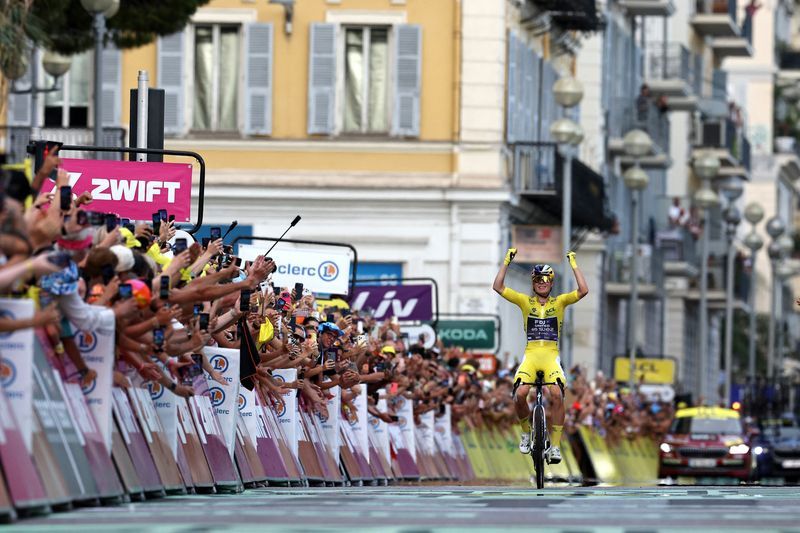
Demi Vollering of the Netherlands has secured cycling's premier women's race for the second time, delivering a commanding performance on the ninth and concluding stage of the 2025 Tour de France Femmes on Sunday. The 29-year-old FDJ-Suez rider's victory near Nice capped a remarkable career trajectory that has established her as one of the sport's most formidable talents in recent years. Her triumph comes just two years after her maiden Tour victory in 2023, underlining her exceptional consistency at the highest levels of professional cycling.
Vollering's palmares read like a masterclass in endurance racing excellence. Beyond her two Tour de France Femmes victories, the Dutch champion has claimed the 2026 Giro d'Italia Women title and secured back-to-back La Vuelta Femenina crowns in 2024 and 2025. For Southeast Asian cycling enthusiasts and sports followers, Vollering's achievements represent the calibre of performance now expected at women's cycling's highest echelon—a sport increasingly gaining profile and investment globally.
Entering Sunday's 99.2-kilometre final stage, Vollering held an eight-second advantage over Poland's Katarzyna Niewiadoma-Phinney, having reclaimed the yellow jersey the previous day. That slender margin underscored just how fiercely contested the race had become, with Niewiadoma-Phinney mounting a serious challenge throughout the final week. The tension surrounding Vollering's lead meant that the concluding stage would likely determine the race's outcome decisively, rather than serving as a formality for the jersey holder.
The decisive moment arrived on the fourth and final climb of the Col d'Eze during the run-in to Nice. Vollering unleashed a powerful attack that immediately distanced Niewiadoma-Phinney, who could not match the acceleration. From that point forward, the Dutch rider controlled the descent and final kilometres to cruise across the finish line in solitary triumph. The emphatic nature of her victory—achieved precisely when it mattered most—demonstrated the mental fortitude and physical superiority that characterise cycling's true champions.
Reflecting on her success immediately after crossing the line, Vollering articulated the deeper significance of her achievement. She noted that winning while wearing the yellow jersey held particular meaning for her, as it marked her first such victory at cycling's grandest stage. Her comments revealed the collaborative nature of professional cycling, as she acknowledged her FDJ-Suez teammates, particularly Celia Gery, who had endured a difficult night during the race. This human dimension—the bonds formed through shared sacrifice and collective purpose—distinguishes professional cycling from more individualistic sports.
Vollering's philosophical reflections on her victory transcended mere athletic accomplishment. She spoke about the privilege of living a life dedicated to professional cycling, of working alongside passionate individuals united by common goals, and of pursuing excellence with both humility and pride. For Malaysian readers, her perspective offers insight into what motivates elite athletes at the pinnacle of their disciplines—values centred on teamwork, personal development, and the intrinsic satisfaction of pursuing mastery.
The final general classification saw Vollering finish one minute and eighteen seconds ahead of Niewiadoma-Phinney, a substantial margin that reflected her consistent strength throughout the race rather than relying solely on a single dramatic moment. Italy's Elisa Longo Borghini completed the podium in third place, ensuring that the top three positions reflected genuine competitive depth. Spain's Paula Blasi claimed the stage honours behind Vollering, finishing one minute and four seconds adrift, with Niewiadoma-Phinney rounding out the day's top three finishers.
Vollering's three stage victories across this edition of the Tour de France Femmes brought her overall tally to six stage wins across her Tour appearances. These numbers illustrate not just her prowess in mountain stages, but her versatility across varying terrain and race conditions. Her ability to accumulate multiple stage victories while simultaneously managing the overall classification demonstrates the comprehensive skill set required of Tour contenders.
The women's Tour de France Femmes continues to establish itself as professional cycling's marquee event for female athletes, with increasingly competitive fields and dramatic finishes capturing global attention. Vollering's performances this year have substantially elevated the race's profile, particularly in demonstrating the tactical sophistication and physical demands that characterise women's professional cycling at its elite level. For regional cycling communities in Southeast Asia, where the sport continues to develop, such high-profile international success serves as inspiration and a benchmark for aspiring cyclists.
In comparative context, Vollering's achievement occurs amid broader momentum in women's cycling. Slovenia's Tadej Pogacar recently secured a record-equalling fifth Tour de France title in July, claiming his third successive victory in cycling's most prestigious men's race. While Pogacar's dominance has generated substantial discussion within cycling communities, Vollering's sustained excellence across multiple Grand Tours demonstrates that women's cycling is producing similarly accomplished performers capable of dominating their respective disciplines. The parallel achievements of these two cyclists underscore professional cycling's trajectory toward genuine equality in prestige and competitive intensity between its men's and women's divisions.

