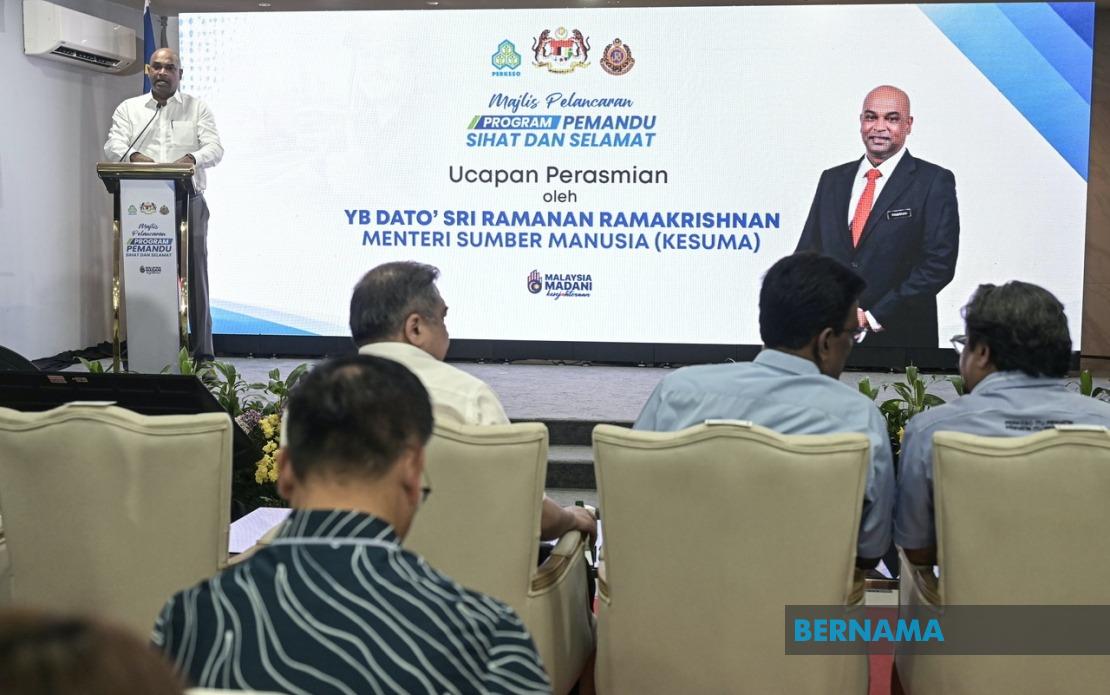
Professional drivers renewing their vocational licences in Malaysia must now complete a comprehensive health screening under the Healthy and Safe Driver Programme, a newly launched initiative aimed at strengthening road safety across the nation. Human Resources Minister Datuk Seri R. Ramanan announced the mandatory requirement, which takes effect immediately through 500 designated panel clinics positioned nationwide. The screening represents a significant shift in how authorities monitor the fitness of drivers who form the backbone of Malaysia's transport and logistics industries.
The health assessment encompasses multiple dimensions of physical wellbeing critical to safe driving performance. Participants undergo standard physical examinations alongside specialised testing for vision and hearing acuity, recognising that sensory capabilities directly influence road safety outcomes. The programme also screens for obstructive sleep apnea and other sleep-related disorders, conditions that have been linked to fatigue-related accidents among long-distance and shift workers in the transport sector. Beyond these checks, medical professionals evaluate the functioning of major bodily systems including the cardiovascular, respiratory, and neurological networks—all essential to maintaining alertness and reaction time behind the wheel.
The financial arrangement reveals the government's commitment to accessibility. Drivers bear only RM30 of the total RM85 screening cost, with the Social Security Organisation funding the remaining RM55 through the MADANI Government subsidy. This pricing structure removes financial barriers that might otherwise discourage compliance, particularly among drivers operating on tight margins in the competitive logistics and transport industries. By absorbing the majority cost, authorities signal that road safety investment extends beyond individual responsibility into collective public health strategy.
Minister Ramanan emphasised that the initiative addresses a genuine safety concern rather than imposing bureaucratic inconvenience. Comprehensive health screening enables early detection of medical conditions that could impair driving ability—undiagnosed cardiovascular issues, uncontrolled diabetes measured through HbA1c blood tests, or untreated sleep disorders. By identifying these problems before they contribute to accidents, the programme shifts from reactive incident management to preventive intervention, allowing drivers to receive treatment promptly and maintain their fitness for road work.
The programme's ambition extends well beyond current infrastructure. The ministry plans to expand screening capacity from the initial 500 panel clinics to 3,000 locations nationwide, a six-fold increase reflecting confidence in the model's effectiveness. This expansion would position the PSS as a routine touchstone in the vocational licence renewal process, embedding health assessment into the professional driver lifecycle. The broader geographic coverage also addresses disparities in access, ensuring that drivers in less-urbanised areas face equivalent screening availability.
Road fatality data underscores the urgency behind this preventive approach. In 2025, 115 workers died in road accidents, representing a concerning increase from 94 deaths recorded in 2024—a jump of 22 percent in fatalities among workers who depend on road transport for employment. These figures encompass bus drivers, van operators, motorcycle couriers, and others whose livelihoods intersect with traffic risk. The statistics reveal a worsening trend despite existing safety regulations, suggesting that traditional enforcement mechanisms alone prove insufficient.
Within this mortality landscape, lorry drivers face disproportionate danger. The 62 fatalities among heavy goods vehicle operators represent 21 percent of all worker road deaths, the highest single category among transport professions. This concentration reflects the unique occupational hazards of long-haul operations—extended driving hours, fatigue accumulation, challenging road conditions, and heavy vehicle dynamics. These drivers require particular scrutiny for sleep disorders and cardiovascular fitness, making the targeted health screening especially relevant to their demographic.
The initiative represents collaborative governance spanning two critical ministries. The Ministry of Human Resources partners with the Ministry of Transport to coordinate health assessment with licensing authority requirements, creating administrative integration that simplifies driver compliance. This inter-agency approach acknowledges that road safety transcends narrow transportation or labour concerns, demanding coordinated policy responses that reflect the multifaceted nature of occupational safety in transport sectors.
For Malaysian drivers, the PSS programme introduces a new requirement into the licence renewal cycle, shifting expectations around personal health responsibility. Professional drivers must recognise that medical fitness now forms part of professional competency assessment, equivalent to skills testing or criminal record checks. This cultural shift aligns Malaysia with international best practice, where health-based screening represents standard licensing practice in developed economies with advanced road safety frameworks.
The programme's effectiveness will depend on consistent implementation and driver cooperation. Panel clinic capacity, staff training, and quality control standards will shape whether the initiative achieves its preventive objectives. Additionally, the data generated through 3,000 clinic screening episodes could inform epidemiological understanding of occupational health risks in Malaysian transport sectors, enabling evidence-based policy refinement.
For the transport industry itself, mandatory health screening creates operational considerations. Fleet operators may need to support drivers undergoing screening, potentially adjusting schedules to accommodate clinic visits. However, this minor administrative adjustment offers substantial returns through reduced accident-related downtime, insurance claims, and reputational damage. Operators committed to professional standards increasingly view driver health investment as central to business resilience and competitive positioning.
The PSS initiative ultimately reflects governmental recognition that professionalised transport depends on professionalised workforce health management. As road networks densify and traffic volumes increase, driver fitness becomes increasingly critical to public safety outcomes. By embedding health assessment into licence renewal cycles, Malaysia positions itself to capture early intervention opportunities while establishing road safety as a shared responsibility extending across individual drivers, employers, healthcare providers, and regulatory authorities.

