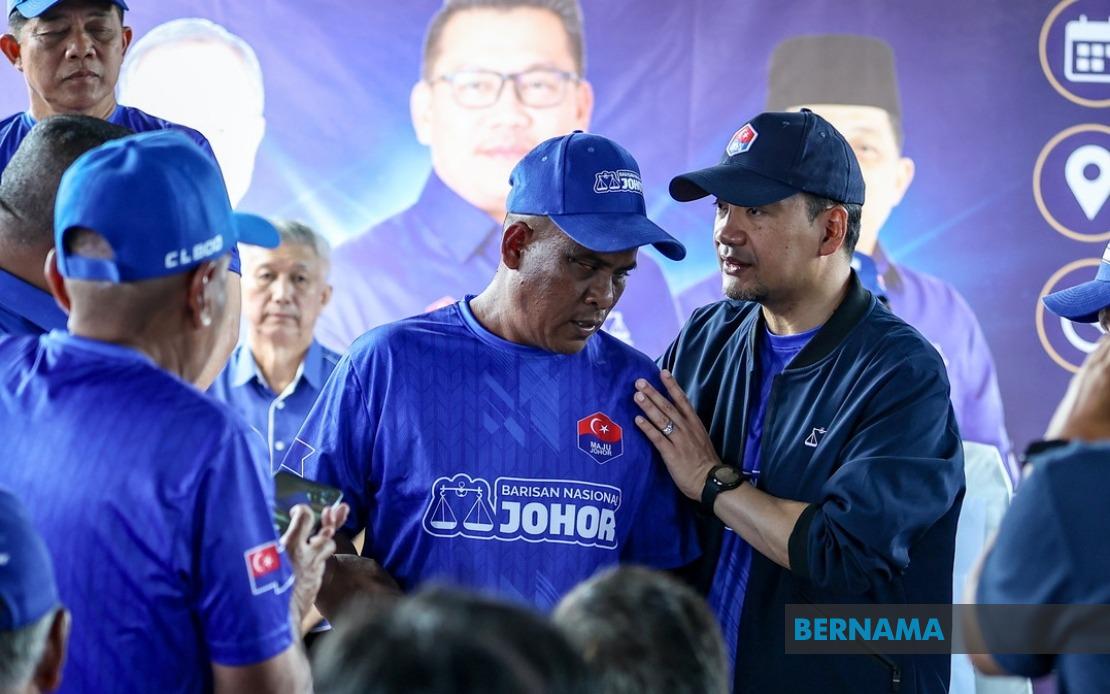
Mohd Hairol Leman has been navigating life without sight since birth, yet this reality has done nothing to diminish his commitment to voting. The 46-year-old Batu Pahat resident views his participation in elections not as an optional exercise but as a fundamental civic responsibility that shapes his state's trajectory. Living in Kampung Sri Pantai, Senggarang, Mohd Hairol represents a growing recognition across Malaysia that persons with disabilities remain essential stakeholders in the democratic process, capable of contributing meaningfully despite physical limitations.
For nearly two decades, Mohd Hairol has maintained an unblemished voting record, casting his ballot in every election cycle since 2008 without exception. This upcoming 16th Johor State Election, scheduled for July 11 with early voting on July 7, will mark his sixth voting experience. His consistency underscores an important reality often overlooked in discussions about electoral participation: disabled citizens frequently demonstrate higher civic engagement when proper accommodations exist, challenging assumptions that disability inherently reduces political involvement.
Mohd Hairol's journey as a voter has been enabled by the systematic support provided by the Election Commission, which facilitates accessibility for visually impaired voters through trained officials who assist in marking ballots. This institutional framework represents a crucial component of Malaysia's democratic infrastructure, ensuring that all citizens can exercise their franchise regardless of sensory impairment. His willingness to continue voting despite the logistical complexities involved speaks to both his personal conviction and the effectiveness of these accessibility mechanisms.
When discussing his electoral participation, Mohd Hairol emphasises that choosing leaders capable of genuinely serving the population transcends personal interest and represents a collective obligation. He recognises that every vote carries weight in determining not just who holds office, but whose voices get heard in governance decisions that affect resource allocation, policy priorities, and the social safety net. For someone who relies on government assistance programmes, this connection between voting and policy outcomes carries particularly tangible significance.
Both the Department of Social Welfare and the Johor State Islamic Religious Council's Baitulmal have provided critical support that enables Mohd Hairol's participation in society. Rather than viewing his acceptance of such assistance as diminishing his voice, he interprets his continued voting as an expression of gratitude for these interventions. This perspective reframes welfare not as a one-directional transaction but as part of a reciprocal relationship between citizens and state, wherein beneficiaries retain agency and obligation.
Mohd Hairol's comments regarding the importance of responsive leadership reflect broader anxieties across Malaysia about whether elected officials prioritise vulnerable populations when distributing resources and designing social programmes. His emphasis on leaders who "look after the people" suggests that marginalised communities view electoral choices through the lens of survival and dignity, not abstract political ideologies. For persons with disabilities, cost-of-living pressures compound existing accessibility challenges, making the selection of responsive governance particularly consequential.
The Johor State Election features 172 candidates competing for 56 State Legislative Assembly seats, representing a significant electoral exercise in one of Malaysia's most politically dynamic states. The scale of this contest makes individual voter participation, including from citizens like Mohd Hairol, genuinely influential in determining outcomes, particularly in closely contested constituencies. His determination to vote reflects confidence that his ballot contributes meaningfully to electoral outcomes.
Mohd Hairol's public discussion of his voting experience serves an important advocacy function within Malaysian society. By openly affirming his participation and the accommodations that make it possible, he normalises the presence of disabled citizens as active political participants rather than passive beneficiaries of charity. This visibility matters, as it challenges societal assumptions that disability precludes meaningful democratic engagement and encourages other visually impaired citizens to exercise their franchise.
The accessibility provisions that enable voters like Mohd Hairol to participate represent an ongoing institutional commitment to inclusive democracy. However, the relatively limited public discussion of such arrangements suggests that Malaysia could benefit from more systematic awareness-raising about the mechanisms through which disabled citizens can exercise their voting rights. Greater visibility of these processes could increase participation among persons with disabilities who remain unaware of available accommodations.
Looking forward, Mohd Hairol's stated intention to vote in the July 11 election demonstrates that commitment to democratic participation persists across demographic categories when genuine opportunities exist. His experience suggests that barriers to voting among disabled persons may reflect accessibility gaps rather than disinterest. As Malaysia continues developing its electoral infrastructure, the experiences of voters like Mohd Hairol provide valuable guidance for enhancing inclusive democratic participation.
The broader significance of Mohd Hairol's voting history lies in demonstrating that disability and democratic engagement are not mutually exclusive categories. His consistent participation since 2008 across multiple election cycles shows that, given appropriate support systems, persons with visual impairments remain engaged citizens capable of understanding complex policy choices and selecting representatives. This reality should inform ongoing conversations about accessibility, inclusion, and the true barriers that prevent full democratic participation across Malaysian society.

