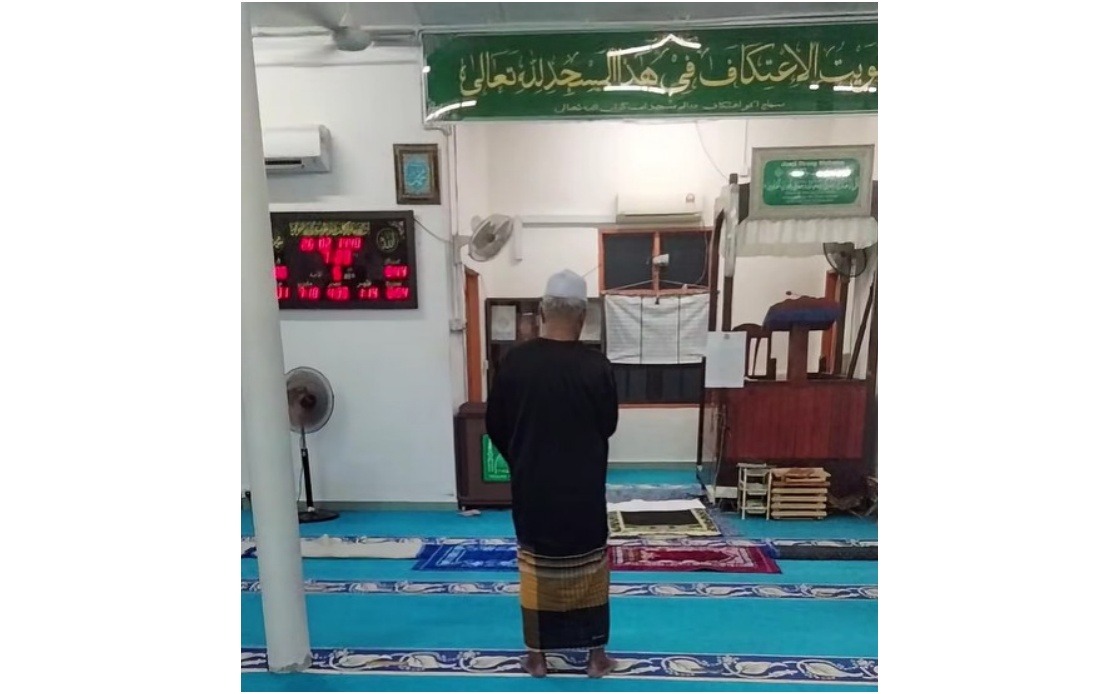
A brief video making the rounds on social media has thrust a small mosque in rural Mersing into the spotlight, raising broader questions about how religious institutions adapt to changing population patterns across Malaysia. The 15-second clip, shared via Facebook and WhatsApp, captured what appeared to be a solitary worshipper at Masjid Tanjung Resang, leading some online commentators to question the mosque's viability and management efficacy. The incident has become a microcosm of challenges facing religious infrastructure in areas experiencing demographic shifts and outmigration.
Mersing Member of Parliament Muhammad Islahuddin Abas, who resides in the locality, acknowledged the underlying realities driving the perception while defending the mosque's operational standing. He explained that although the village contains numerous residential structures, the actual population has dwindled considerably as residents have pursued employment opportunities elsewhere or relocated permanently. This disconnect between housing stock and resident population creates a misleading impression of community size, a phenomenon increasingly common in Malaysian villages as younger generations migrate cityward for economic advancement. Despite these headwinds, he noted that Masjid Tanjung Resang maintains its regular programming schedule, demonstrating institutional commitment beyond simple attendance metrics.
The mosque management has consistently organised diverse religious activities spanning educational lectures, Quranic recitations, and spiritual talks—initiatives that underscore an operational philosophy extending beyond daily prayer congregations. Muhammad Islahuddin disclosed that he himself was initially surprised by the viral content when a friend from Kuala Lumpur shared a screenshot via messaging application, illustrating how information circulates rapidly through digital networks regardless of geographical distance or contextual understanding. His candid reaction underscores how easily isolated moments can become disconnected from broader operational realities when amplified through social media without accompanying explanation.
Mosque chairman Abdul Syamil Abdul Fadzil moved to contextualise the footage more precisely, revealing that the individual captured in the video was performing a voluntary supererogatory prayer rather than obligatory congregational worship. This distinction, while perhaps subtle to the untrained observer, carries significant theological and administrative weight within Islamic practice. The voluntary nature of the activity means its occurrence outside scheduled prayer times does not reflect overall congregation patterns. Syamil further indicated that officials from the Johor Islamic Religious Affairs Department (JAINJ) had already been briefed on the matter and fully understand the congregation's circumstances, suggesting institutional oversight mechanisms were functioning appropriately.
The broader implication of Syamil's remarks is that regulatory bodies monitoring mosque operations and religious programming remain cognisant of rural realities and do not apply uniform attendance expectations across demographically disparate communities. This represents a measured administrative approach recognising that villages experiencing net population loss cannot be held to performance standards applicable to urban or suburban settings. The department's awareness of the congregation's situation and apparent acceptance of its operational model suggests that Malaysian Islamic authorities understand the distinction between decline and dysfunction—a nuance often lost in viral social media narratives.
Yet Muhammad Islahuddin detected an unexpected positive dimension to the controversy. The viral circulation, while initially embarrassing to community stakeholders, has inadvertently brought Masjid Tanjung Resang to the attention of audiences far beyond its immediate vicinity. This expanded awareness addresses a longstanding problem plaguing the facility: its geographical obscurity. Located off the primary thoroughfare, the mosque has remained largely unknown even to residents of the broader Mersing district, let alone those from distant states. The unintended publicity, though arising from somewhat unflattering circumstances, has partially remedied this visibility deficit.
The mosque's actual role within the local and broader community deserves recognition beyond the narrow confines of congregational prayer statistics. Muhammad Islahuddin emphasised that Masjid Tanjung Resang functions as a welcoming facility accommodating visitors of all faiths, reflecting a more expansive conception of religious institutional purpose. The facility provides crucial amenities for hikers traversing Gunung Arong, a mountain of recreational significance to trekking enthusiasts across the region. This multipurpose orientation—serving simultaneously as a place of worship, community gathering point, and visitor service hub—reflects evolving understandings of how rural religious structures remain relevant and valuable even as traditional worship attendance fluctuates.
The incident illuminates tensions between quantitative metrics and qualitative institutional contributions when evaluating religious facilities in demographically challenged areas. A viral video capturing a single moment at prayer time cannot convey the cumulative impact of regular programming, community outreach, and multifaceted service provision that characterise the mosque's weekly operations. Programme regularity, as Muhammad Islahuddin stressed, persists regardless of congregation size, suggesting an institutional commitment to religious mission that transcends simple attendance figures. This distinction becomes increasingly important as Malaysian rural areas undergo demographic transformation.
For Southeast Asian readers observing similar patterns in their own communities, the Mersing case offers instructive lessons about how misinformation or context-stripped footage can distort perceptions of institutional functionality. Rural religious institutions across the region face comparable pressures from urban migration and generational relocation patterns. However, institutional resilience often manifests through programme continuity and community adaptation rather than maintenance of historical attendance levels. The mosque's transformation into a visitor facility serving trekkers represents precisely this kind of adaptive evolution.
The episode also raises questions about social media literacy and responsible information sharing within Malaysian society. A 15-second video, decontextualised from the complex demographic and operational realities it portrays, circulated rapidly enough to reach federal legislators and government religious departments. This velocity of spread often outpaces meaningful fact-checking or contextual explanation. That local leaders felt compelled to issue clarifications demonstrates the power of digital platforms to shape perceptions, sometimes inaccurately. Institutional authorities and community representatives increasingly find themselves reactive, managing narratives rather than proactively communicating their work.
Looking forward, Masjid Tanjung Resang's experience suggests potential benefits emerging from the controversy. Increased awareness may attract pilgrims, trekkers, and curious visitors, potentially enriching the institution's mission and financial sustainability. The Johor Islamic Religious Affairs Department's engagement demonstrates that regulatory oversight functions appropriately even for geographically remote and demographically modest congregations. Meanwhile, the mosque's demonstrated ability to maintain regular programming despite population challenges offers encouragement to other rural religious institutions navigating similar pressures.
Ultimately, the viral video episode reflects broader societal patterns reshaping Malaysia's religious landscape. As populations concentrate increasingly in urban corridors, rural mosques and other traditional institutions must redefine their purposes and value propositions. Masjid Tanjung Resang appears to be managing this transition through diversified community service, welcoming posture toward non-Muslim visitors, and commitment to consistent religious programming. These adaptations, though born partly from necessity, suggest viable pathways for rural religious institutions seeking relevance and sustainability in an evolving demographic context. The controversy, despite its initial unflattering framing, may ultimately strengthen rather than undermine the mosque's standing and mission.

