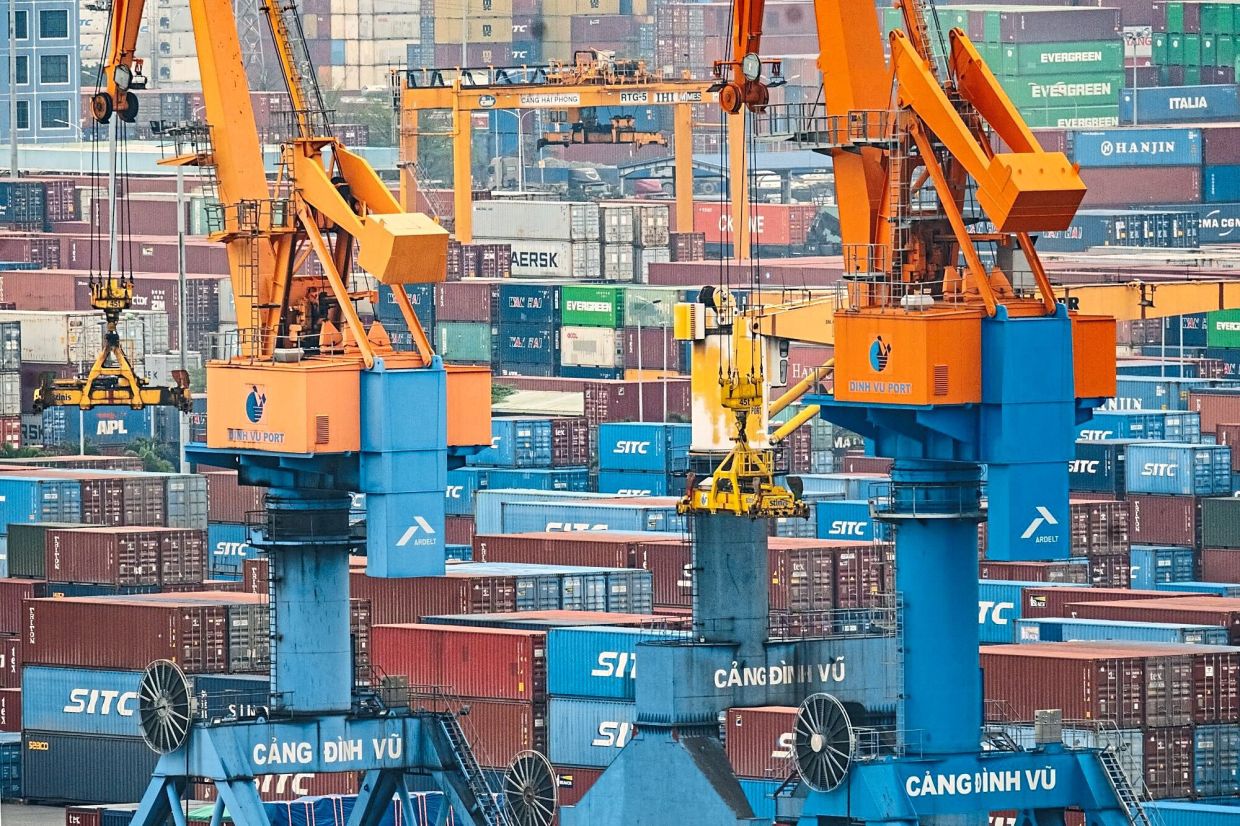
Vietnam is working to break the deadlock in protracted negotiations with the Trump administration over a comprehensive trade agreement, with Deputy Prime Minister Nguyen Van Thang meeting US Trade Representative Jamieson Greer in Washington to demonstrate Hanoi's commitment to resolving longstanding disputes. The encounter underscores Vietnam's strategic recognition that a breakdown in trade relations would jeopardise its economy, which relies heavily on exports to American markets and foreign investment from US corporations.
Thang conveyed Vietnam's readiness for "open, constructive" dialogue aimed at reaching a final tariff deal, according to statements issued by the Vietnamese government. The deputy prime minister's visit to the US capital reflects Hanoi's anxiety over the stalled negotiations and the threat of escalating American tariffs that could disrupt supply chains and investor confidence in the country. His presence in Washington also signals Vietnam's willingness to make concessions on issues that have proven contentious, indicating that policymakers in Hanoi believe the cost of continued friction outweighs the political cost of compromise.
The two nations had reached a framework agreement in October, but substantive talks have since stalled over several technical and regulatory matters. Greer made clear that Washington expects negotiations to conclude swiftly, putting time pressure on Vietnamese negotiators to move beyond the current impasse. This acceleration in the timeline reflects the Trump administration's broader push to restructure American trade relationships, with Vietnam featuring prominently in its strategic recalibration of commercial ties across Asia.
America's chief trade concern centres on what US officials characterise as illicit transshipment—the routing of goods, particularly from China, through Vietnam to circumvent tariffs. This practice allows Chinese manufacturers to relabel products as Vietnamese, thereby gaining preferential access to American markets while evading existing trade restrictions. Vietnam has become a critical transshipment hub as American tariffs on Chinese goods have escalated, creating financial incentives for exporters to obscure the origin of merchandise. Thang's openness to addressing these concerns signals that Vietnam recognises the legitimacy of Washington's security and trade-enforcement interests, even if implementation presents administrative challenges.
The United States Trade Representative's office has escalated pressure by launching three concurrent Section 301 investigations into Vietnamese trade practices, examining transshipment, non-tariff barriers, and intellectual property enforcement. These investigations represent a formal mechanism through which the Trump administration can impose unilateral tariffs without Congressional approval, making them a potent negotiating tool. The April designation of Vietnam as a "priority foreign country" over its handling of online piracy and counterfeit goods reflected frustration with what American officials view as inadequate enforcement along Vietnam's borders. The investigations are scheduled to conclude in November, creating a firm deadline that both sides are working against.
Vietnam's trade surplus with the United States has widened dramatically, reaching US$114 billion in the first half of 2026—the largest bilateral deficit America faces with any single country, surpassing those with China, Mexico, and Taiwan. This outsized surplus has made Vietnam a target for protectionist pressure from American domestic constituencies, particularly manufacturers who complain about competition from Vietnamese exporters. The scale of the imbalance has also attracted scrutiny from Congressional lawmakers concerned about whether trade flows reflect genuine comparative advantage or instead result from regulatory arbitrage and transshipment schemes.
What complicates Vietnam's position is the paradox of its own trade dynamics. Vietnamese imports from China have accelerated sharply as manufacturers in Vietnam boost production of goods destined for American consumers, particularly electronics. This means Vietnam's role in regional supply chains is deeply intertwined with Chinese suppliers, making it difficult for Hanoi to fully decouple from Beijing even as it deepens ties with Washington. American trade officials argue that this dependence on Chinese inputs masks the true origin of many products, while Vietnamese manufacturers argue they are simply participating in efficient regional production networks. Resolving this tension will require both nuanced technical discussions and potentially new rules of origin frameworks.
Beyond trade mechanics, Thang's Washington visit encompassed a broader commercial agenda aimed at attracting American investment. The deputy prime minister met executives from Qualcomm Inc., Visa Inc., Axon Enterprise Inc. and Caterpillar Inc., emphasising Vietnam's appeal as a manufacturing and financial services destination. These engagement efforts reflect Hanoi's calculation that deepening economic integration with American corporations creates constituencies in the United States with vested interests in smooth bilateral relations. By hosting investment discussions alongside trade talks, Vietnam is hedging against the possibility of tariffs by seeking to establish manufacturing operations that could qualify for preferential treatment under any new agreement.
The timing of Thang's mission also carries significance for Southeast Asia's broader geopolitical alignment. Vietnam's economy is substantially dependent on trade with the United States, and any protectionist measure against Hanoi would reverberate through regional supply chains that involve Thailand, Malaysia, Indonesia, and other ASEAN partners. The outcome of these negotiations will therefore influence how other Southeast Asian nations calibrate their own trade strategies and investment policies. A failure to reach agreement could prompt manufacturers to relocate investments to other jurisdictions, potentially benefiting competitors in the region while undermining Vietnam's attractiveness as a manufacturing hub.
For Malaysian observers and policymakers, Vietnam's negotiating stance offers instructive lessons about navigating American trade pressures. Malaysia itself faces scrutiny over transshipment and intellectual property enforcement, and the frameworks being discussed between Washington and Hanoi may establish precedents that influence future bilateral discussions with other Southeast Asian nations. Additionally, any resolution that involves enhanced border controls or supply chain transparency mechanisms could create operational challenges and costs for Malaysian companies trading through or with Vietnamese partners, making the outcome a matter of regional commercial interest.
The constructive tone adopted by Thang and acknowledged by Greer suggests both sides are motivated to reach accommodation rather than escalate to punitive tariffs. Vietnam's willingness to address American concerns over counterfeits, piracy, and transshipment indicates that Hanoi views accommodation as preferable to the alternative of facing the November investigation outcomes without a negotiated framework. Conversely, the Trump administration's eagerness to conclude talks reflects a desire to demonstrate progress on trade negotiations while maintaining leverage over China. Whether that mutual interest translates into a substantive agreement that satisfies American enforcement priorities while preserving Vietnam's economic interests remains uncertain, but the recent engagement suggests both parties are investing effort in finding middle ground.

