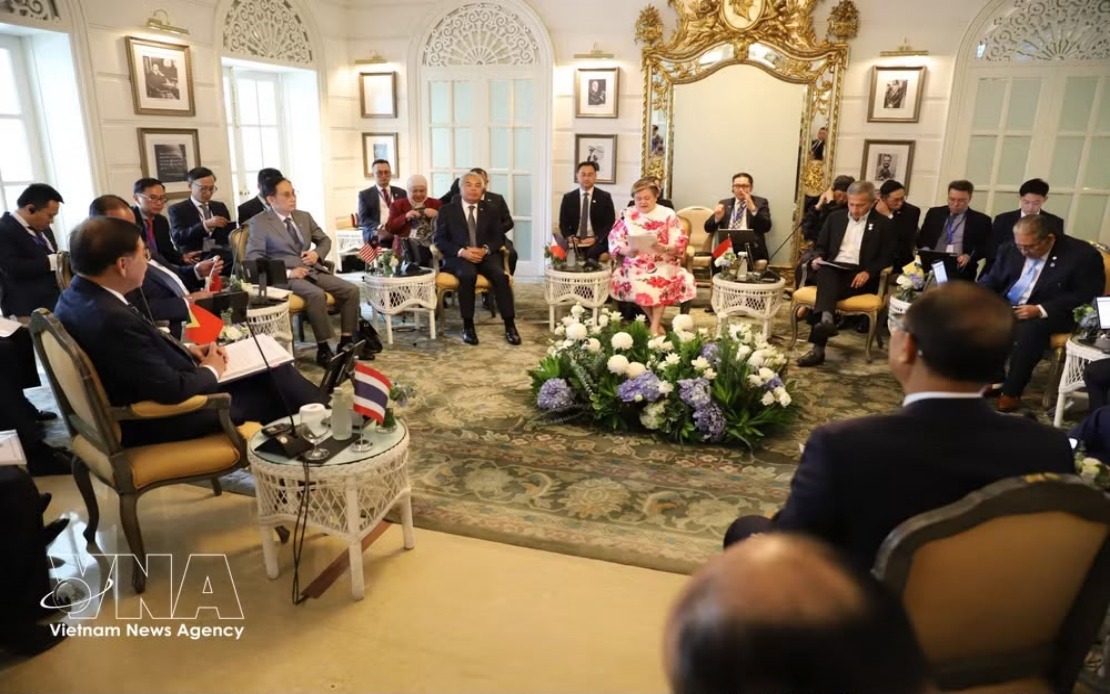
Vietnam has formally committed to working alongside other ASEAN members in supporting Myanmar's path toward political stability and economic recovery, with Foreign Minister Le Hoai Trung making the pledge at an extraordinary meeting of Southeast Asian foreign ministers in Bangkok. The July 12 gathering, chaired by Philippine counterpart Maria Theresa P. Lazaro whose nation assumes the ASEAN presidency in 2026, represented the most significant direct engagement between the bloc and Myanmar's military administration since the country's 2021 coup d'état. This diplomatic moment carries particular weight for the region, as it signals ASEAN's continued commitment to maintaining dialogue with Myanmar despite the contentious circumstances surrounding its governance.
Trung's remarks underscored Vietnam's unwavering recognition of Myanmar as a full ASEAN member whose challenges remain a collective concern for the association. Rather than isolating Yangon, the Vietnamese minister advocated for the Five-Point Consensus—ASEAN's established framework for Myanmar engagement—to remain the cornerstone of regional support efforts. This framework, developed in the aftermath of the 2021 coup, emphasises dialogue, humanitarian assistance, and a Myanmar-led political solution, though its implementation has remained contentious among member states with divergent views on how firmly to pressure the junta. Vietnam's positioning suggests it favours sustained diplomatic channels over sanctions or isolation tactics, a stance that reflects both its own historical relationships and its pragmatic approach to regional geopolitics.
The Vietnamese minister explicitly acknowledged recent actions taken by Myanmar's authorities to address governance concerns and security challenges. These include initiatives to stabilise the political environment, stimulate economic activity, strengthen institutional practices, and intensify campaigns against transnational organised crime—particularly drug trafficking networks that destabilise the broader region—as well as cybercriminal operations that increasingly target Southeast Asia. By recognising these efforts, Trung signalled that ASEAN appreciates Myanmar's attempts at self-correction, though observers note the junta's record on human rights and democratic principles remains severely contested by international bodies.
Vietnam's commitment extends beyond rhetorical support to concrete proposals for action. Trung advocated that ASEAN should implement more tangible and practical measures to facilitate Myanmar's recovery, with particular emphasis on maintaining consistent, direct dialogue with the country's leadership. This approach reflects a strategic calculation that regular engagement allows ASEAN to monitor developments, influence outcomes subtly, and remain positioned as an honest broker rather than a bloc imposing external solutions. For Myanmar, which has increasingly faced international isolation, this sustained engagement offers economic and diplomatic lifelines that are crucial for its development trajectory.
The Vietnamese position encompasses a broad development agenda for Myanmar that extends beyond political normalisation. Support should encompass economic revitalisation—critical as Myanmar's economy deteriorated significantly following the coup—alongside addressing humanitarian and social needs that affect ordinary citizens. Crucially, Trung identified transnational crime prevention as a priority, reflecting growing Southeast Asian concerns about drug manufacturing and trafficking originating from Myanmar's border regions, particularly in the Golden Triangle area where Afghan opium and regional synthetic drugs create destabilising flows throughout the region.
Vietnam explicitly positioned itself as willing to coordinate with the Philippine ASEAN chair and other member states to operationalise this support agenda. This diplomatic flexibility carries implications for regional cohesion, as ASEAN has struggled with divergent approaches to Myanmar. While some members, particularly vocal advocates for stronger pressure, view comprehensive engagement as enabling junta consolidation, Vietnam's pragmatism suggests that dialogue remains preferable to isolation, a position shared by several key members including Thailand and Laos. This coalition of pragmatists may prove decisive in shaping ASEAN's Myanmar policy trajectory over the coming years.
The Bangkok meeting itself represented a symbolic breakthrough in ASEAN-Myanmar relations. It was the first in-person gathering attended by numerous ASEAN foreign ministers alongside Myanmar Foreign Minister Tin Maung Swe, marking a deliberate effort to restore high-level engagement after extended estrangement. Myanmar's representative briefed colleagues on a 100-day development plan encompassing initiatives for peace-building, reconciliation, and administrative stabilisation, demonstrating that Yangon recognises the need to address regional concerns through concrete proposals rather than mere rhetoric. For Southeast Asian capitals, such engagement opportunities provide venues to communicate expectations and monitor implementation of stated commitments.
The deliberations reflected careful diplomatic calibration. Ministers adopted a forthright yet constructive tone, enabling frank discussion of Myanmar's situation while avoiding confrontational posturing that might further alienate the administration. This balanced approach proved essential for sustaining dialogue and reaching consensus, particularly given the participation of members with differing political systems and Myanmar policy preferences. Participants discussed specific mechanisms for improving coordination and support through substantive application of the Five-Point Consensus, attempting to translate the framework from conceptual agreement into operational reality.
MYANMAR's strategic importance to regional stability cannot be overstated for Malaysian and broader Southeast Asian readers. As a neighbour to Thailand and a transit zone for people, goods, and illicit commodities moving through the region, Myanmar's internal instability directly affects Southeast Asia's security architecture. Economic disruption in Myanmar exacerbates cross-border refugee flows, creates vacuums exploited by transnational criminal networks, and complicates ASEAN's internal cohesion. Vietnam's commitment to sustained engagement therefore serves broader regional interests beyond Myanmar itself, functioning as part of the collective effort to prevent state collapse and the regional spillovers that would inevitably follow.
The ministers' reaffirmation that ASEAN will continue supporting a Myanmar-owned, Myanmar-led political solution represents an important principle: external powers will not impose outcomes, but rather facilitate the conditions enabling Myanmar to chart its own path toward stability. This approach respects Myanmar's sovereignty while acknowledging that regional stability requires active ASEAN engagement rather than passive observation. The emphasis on long-term solutions aimed at peace, reconciliation, and development underscores recognition that quick fixes are unrealistic and that sustained commitment over years will be necessary.
For Malaysia specifically, Vietnam's stance carries policy implications worth considering. As a moderate ASEAN voice often seeking middle ground on contentious issues, Malaysia shares Vietnam's pragmatic internationalism and preference for dialogue-based solutions. The Vietnamese position aligns with Malaysia's broader strategic interests in maintaining ASEAN unity and preventing any member state's marginalisation, which could weaken the bloc's collective influence in regional affairs. Furthermore, Malaysian economic interests in Myanmar—encompassing trade, investment, and supply chain integration—benefit from political stabilisation and economic recovery, making engagement strategies more palatable than isolationist approaches.
Looking forward, the sustainability of this ASEAN support framework depends on Myanmar demonstrating genuine progress toward the objectives outlined in the Five-Point Consensus while ASEAN members maintain unified messaging despite their differing preferences. Vietnam's commitment to close coordination with the Philippine chair and other members suggests determination to prevent the issue from fracturing ASEAN solidarity. The challenge will be converting diplomatic engagement into measurable improvements in Myanmar's governance, security, and development outcomes while managing expectations among members advocating for more aggressive approaches to accountability and democratic transition.

