The Phu Quoc Special Zone in An Giang province has thrown its full institutional weight behind rescue and medical operations following a speedboat incident on July 11 that struck Indian nationals. Working in concert with provincial authorities, the special economic zone activated emergency protocols immediately upon notification, deploying personnel and specialised equipment to both locate survivors and provide urgent clinical intervention. The rapid mobilisation underscores how Southeast Asian tourist destinations are increasingly equipped with advanced disaster-response mechanisms to protect visitors in its waters.
Sun Group International Hospital in the region initiated its highest emergency alert level within minutes of receiving word of the accident. The facility dispatched multiple ambulances and trained trauma teams to the incident scene while simultaneously preparing its entire medical workforce to handle a mass casualty situation. This dual-pronged approach—sending responders outward while positioning internal resources to receive patients—demonstrates the operational sophistication now expected at major hospitals serving high-volume tourist zones across the region. The hospital's rapid reaction would prove critical in the hours immediately following the disaster.
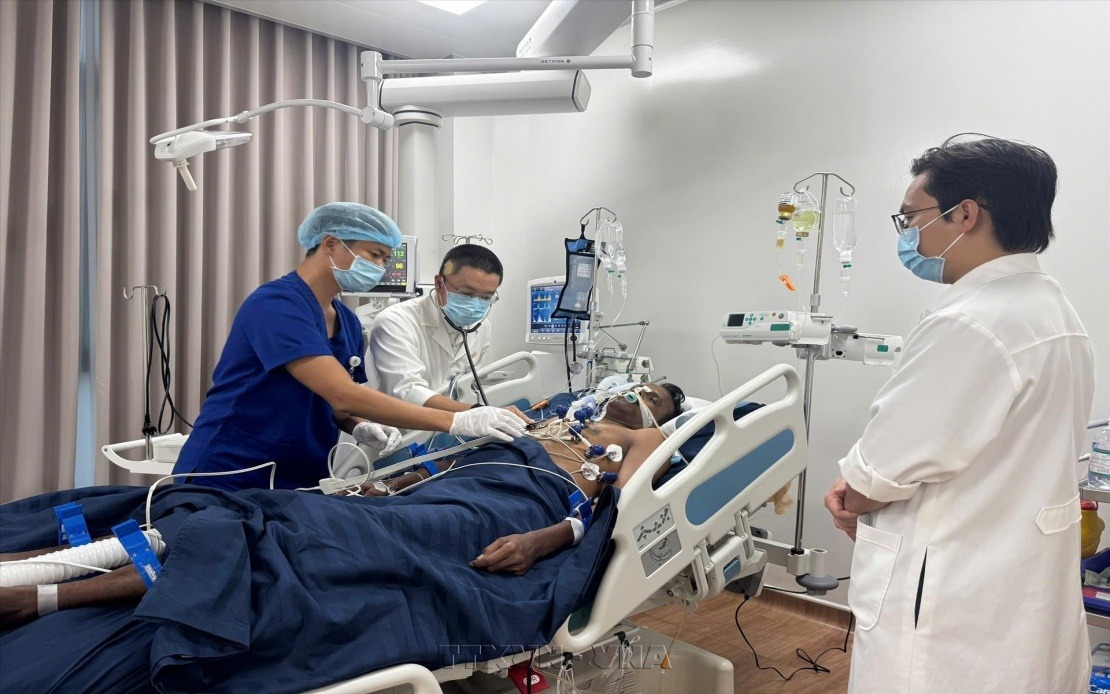
Two patients presenting with the most severe injuries underwent nearly 120 minutes of continuous resuscitation efforts within the hospital's emergency department. Medical staff successfully stabilised both individuals, who were subsequently moved to the intensive care unit where they regained consciousness within hours. Their transition to stable vital parameters represented a crucial turning point in the emergency response, suggesting that timely intervention had prevented what might otherwise have been fatal outcomes. By the evening of the accident, both patients remained under observation but showed positive neurological and physiological indicators.
As evening progressed on July 11, the hospital's emergency intake continued to expand. A total of fifteen additional casualties were admitted, all maintaining consciousness upon arrival. These patients underwent comprehensive medical screening protocols including trauma assessments and investigations to identify both obvious and occult injuries. The differentiation between the two critically injured patients requiring intensive care and these fifteen conscious arrivals allowed hospital staff to allocate resources according to clinical acuity, a fundamental principle of disaster medicine that became essential given the scale of the incident.
Dr. Nguyen Quang Thang, who directs Sun Group International Hospital, disclosed that two of the admitted patients developed severe respiratory failure—a life-threatening complication that demanded round-the-clock monitoring and intervention. Of these two, one patient improved sufficiently to be weaned from advanced respiratory support and cleared for potential discharge pending final clearance. The other respiratory failure patient remained hospitalised, with underlying chronic health conditions complicating the clinical picture and extending the anticipated recovery timeline. Dr. Thang noted that specialists had established coordination with Cho Ray Hospital in Ho Chi Minh City to ensure this patient received the most sophisticated intensive care available in southern Vietnam, with physician expectations trending toward gradual improvement.
Beyond the purely medical dimensions of the crisis, An Giang's administrative apparatus mobilised to address the financial and diplomatic complexities that arise when foreign nationals suffer injury or death within Vietnamese territory. The vessel's operating company committed to providing immediate cash disbursements of 1,000 USD to the families of those who perished and 500 USD to each injured passenger, acknowledging corporate responsibility while expediting relief that families would need during the immediate aftermath. This private-sector contribution complemented government action rather than replacing it.
Tran Minh Khoa, Chairman of the Phu Quoc Special Zone's People's Committee, signalled that local government would supplement corporate assistance with official compensation. The administration announced it would provide 26 million Vietnamese Dong—approximately equivalent to 1,000 USD—to bereaved families for each fatality. This layered response, combining operator liability with public-sector social support, reflects a compensation model increasingly standard across Southeast Asia when tourism-related disasters occur. Such swift financial action serves multiple purposes: it demonstrates governmental responsibility to grieving families, provides practical resources for funeral and repatriation expenses, and signals to the international tourist market that the destination takes passenger safety seriously.
Parallel to medical and financial responses, authorities commenced formal investigations into the accident's underlying causes while expediting civil registration and legal documentation procedures according to Vietnamese administrative requirements. Officials recognised that Indian nationals and their families would require comprehensive documentation for consular purposes, insurance claims, and other legal proceedings that necessarily follow fatal or serious-injury incidents abroad. The willingness to streamline bureaucratic processes in this context reflects recognition that excessive delays in paperwork compound family trauma during already devastating circumstances.
The accident highlights persistent safety concerns surrounding high-speed marine transportation in Southeast Asia, a region where tourism growth has outpaced infrastructure development in certain sectors. Phu Quoc Island has emerged as one of Vietnam's premier beach destinations, attracting tens of thousands of regional and international visitors annually. The concentration of speedboat operators serving tourists creates natural competition that, while benefiting consumers through lower prices, occasionally generates pressure toward cost-cutting that may compromise safety protocols. Malaysian and other regional tourists visiting Phu Quoc and comparable destinations should remain aware that marine accident risks, while statistically low, do exist in local waters.
For Malaysia, which sends substantial tourism flows to Vietnam annually, the incident serves as a reminder of the importance of travel insurance, pre-departure safety briefings, and selection of established operators with proven safety records. Malaysian tour operators increasingly scrutinise safety documentation from Vietnamese counterparts before including specific activities in itineraries, a trend likely to accelerate following high-profile incidents such as this speedboat accident. The Vietnamese government's visible commitment to medical response and victim support, as demonstrated in An Giang, will help maintain confidence in the destination's overall safety infrastructure, though individual operators and Malaysian travel agencies will undoubtedly emphasise verified safety records more heavily in marketing materials going forward.
The coordinated response also reflects Vietnam's strategic interest in maintaining its position as a leading regional tourism destination. Investment in hospital infrastructure, emergency response systems, and trauma care training represents not merely humanitarian commitment but also recognition that tourist confidence depends directly upon visible preparedness for medical emergencies. As Vietnam continues modernising its healthcare system and expanding tourism capacity, incidents like this accelerate learning and protocol refinement across the entire industry. Other Southeast Asian nations, including Malaysia, monitor how competitors manage tourism-related crises, as successful crisis management directly influences where international and regional tourists allocate their travel budgets.

