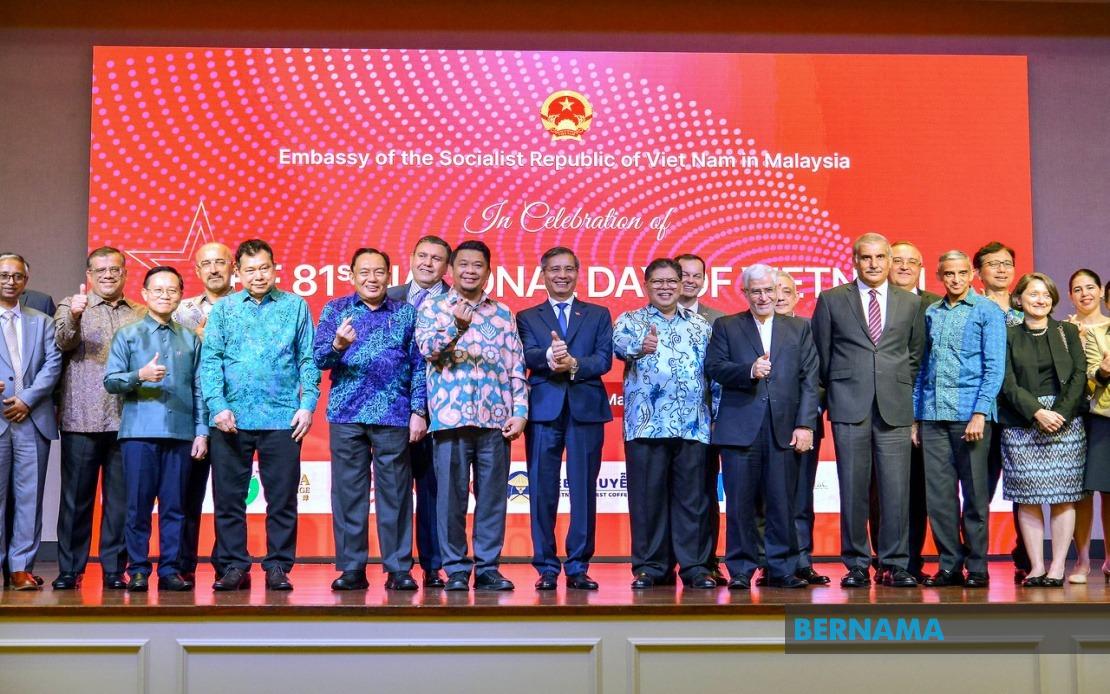
The relationship between Vietnam and Malaysia has entered a fresh phase of development, anchored by the Comprehensive Strategic Partnership framework that was formalised in November 2024. Speaking at Vietnam's 81st National Day celebration in Kuala Lumpur this week, Vietnam's Ambassador to Malaysia Dinh Ngoc Linh underscored how this elevated status reflects a fundamental shift in bilateral engagement, built on growing political trust and aligned strategic interests that position both nations as critical partners in an increasingly volatile regional environment.
For Malaysia, Vietnam's significance extends beyond bilateral commerce and cultural ties. As Southeast Asia navigates intensifying geopolitical pressures and economic uncertainty, the partnership represents a concrete commitment to regional stability through deepened institutional cooperation. Ambassador Dinh characterised Malaysia as an especially valued partner for Vietnam precisely because of its role in maintaining ASEAN cohesion and centrality—a theme that resonates deeply across Southeast Asia as major powers compete for influence throughout the region.
The scope of bilateral engagement has expanded substantially over recent years. Beyond traditional areas such as trade and investment, cooperation now encompasses agriculture, education, culture, and tourism. This diversification matters for Malaysia because it reduces economic vulnerability to any single sector while creating multiple constituencies—from farmers to educators to business leaders—invested in maintaining good relations. The breadth of interaction also facilitates people-to-people exchanges that anchor diplomatic relationships in genuine human connections rather than mere state interests.
Defence and security cooperation occupies particular significance in the partnership framework. Ambassador Dinh highlighted this domain as essential to building mutual confidence between the two nations, while simultaneously contributing to regional peace and stability. For Malaysian policymakers, this emphasis reflects Vietnam's strategic weight in Southeast Asia and the shared interest both countries have in maintaining freedom of navigation and respecting international law in contested waters—issues that directly concern Malaysia's maritime security and economic interests.
The role of parliamentary exchanges emerged as another pillar strengthening bilateral understanding. By facilitating dialogue between legislators and policymakers at multiple levels, these interactions create networks of trust that persist across political transitions and personnel changes. For Malaysia's increasingly sophisticated parliament, engagement with Vietnam's National Assembly represents opportunities to share legislative experience and coordinate positions on regional issues affecting ASEAN.
Ambassador Dinh's references to ASEAN unity and centrality carry particular weight for Malaysian readers. Malaysia has long positioned itself as a bridge between different regional groupings and an advocate for ASEAN's independent voice amid great power competition. Vietnam's explicit commitment to working with Malaysia and other ASEAN members to strengthen the bloc's resilience signals that both nations view ASEAN institutional frameworks as vehicles for protecting smaller nations' interests rather than abandoning them.
The historical trajectory underlying current partnerships deserves emphasis. Vietnam and Malaysia established diplomatic relations in 1973, meaning their engagement predates ASEAN's own transformation into a major regional institution. This half-century of continuous contact, despite periods of limited engagement and different historical experiences, demonstrates institutional resilience and suggests the current strategic partnership rests on genuine foundations rather than temporary diplomatic convenience.
Ambassador Dinh's personal remarks, acknowledging the conclusion of his posting after three years in Malaysia, add a human dimension to state-level relations. His expressed commitment to following bilateral developments and maintaining affection for Malaysia—regardless of future positions—exemplifies the personal relationships that often underpin sustained diplomatic cooperation. Incoming ambassadors inherit not just institutional arrangements but also the goodwill their predecessors cultivate, creating continuity that benefits both nations.
For Malaysia, the timing of this partnership elevation merits consideration. As China expands its regional influence through economic and strategic initiatives, and as the United States recalibrates its Asian engagement, Vietnam and Malaysia share interests in maintaining autonomous decision-making capacity. The Comprehensive Strategic Partnership allows both nations to deepen cooperation without exclusively aligning with any great power, preserving strategic flexibility that Southeast Asian nations increasingly view as essential.
The partnership's emphasis on mutual prosperity and shared success resonates with Malaysia's own development aspirations. Vietnam's rapid economic growth and integration into global value chains offer lessons for Malaysian policymakers, while Malaysia's experience as a more developed middle-income economy provides potential templates for Vietnam's continued advancement. This reciprocal learning dynamic strengthens partnerships beyond what traditional hierarchies might suggest.
The presence of Deputy Foreign Minister Datuk Lukanisman Awang Sauni at the celebration signals Malaysian government commitment to the partnership at senior levels. Such attendance at national celebrations by high-ranking officials demonstrates respect and investment in the relationship, sending clear signals to both Vietnamese leadership and Malaysia's regional partners about the priority assigned to Vietnam ties.
Looking forward, the Comprehensive Strategic Partnership creates institutional frameworks for addressing emerging challenges jointly. Climate change, maritime resource management, economic integration, and connectivity projects all present opportunities for Vietnam and Malaysia to coordinate positions within ASEAN and demonstrate how smaller powers can advance shared interests through multilateral cooperation. The partnership thus extends beyond bilateral benefits to encompass the broader Southeast Asian strategic environment that Malaysia seeks to influence.
Ultimately, the elevation of Vietnam-Malaysia relations reflects a maturation of both bilateral engagement and regional power dynamics. As ASEAN members confront multipolar competition and transnational challenges, partnerships like this one demonstrate how regional solidarity can enhance national autonomy. For Malaysia, strengthening ties with Vietnam serves both immediate diplomatic interests and longer-term strategic objectives of maintaining a resilient, prosperous Southeast Asia capable of managing its own affairs.

