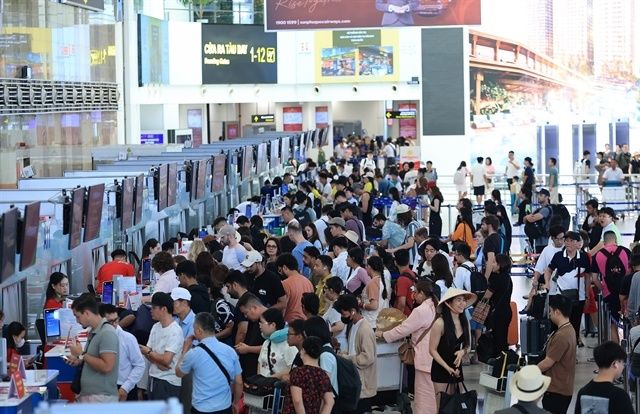
Vietnam has introduced comprehensive protections for air travellers through Government Decree No. 208, which establishes mandatory compensation and assistance standards for flight disruptions. The regulation, issued this week, marks a significant shift in passenger rights protection across the civil aviation sector and will become enforceable from the beginning of next month. The decree consolidates scattered provisions from existing civil aviation law into a cohesive framework that addresses delays, cancellations, rescheduling, and denied boarding scenarios.
Under the new Vietnamese rules, a flight officially qualifies as delayed when departure occurs more than 15 minutes after the scheduled time. The decree distinguishes between standard delays and extended disruptions, classifying any delay of four hours or more as a "long delay." This tiered approach allows regulators to apply proportionate remedies based on severity, reflecting practices established in mature aviation markets across the European Union and other developed regions. The 15-minute threshold is particularly relevant for regional carriers operating frequent short-haul routes across Southeast Asia, where punctuality standards have historically been less rigorous than international benchmarks.
Airline obligations begin the moment carriers anticipate disruption. Upon recognising that a delay will occur, airlines must immediately notify affected passengers, issue a formal apology, and clearly communicate the reason for the disruption. Beyond initial notification, carriers remain responsible for maintaining updated information throughout the delay period. Airlines must communicate revised departure estimates to airport operators and terminal service providers, ensuring that flight information screens display current data at least every 30 minutes. This requirement addresses a persistent frustration for travellers in Southeast Asian airports, where real-time information dissemination has sometimes lagged behind international standards.
Material assistance becomes mandatory once delays reach two hours. During such disruptions, carriers must provide drinking water or issue vouchers of equivalent monetary value to stranded passengers. For extended overnight disruptions, the decree mandates different support levels depending on timing. If the delay falls between 10 p.m. and 7 a.m., airlines must arrange appropriate sleeping or rest accommodation aligned with local conditions, or provide an alternative solution acceptable to the passenger. For delays occurring during daytime hours between 7 a.m. and 10 p.m., carriers must arrange suitable rest facilities within the airport's actual capacity constraints.
The decree grants passengers significant flexibility in routing when delays occur due to airline fault. Carriers must waive standard restrictions on itinerary changes and rebooked flights, eliminating surcharges that would typically apply. Airlines must offer passengers a choice between rebooked departures on the same service, routing to the final destination through alternative flights, or acceptance of a full refund. This passenger-centric approach mirrors international best practice and stands in contrast to legacy policies in some Asian markets where rebooking options remain limited or carry substantial fees.
Schedule changes—deliberate alterations to planned departure times—receive distinct treatment under the decree. When carriers advance or postpone a flight by five hours or more, passengers gain the right to request a full ticket refund, rebooked passage on suitable alternative flights, or relocation to another service within 72 hours. However, the decree permits carriers to apply their own policies for schedule changes that shift departure earlier by up to four hours, or delay departure by no more than 15 minutes. This flexibility recognises that minor adjustments are sometimes necessary for operational viability on congested regional routes.
Cancellations trigger the most stringent protections. The decree defines a cancelled flight as any scheduled service that fails to operate despite at least one passenger holding a confirmed seat and valid ticket. Immediately upon cancellation, carriers must notify passengers without delay, apologise, and provide transparent explanation. When cancellation results from airline fault—mechanical issues, crew unavailability, or operational failures—passengers gain unconditional choice among three remedies. They may request rebooked passage on alternative itineraries reaching their destination, a full fare refund, or compensation for unused ticket portions. Critically, airlines cannot impose change restrictions or additional charges when exercising these rights.
The Vietnamese government has delegated to the Minister of Construction the authority to establish further implementation details. These pending specifications will address non-refundable advance compensation amounts, payment methodologies and timelines for advance compensation, and reporting obligations when delays, cancellations, or boarding denials occur. This phased implementation approach allows regulators to calibrate compensation levels against industry capacity and international precedent, rather than imposing fixed amounts that might prove economically destabilising for regional carriers still recovering from pandemic-related disruptions.
The decree's comprehensive scope reflects growing regional demands for passenger protection standards comparable to developed markets. Southeast Asian travellers have increasingly experienced flight disruptions as route networks expanded and aircraft utilisation intensified throughout the post-pandemic recovery. Vietnam's formalisation of compensation and assistance standards positions the country alongside more mature aviation regulatory environments and may encourage other ASEAN nations to strengthen their own passenger protection frameworks. For Malaysian travellers and carriers operating regional services, Vietnam's approach provides a regulatory model addressing long-standing gaps in dispute resolution and passenger support infrastructure.
Implementation will require significant operational and financial adjustments across Vietnamese carriers. Airlines must establish systems for real-time passenger notification, coordinate with airport authorities on information dissemination, and develop protocols for arranging accommodation and meal support. The administrative burden of tracking delays, calculating compensation, and processing refunds will necessitate enhanced customer service capabilities. However, these requirements align with international aviation standards, and carriers operating across Southeast Asia already maintain such systems for European and other international routes where comparable regulations apply.
The decree's effectiveness ultimately depends on robust enforcement and passenger awareness. Vietnamese carriers and airports must develop transparent complaint mechanisms and reporting systems to ensure compliance, while civil aviation authorities require adequate resources to investigate violations and levy penalties. Passengers must understand their entitlements to utilise them effectively. Regional travellers accustomed to limited recourse when flights are disrupted will benefit from clearer rights, though enforcement rigour will determine whether the decree achieves its intended protective impact or remains a formal standard honoured primarily in breach.