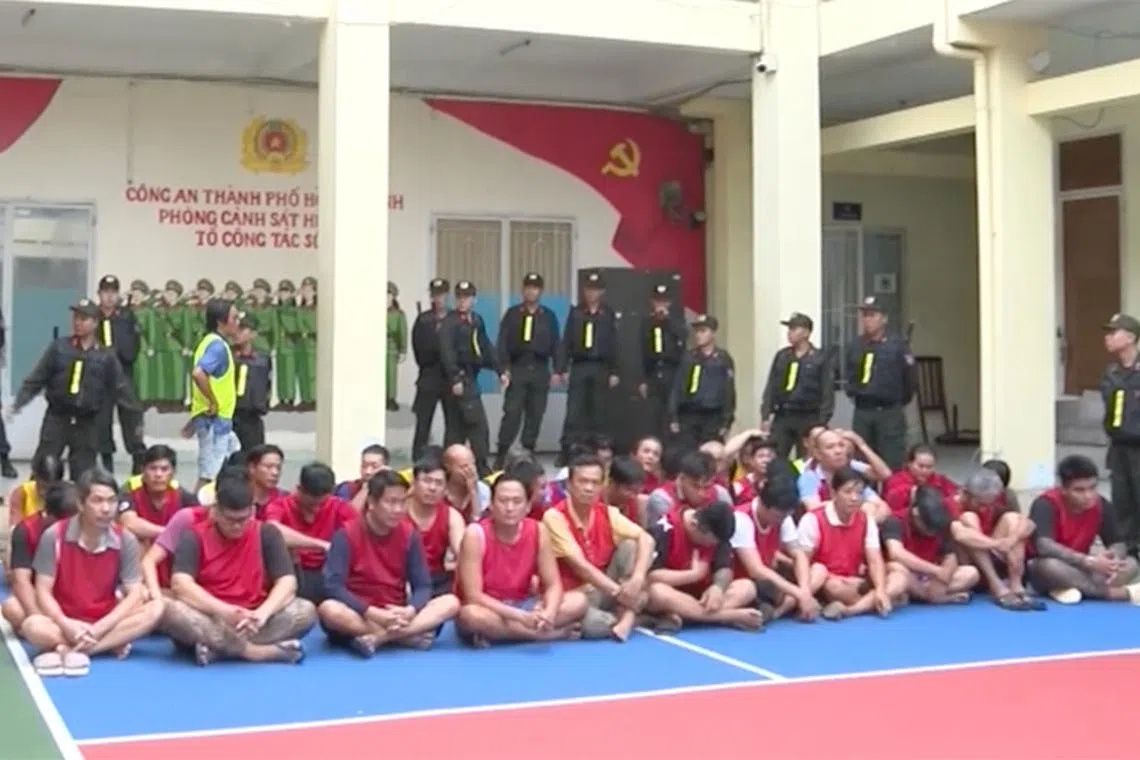
Vietnamese police have dismantled two exceptionally large illegal betting networks and arrested 85 people in connection with operations handling a combined US$133 million in illicit transactions, authorities announced on Tuesday following raids conducted in late June. The major enforcement action underscores the country's intensified efforts to suppress underground gambling activities as the 2026 World Cup tournament approaches, even though the matches will be hosted thousands of kilometres away in Canada, Mexico and the United States.
The two betting rings targeted in the operation demonstrated a sophisticated organisational structure with multi-tiered hierarchies and robust operational controls, according to statements from police in Ho Chi Minh City. This level of complexity indicates the betting syndicates had evolved beyond simple neighbourhood gambling operations into organised networks capable of processing large volumes of transactions across multiple user tiers. The sheer scale of money involved—US$133 million in just several months since October 2025—reveals the tremendous profitability and demand driving these illegal enterprises despite the country's stringent prohibition on online gambling.
At the heart of these operations lay a cross-border element that highlights regional vulnerabilities in combating illegal gambling. The leadership of the dismantled rings admitted to sourcing premium "master-level betting accounts" from individuals operating in Cambodia, then subdividing these accounts into numerous subsidiary agent and member accounts for distribution to individual gamblers throughout Vietnam via online platforms. This arrangement allowed operators to maintain distance from direct customer contact whilst leveraging Cambodia's more permissive regulatory environment. For Malaysian authorities monitoring similar cross-border gambling flows through Southeast Asia, the Vietnamese case illustrates how geographic regulatory gaps can facilitate large-scale illegal operations.
The RM534 million in combined transaction value represents only the portion of illegal betting activity that Vietnamese police have successfully quantified. According to the country's public security ministry, law enforcement operations across the entire nation dismantled 73 separate gambling operations during the first 20 days of World Cup coverage, resulting in the arrest of 346 suspects involved in illegal gambling and football betting activities. Colonel Bui Tuan Anh from the public security ministry stated that transaction values in these cases totalled thousands of billions of Vietnamese dong, encompassing hundreds of millions of dollars in aggregate—suggesting the US$133 million figure represents merely a fraction of detected illegal betting activity.
The timing of these enforcement actions reflects Vietnam's strategic decision to intensify gambling suppression during major international sporting events, when illegal operators experience peak customer demand and transaction volumes. Despite online gambling being comprehensively banned throughout the communist nation, lucrative underground betting operations persistently emerge due to the substantial profit margins and seemingly insatiable appetite among Vietnamese bettors. Rather than achieving permanent elimination of illegal gambling, authorities instead pursue periodic intensive crackdowns that disrupt operations and impose costs on organisers, with the understanding that the fundamental prohibition cannot be fully enforced across the entire country.
The 2026 World Cup final scheduled for July 19 will provide the immediate focal point for Vietnam's ongoing campaign, though the tournament's geographic distance—hosted across North America rather than regionally—has not diminished police attention to domestic illegal betting rings. Regional sporting events such as the AFC Asian Cup or other football competitions generate comparably intense betting activity and enforcement responses from Vietnamese authorities. For Southeast Asian nations including Malaysia, Vietnam's experience demonstrates both the challenge and necessity of sustained law enforcement coordination, as criminal gambling networks frequently operate across borders and leverage jurisdictional gaps to facilitate their activities.
The sophisticated account-subdivision structure employed by the dismantled rings mirrors techniques observed in illegal gambling operations throughout Southeast Asia, suggesting the existence of shared operational methodologies and possibly even transnational criminal cooperation networks. By obtaining accounts registered in Cambodia and then fragmenting them into numerous subsidiary accounts, organisers created layers of distance between actual money flows and identifiable individuals, complicating law enforcement tracking efforts. This architectural approach has proven remarkably durable because it provides plausible deniability to lower-tier participants whilst concentrating control and profit at the top of the hierarchy.
Vietnamese authorities will face the ongoing challenge of preventing new illegal betting networks from reconstituting following the closure of these two major syndicates. History suggests that suppression of one operation typically leads to emergence of successor networks utilising refined techniques to evade detection. The persistent profitability of illegal gambling in Vietnam—evidenced by the speed at which these large operations accumulated hundreds of millions of dollars—ensures that entrepreneurial criminal elements will continue attempting to serve the substantial demand from Vietnamese bettors. Sustained enforcement will require not merely periodic crackdowns but systematic intelligence development and cross-border coordination mechanisms.
For Malaysia and other Southeast Asian countries, the Vietnamese case offers valuable lessons regarding the structural vulnerabilities in regional financial systems that enable large-scale illegal gambling operations. Money laundering risks associated with these networks extend beyond gambling itself, as enormous cash flows generated by betting syndicates become attractive targets for broader criminal activities. Furthermore, the involvement of Cambodia as a source of master accounts suggests that Southeast Asian nations must develop more robust mechanisms for sharing intelligence about cross-border gambling operations and coordinating enforcement actions. Individual national crackdowns, however successful in the short term, remain insufficient without regional cooperation frameworks.
The upcoming 2026 World Cup will serve as a stress test for Vietnamese law enforcement's capacity to manage illegal betting demand during peak periods. Whether the authorities' approach of intensive enforcement campaigns can meaningfully reduce overall illegal gambling volumes remains uncertain, particularly given the structural economic incentives driving the supply of betting services. What is clear is that the US$133 million seized and the 85 arrests represent only the visible portion of Vietnam's broader struggle with endemic illegal gambling, a challenge shared across much of Southeast Asia and likely to persist regardless of tournament schedules or enforcement intensity.

