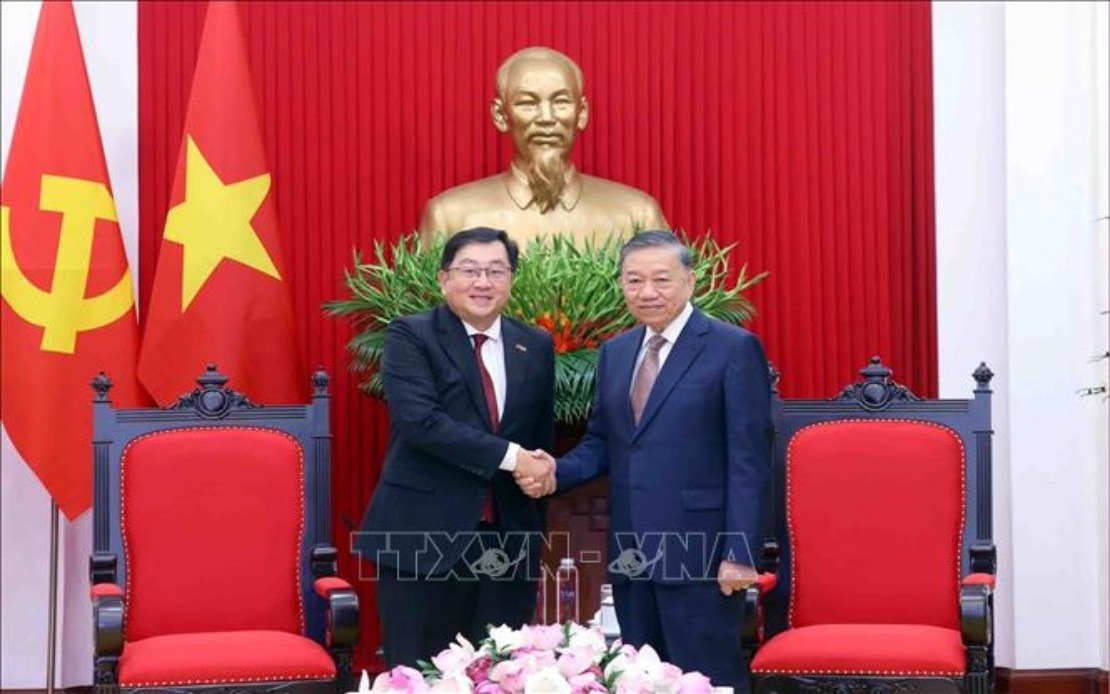
Vietnam and Malaysia are charting a course toward deeper cooperation across multiple domains, according to Vietnamese President To Lam, who received outgoing Malaysian Ambassador Datuk Tan Yang Thai in Hanoi. The encounter underscored a bilateral relationship increasingly anchored in political stability, economic dynamism, and shared regional interests. Lam's characterisation of ties as "increasingly dynamic" reflects a maturation in the partnership that extends well beyond traditional diplomatic courtesies, touching on substantive areas critical to both nations' development trajectories.
The economic dimension of Vietnam-Malaysia relations has emerged as a particularly robust pillar. Trade between the two countries reached US$10.8 billion during the first six months of 2026, representing a striking year-on-year increase of 40 per cent. This momentum suggests that despite global economic uncertainties, companies and investors on both sides see genuine commercial opportunities in deepening cross-border engagement. Malaysia's position as Vietnam's third-largest investor among ASEAN members and tenth-largest globally indicates a confidence in Vietnam's long-term growth prospects, while Vietnamese businesses are increasingly eyeing Malaysian markets and investment opportunities.
Beyond headline trade figures, the bilateral relationship has consolidated through institutional mechanisms and regular high-level interactions. Political exchanges through party, state, government, and parliamentary channels have become routine, reducing the friction that sometimes characterises international relationships and creating multiple avenues for problem-solving and dialogue. This layered engagement model reflects a mature approach to diplomacy, where disagreements, should they arise, can be addressed through established channels rather than escalating into public disputes. For Malaysian readers, this architecture of cooperation matters because it demonstrates that both countries have invested in sustainable relationship-building infrastructure.
President Lam explicitly reaffirmed Vietnam's commitment to elevating the Comprehensive Strategic Partnership framework with Malaysia, signalling that both nations view their relationship as transcending transactional trade interactions. The invitation extended to His Majesty Sultan Ibrahim and Prime Minister Datuk Seri Anwar Ibrahim to visit Vietnam represents a diplomatic gesture seeking to anchor the partnership at the highest political levels. Such visits typically result in bilateral agreements spanning multiple sectors, allowing both nations to synchronise their development priorities and negotiate frameworks that benefit their respective populations.
The emphasis on digital and green economic development reveals shared strategic priorities that align with global megatrends. As Southeast Asian economies grapple with climate commitments and the imperative to digitalise their industries, Vietnam and Malaysia recognising these as mutual priority areas positions them to collaborate on technology transfer, renewable energy projects, and sustainable business practices. Malaysia's renewable energy expertise and Vietnam's manufacturing capabilities could create complementary advantages in developing regional supply chains for green technologies. This alignment is particularly significant for other ASEAN members watching how Vietnam and Malaysia navigate the energy transition.
Energy and electricity connectivity feature prominently in the bilateral agenda, reflecting practical infrastructure needs across the region. The Mekong River basin's hydropower potential and the broader Southeast Asian grid integration efforts require coordinated planning among nations sharing river systems and electricity infrastructure. Vietnam and Malaysia's cooperation in this sphere could model how ASEAN members manage transnational resource challenges, providing valuable lessons for managing water and energy security amid climate variability. Malaysian investors and policymakers should monitor these initiatives closely, as regional energy solutions directly affect Malaysia's long-term electricity costs and supply reliability.
Maritime cooperation constitutes another pillar of the partnership, reflecting the reality that both nations are maritime economies with significant interests in the waters surrounding them. Cooperation in this domain encompasses not only trade facilitation through shared shipping lanes but also security considerations and the management of marine resources. As regional tensions occasionally flare over maritime boundaries and resource rights, Vietnam and Malaysia's commitment to maritime cooperation demonstrates a preference for dialogue and mutual benefit over confrontation. This approach aligns with ASEAN's institutional commitment to peaceful resolution of disputes and rules-based maritime conduct.
During his farewell engagement, Ambassador Tan Yang Thai's expressions of confidence in Vietnam's development trajectory and his commitment to strengthening ties reflected the perspective of Malaysia's diplomatic establishment. His reference to Malaysia's interest in digitalisation and renewable energy partnerships with Vietnam suggests that Malaysian policymakers view Vietnam not merely as a regional peer but as a potential collaborative partner in addressing contemporary economic challenges. The diplomat's special affection for Vietnam, mentioned in his remarks, personalises bilateral relations and indicates that Malaysian officials have developed genuine investment in the partnership's success beyond routine diplomatic obligations.
The reciprocal invitation for President Lam to visit Malaysia, conveyed through Ambassador Tan, represents Malaysia's own interest in elevating engagement. State visits carry symbolic weight and practical importance; they signal to domestic constituencies and international observers that a country prioritises a particular relationship and provides opportunities for bilateral negotiations at the highest level. For Malaysia, hosting Vietnam's president would demonstrate the kingdom's regional diplomatic standing and its commitment to Southeast Asian multilateralism.
Looking forward, the trajectory of Vietnam-Malaysia relations carries implications for Malaysia's broader foreign policy positioning. As Malaysia navigates great power competition and regional economic shifts, deepening ties with Vietnam strengthens Malaysia's diplomatic flexibility and provides additional leverage in regional forums like ASEAN. Vietnam's economic growth trajectory and strategic location make it a valuable partner in Malaysia's efforts to diversify its international relationships and secure its economic future. The emphasis on shared development priorities in green and digital economies suggests that both nations recognise the need for economic transformation and view cooperation as mutually beneficial rather than zero-sum.
The partnership's expansion into new domains such as digital economy collaboration and green technology cooperation reflects how bilateral relationships are evolving in response to global megatrends. Rather than remaining confined to traditional areas like trade and political dialogue, Vietnam and Malaysia are positioning themselves as partners in navigating the economic challenges of the 21st century. This forward-looking orientation suggests that the relationship will likely deepen further, with new agreements and collaborative initiatives emerging in coming years.

