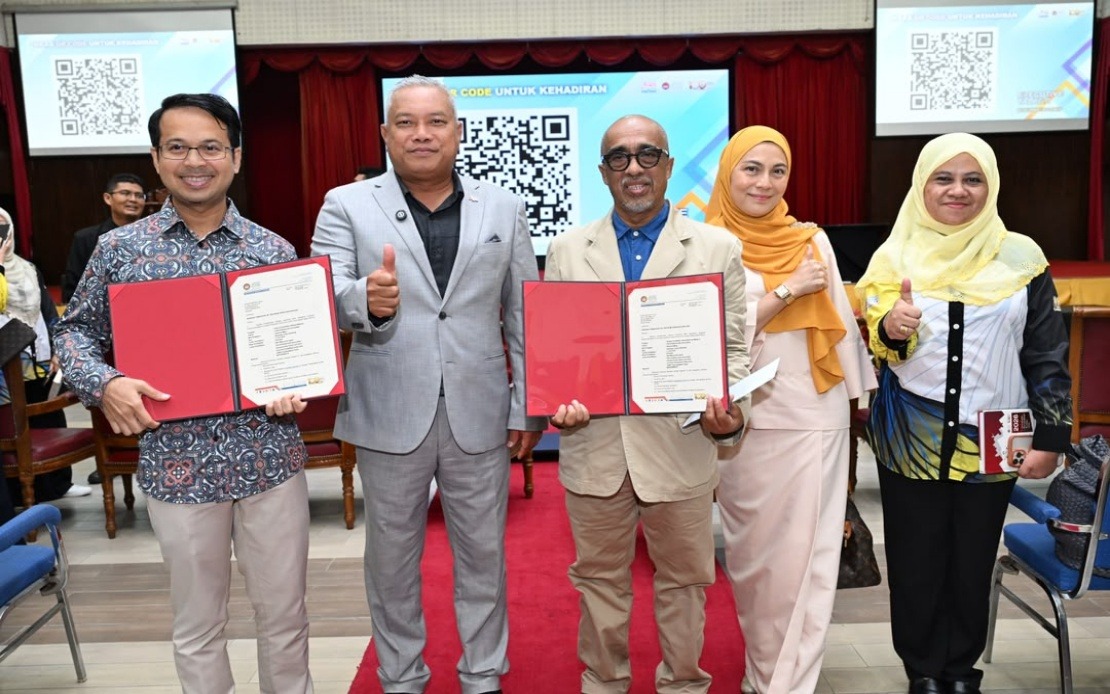
At 65, veteran Malaysian actor and filmmaker Mohd Sabri Yunus is fulfilling an educational aspiration deferred for more than four decades. The celebrated performer has secured admission to pursue a Master of Education in Malay Literature at Universiti Pendidikan Sultan Idris (UPSI) in Ipoh, marking a significant milestone in a career spanning multiple decades in film, theatre, and cultural work. Alongside him, television presenter and media personality Ahmad Fedtri Yahya, 45, will commence studies for a Master of Education in Malay Language at the same institution. Both men represent the inaugural cohort of students in these newly developed programmes within UPSI's Faculty of Languages and Communication, and both gained entry through the Accreditation of Prior Experiential Learning for Award of Qualifications (APEL.Q) pathway—a mechanism that values lived professional experience as equivalent to conventional academic prerequisites.
The APEL.Q route represents an increasingly important avenue for mature-age learners across the Malaysian higher education landscape. Rather than requiring candidates to complete traditional undergraduate qualifications or standardised entrance examinations, this pathway recognises that decades of professional engagement, creative output, and community contribution constitute legitimate forms of knowledge and capability development. For Sabri Yunus, whose four-decade involvement with Malaysian cinema, television, and the Dewan Bahasa dan Pustaka has positioned him as a cultural custodian, the mechanism acknowledges that experiential learning accumulated through real-world practice can meet or exceed the rigour of conventional coursework. This philosophical shift in credential recognition has particular resonance in Southeast Asia, where many accomplished professionals lack formal tertiary qualifications despite demonstrable expertise.
Sabri Yunus' pursuit of formal postgraduate study carries poignant personal dimensions. He revealed that he had attempted twice during the 1980s and early 1990s to enrol at university whilst employed at the Dewan Bahasa dan Pustaka as an illustrator, but institutional and employment constraints prevented realisation of those ambitions. The intervening decades did not extinguish his intellectual curiosity; instead, he adopted what he characterises as a continuous learning philosophy, treating every encounter and relationship as a source of knowledge transfer. His planned research focus—examining specific traditions within pantun, the classical Malay verse form—bridges his lifelong engagement with Malaysian language, literature, and cultural preservation with scholarly inquiry. This approach reflects a broader pattern among Malaysian cultural figures seeking to consolidate experiential understanding into formal academic frameworks.
Fedtri Yahya's decision to specialise in Malay Language at the postgraduate level reflects deliberate concern regarding the contemporary trajectory of linguistic practice in Malaysia. Speaking at UPSI, he articulated conviction that language usage patterns fundamentally intertwine with societal standards of civilisation and intellectual development. His particular preoccupation centres on erosion of Malay language proficiency and distinctive usage patterns among younger Malaysians, attributing this decline to transformations in communication styles precipitated by social media proliferation and digital technologies. Rather than viewing linguistic change with passive resignation, Fedtri positions his scholarly engagement as a deliberate intervention—using his platform and forthcoming academic credentials to strengthen institutional and cultural commitment to the national language. For a television personality with substantial influence over younger demographics, this career pivot signals the seriousness with which prominent cultural figures regard questions of linguistic and cultural vitality.
The significance of admitting these high-profile figures to UPSI extends beyond individual educational trajectories. University leadership explicitly recognises that Sabri Yunus and Fedtri Yahya bring substantial cultural capital and professional credibility to the institution's community. Prof Datuk Dr Md Amin Md Taff, UPSI's vice-chancellor, positioned their enrolment as a strategic opportunity for knowledge exchange between these experienced practitioners and the university's 25,000 students, the preponderance of whom will enter teaching professions. This framing acknowledges that universities function not merely as knowledge-transmission institutions but as spaces where accomplished professionals can model intellectual commitment and share insights garnered through decades of practical engagement with language, culture, and creative expression.
The pedagogical implications deserve consideration. Teacher-training institutions occupy a distinctive position in Malaysia's educational ecosystem, wielding influence over curriculum design, classroom practice, and cultural transmission across the schooling system. When respected cultural figures enrol as postgraduate students within these institutions, they implicitly endorse the value of formal academic engagement with cultural questions whilst simultaneously bringing practitioner perspectives that can enrich how future teachers approach Malay language and literature instruction. Sabri Yunus' research into pantun traditions, conducted at postgraduate level within a teacher-training university, potentially generates scholarly resources and pedagogical frameworks that might eventually influence classroom instruction at secondary and primary levels.
The APEL.Q pathway itself warrants attention within broader Malaysian policy conversations regarding lifelong learning and workforce development. Many Southeast Asian nations struggle with credential inflation—situations where individuals with genuine expertise lack formal qualifications, whilst others possess credentials bearing tenuous relationship to actual capability. Malaysia's investment in alternative qualification pathways potentially addresses this dysfunction, particularly for creative and cultural sectors where apprenticeship and experiential learning have historically dominated. By formalising mechanisms that recognise such experience, UPSI and allied institutions signal receptiveness to non-traditional educational trajectories, potentially encouraging other accomplished practitioners to pursue formal postgraduate study.
The timing of these admissions also reflects contemporary anxieties regarding Malaysian cultural identity and linguistic vitality. National conversations increasingly express concern that rapid modernisation, digital disruption, and globalisation are eroding distinctively Malaysian cultural expressions and language practices. When prominent entertainers and media personalities invest personal time and credibility in formal academic study of Malay language and literature, they implicitly validate these concerns whilst positioning education as a meaningful response. Their presence at UPSI communicates that these subjects merit serious intellectual engagement, potentially influencing how younger Malaysians perceive the status and contemporary relevance of traditional cultural domains.
Sabri Yunus' specific research direction—examining particular pantun traditions—carries particular resonance given broader Southeast Asian interest in revitalising classical literary forms. Pantun represents a distinctively Malay expressive tradition extending across regional boundaries, yet younger generations increasingly encounter it superficially or through decontextualised classroom instruction. Scholarly research conducted by a practitioner deeply embedded in Malaysian cultural institutions potentially generates insights that bridge academic analysis and living cultural practice, enriching understanding of how traditional forms remain meaningful within contemporary contexts. This represents precisely the kind of knowledge production that emerges when experienced cultural workers pursue formal postgraduate study.
The admission of Fedtri Yahya to a Malay Language programme simultaneously addresses and complicates questions regarding linguistic standardisation and evolution. Language naturally evolves through community usage; digital communication platforms and social media have introduced novel linguistic registers and expression patterns, particularly among younger speakers. Fedtri's scholarly engagement with Malay language, conducted from the perspective of a media professional thoroughly embedded in contemporary communication ecosystems, potentially generates nuanced understanding of ongoing linguistic change. Rather than reflexively positioning such changes as degradation, serious academic study might illuminate how language communities adapt inherited systems to new communicative contexts and technological affordances.
The implications for Malaysia's broader education sector merit consideration. UPSI's development of APEL.Q programmes and recruitment of accomplished cultural practitioners signals institutional confidence in alternative pathways to postgraduate qualification. Other Malaysian universities, particularly those focused on teacher training, vocational education, and cultural studies, might observe this initiative and consider analogous investments. If successful, such programmes could eventually reshape Malaysia's academic credentialing landscape, creating more permeable boundaries between professional practice and formal study. This would particularly benefit creative sectors—arts, media, cultural industries—where practitioners often develop sophisticated expertise outside conventional academic structures.
For Malaysian readers contemplating educational trajectories or career development, the Sabri Yunus and Fedtri Yahya examples offer compelling narratives regarding lifelong learning and intellectual renewal. Both individuals have achieved professional prominence without formal postgraduate credentials; their choice to pursue Master's degrees at this career stage reflects conviction that formal academic engagement offers distinctive value. Neither candidate represents an individual seeking credentials for employment advancement in conventional labour markets; instead, both apparently prioritise deepening intellectual engagement with their chosen fields and contributing to scholarship addressing national cultural concerns. This motivation—intellectual curiosity and cultural commitment rather than credentialing instrumentalism—may increasingly characterise postgraduate study among mature-age learners navigating alternative qualification pathways.

