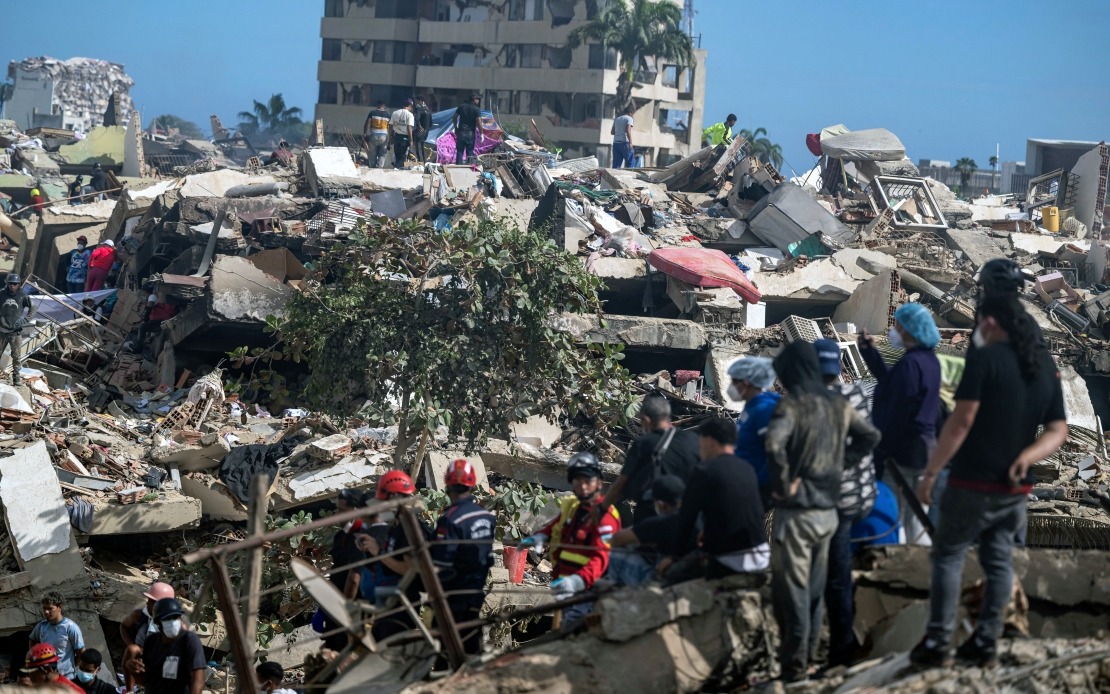
The humanitarian crisis unfolding in northern Venezuela has reached catastrophic proportions following the twin earthquakes that struck on June 24. National Assembly President Jorge Rodriguez disclosed on Wednesday that the confirmed fatality count has climbed to 2,295, while the number of documented injuries now exceeds 11,267. The scale of displacement has also deepened, with official records indicating that nearly 12,841 individuals have been forced from their homes, compounding an already fragile humanitarian situation in a nation already grappling with economic hardship and social instability.
The seismic event itself comprised two powerful tremors—measuring 7.2 and 7.5 magnitude respectively—that struck in rapid succession, multiplying the destructive impact across the affected northern regions. Since that initial devastating doublet, the area has experienced 782 recorded aftershocks, creating an environment of persistent uncertainty and danger for residents attempting to return to their neighbourhoods and assess damage to their properties. Seismologists have noted an encouraging trend, however, with both the frequency and intensity of these secondary tremors declining noticeably over the preceding 48 hours, suggesting the immediate seismic threat may be gradually subsiding.
Despite this seismic improvement, National Assembly President Rodriguez cautioned the public against complacency, emphasizing that the danger has not entirely vanished. His warning specifically highlighted the ongoing risks posed by compromised concrete structures that remain precariously unstable throughout the affected zones. This concern reflects the reality facing rescue teams and residents alike—while nature's convulsions may be easing, the architectural destruction left in the earthquakes' wake continues to pose lethal hazards to those moving through the devastated landscape.
The scale of structural damage revealed by satellite imagery underscores the magnitude of the disaster's impact. Data analysed by NASA indicates that more than 58,000 buildings sustained damage or were completely destroyed by the seismic event. This enormous figure translates not merely into economic loss but into a vast humanitarian challenge—thousands of families now lack shelter, and the infrastructure required for basic services such as water, electricity, and medical care has been severely compromised across multiple communities.
Yet amidst this devastation, rescue operations have demonstrated remarkable effectiveness and international solidarity. More than 4,000 emergency personnel mobilized across the impacted zones have managed to extract 6,461 individuals from collapsed structures, often working in dangerous conditions where the risk of secondary collapses remains ever-present. These rescue teams have drawn personnel from more than 30 nations, reflecting a global response to Venezuela's crisis. As of Wednesday, thousands of these rescuers were continuing their painstaking work, methodically moving through debris fields in search of survivors who may still be trapped beneath tonnes of concrete and rubble.
The involvement of international rescue teams highlights the severity of the disaster and Venezuela's need for external assistance. Such coordinated international response is particularly significant given the nation's current geopolitical isolation and ongoing internal challenges. For Malaysian readers, this scenario underscores the unpredictable nature of seismic hazards in the Americas and the critical importance of international disaster relief cooperation—principles that resonate across the Pacific, where Southeast Asian nations also face earthquake and tsunami risks.
The humanitarian infrastructure required to manage such a crisis has stretched Venezuelan authorities to their limits. The United Nations has already begun acquiring 10,000 body bags, a grim logistical requirement that reflects the staggering death toll and the expectation that further fatalities may be discovered as rescue operations progress and mass burial sites are eventually established. This procurement represents not merely bureaucratic procedure but a sobering acknowledgment of the scale at which this disaster has transformed from emergency response into humanitarian catastrophe management.
The dual challenges of ongoing rescue operations and managing the displaced population require coordinated effort across multiple sectors. Medical facilities in the affected regions have been overwhelmed, with over 11,000 injured individuals requiring treatment ranging from minor trauma to life-threatening injuries requiring surgery. The destruction of health infrastructure compounds these challenges, as hospitals themselves have sustained damage and many healthcare workers have lost their own homes, creating staffing crises even as demand for medical services reaches peak levels.
For Venezuela, a nation already experiencing severe economic and political turbulence, this natural disaster arrives at a moment of profound vulnerability. The earthquake has disrupted whatever stability remained in affected regions and will likely trigger renewed migration pressures as residents seek to relocate away from the seismically active zone. The international community's response, while robust at this immediate moment, will need to extend far beyond the initial rescue phase into longer-term reconstruction and rehabilitation—a commitment that remains uncertain given global economic constraints and competing humanitarian priorities elsewhere.
Looking ahead, the transition from emergency rescue to recovery and reconstruction will define Venezuela's capacity to rebuild. The reported decline in aftershock activity offers a window within which rescue operations can proceed with somewhat reduced seismic risk, though this window may be temporary. Seismologists typically caution that stress redistribution following major earthquakes can trigger unexpected activity weeks or months later, meaning residents and rescue workers must maintain heightened vigilance long after the initial news cycle has shifted to other crises. The international teams currently deployed across northern Venezuela's devastated landscape face the challenging work of converting rescue successes into sustainable recovery pathways for a nation and population that will need years, not months, to fully recover from this calamity.

